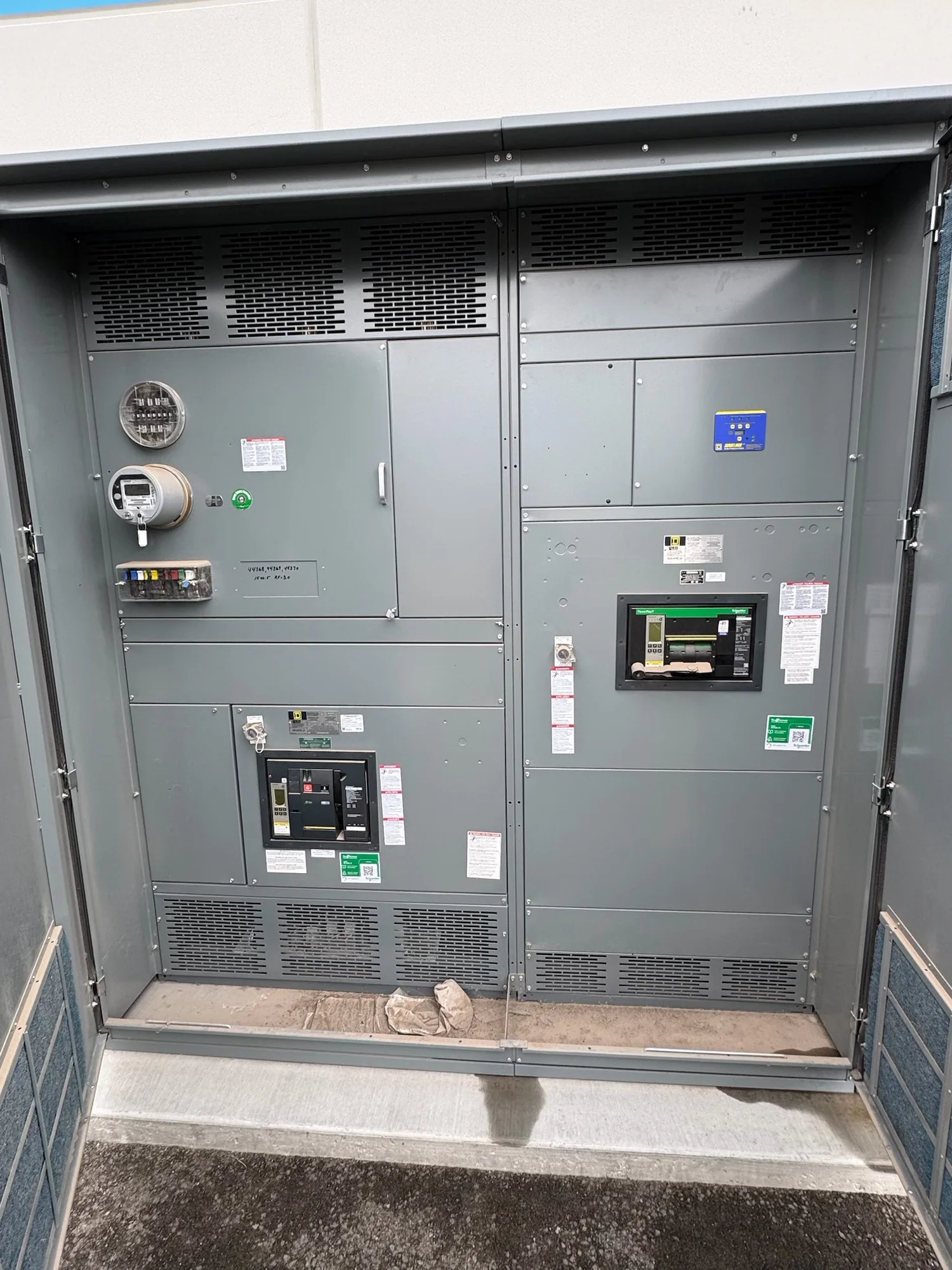
Confirm the 347/600 V system configuration
Start by establishing exactly what “347/600 V” means at the point where the panelboard will be installed. In a grounded-wye 600 V system, 600 V is the line-to-line voltage and 347 V is the line-to-neutral voltage. That distinction affects which loads can connect phase-to-neutral, which require phase-to-phase connections, and how the equipment must be rated. Confirm the source configuration, grounding method, available conductors and intended connection before selecting a panelboard. Do not assume that a nominal voltage description alone identifies the system or establishes equipment suitability. The electrical drawings, utility or upstream-source information, and project requirements should agree. If the system differs from a grounded-wye arrangement, or includes unusual grounding or transformer details, raise that early with the electrical engineer. Qualified professionals must determine applicable ratings, protection and code requirements for the specific installation.
Match branch breakers to connected loads
Branch breaker selection depends on each load’s voltage, phase, current, connection and protective-device requirements—not simply on the panelboard’s nominal system voltage. For a grounded-wye 347/600 V distribution system, identify whether each circuit is line-to-neutral at 347 V or line-to-line at 600 V, then check the load nameplate and design documents. Motors, heating equipment, lighting and other loads can have different connection and protection needs; avoid treating them as interchangeable because they share a panel. Confirm breaker poles, ampere rating, interrupting rating, trip characteristics and any specified accessories against the available fault-current information and the equipment design. Verify that the selected breaker type is suitable for the intended panelboard and that the required protection coordinates with upstream devices and the load. Final protection decisions belong to qualified professionals applying project-specific calculations, equipment data and applicable codes.
| System | Voltage, phase, current and available fault current |
|---|---|
| Configuration | Lineup, protection, controls and enclosure as specified |
| Compliance | Applicable standards and listing confirmed for the assembly |
| Delivery | California and nationwide; schedule confirmed by quote |
Build a circuit layout that supports operation
A useful circuit schedule does more than fill available spaces. Group circuits by system voltage, load function, area or operational relationship so that installers and maintenance personnel can identify them without relying on guesswork. Account for the number of 347 V and 600 V circuits, pole requirements, anticipated spare capacity, and any restrictions on how circuits may be positioned or connected. Check whether phase loading needs to be distributed deliberately, especially where many single-phase 347 V loads are served from the grounded-wye source. Layout choices should also reflect conductor routing, wire-bending space, enclosure access and the physical conditions at the installation. Clearly distinguish installed circuits from future provisions; spare spaces do not automatically establish spare capacity or guarantee compatibility with later loads. A coordinated schedule, one-line diagram and load information give the panelboard builder a stronger basis for reviewing the proposed arrangement and identifying questions before release.
Verify ratings and project-specific suitability
A voltage label or a familiar panelboard format is not enough to establish that a particular assembly suits a 347/600 V application. Confirm the equipment’s applicable voltage rating, bus and branch-device ratings, short-circuit or interrupting requirements, enclosure conditions and connection details against the project documents. Available fault current, ambient conditions, installation environment and upstream protection can all affect selection. Requirements may also differ by jurisdiction, application or procurement specification, so identify the standards and codes that apply to the specific equipment rather than assuming a general rule. Market availability can be project-specific: requested configurations, breaker arrangements and components may need review before they can be confirmed. Provide the one-line diagram, load schedule, fault-current data, specifications and any preferred manufacturer or component requirements for evaluation. Treat proposed ratings and configurations as items to verify during engineering review, not as established capabilities until confirmed for the project.
Prepare a complete inquiry and review the design
For a useful panelboard review, send the current one-line diagram, panel schedules, load types and quantities, system grounding information, and the required voltage and phase details. Include the available fault-current value and its source, upstream protective-device information, enclosure or environmental requirements, mounting conditions, project location, and the applicable specification or code references. Note which circuits are critical, which require 347 V versus 600 V, and whether spare spaces or future provisions are requested. Flag any schedule-sensitive need at the outset; expedited options, if appropriate, depend on project review and confirmation of components and configuration, and should not be assumed. As drawings develop, resolve discrepancies between schedules, diagrams and equipment specifications before finalizing the design. Switchgear Builder California builds new switchgear in the USA with American components and supplies equipment to customers in California and nationwide. Qualified project professionals should verify final selection, protection and installation requirements.