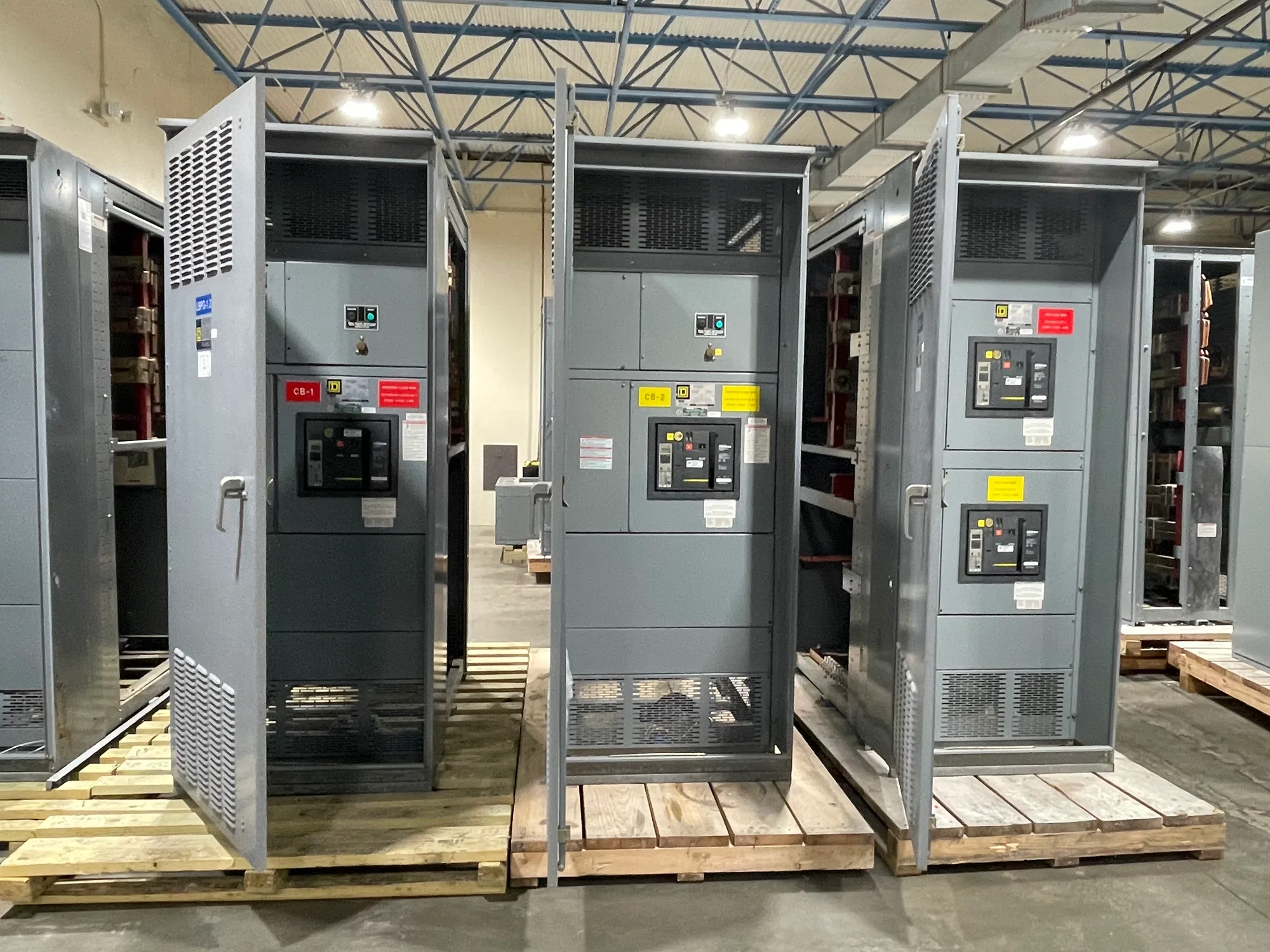
Understand the 347/600 V Grounded-Wye System
In a grounded-wye system, 600 V is the nominal line-to-line voltage, while 347 V is the nominal line-to-neutral voltage. The relationship matters because connected loads may use one voltage or the other, and equipment must be applied to the actual system configuration. A 347/600 V label alone does not establish that every circuit, bus, breaker, or accessory is suitable for every connection. Document the source arrangement, grounding method, available conductors, and intended loads at the outset. Also distinguish nominal system voltage from the maximum voltage and other ratings stated for individual components. These details help the design team assess insulation, switching, protection, and coordination requirements without treating a familiar system designation as a complete equipment specification. Have qualified electrical professionals determine applicable codes, protection, and ratings for the installation.
Verify Ratings for the Assembly and Each Device
For a proposed lineup, confirm the rated voltage of the complete assembly and of each included device rather than relying on a catalog category or the system name. Review the switchgear or switchboard nameplate data, bus rating, interrupting ratings, breaker voltage ratings, and ratings for metering, control power, and other components as applicable. The selected equipment must be evaluated against system voltage, fault conditions, load, and the intended operating arrangement. A device suitable for one voltage or application may not be interchangeable with another, even when the equipment appears physically compatible. Ask for the relevant ratings and configuration to be stated in the proposal and reconciled with the project documents. Where a design includes unusual source, tie, transfer, or grounding conditions, identify them early so the proposed arrangement can be reviewed for suitability.
| System | Voltage, phase, current and available fault current |
|---|---|
| Configuration | Lineup, protection, controls and enclosure as specified |
| Compliance | Applicable standards and listing confirmed for the assembly |
| Delivery | California and nationwide; schedule confirmed by quote |
Coordinate Loads, Protection, and Distribution
A 347/600 V distribution plan can serve different combinations of line-to-line and line-to-neutral loads, so the one-line diagram should show how each feeder and branch circuit is intended to connect. Check load demand, diversity assumptions, continuous loading where relevant, conductor and bus sizing, and the anticipated balance across phases. Protection decisions depend on more than nominal voltage: available fault current, upstream devices, downstream equipment, and coordination objectives all affect breaker selection and settings. Document service and feeder conditions, grounding and bonding requirements, and any metering or monitoring needs. This creates a clearer basis for evaluating the assembly and helps reveal mismatches between drawings, device schedules, and procurement documents. Qualified professionals should establish protection and coordination requirements for the specific installation; a general system label cannot substitute for that engineering review.
Treat Market Availability as Project-Specific
Equipment suitable for a 347/600 V project depends on the requested lineup, component ratings, construction details, and current supply conditions. Requirements that narrow the design—such as specific breaker types, unusual bus arrangements, instrumentation, enclosure constraints, or interface provisions—can affect what can be offered and how the design should be developed. Availability should therefore be confirmed against the project’s actual documents rather than assumed from the voltage designation alone. Provide the one-line diagram, load and fault information, device schedule, enclosure and environmental requirements, and applicable project standards when requesting a review. If the project is schedule-sensitive, identify the required dates and any acceptable design alternatives; expedited possibilities can be considered only after project review and are not guaranteed. Confirm scope, exclusions, and schedule assumptions in writing before placing an order.
Prepare a Clear RFQ and Close Open Questions
A useful request for quotation identifies the nominal system voltage and grounded-wye arrangement, but also states the required assembly function, main and feeder devices, bus details, fault-duty information, metering, enclosure conditions, and relevant drawings or specifications. Flag any requirements that remain preliminary so they can be resolved rather than silently treated as established. Ask the manufacturer to identify the proposed assembly rating and the rated voltage of each proposed protective device, with exceptions or substitutions clearly noted. For medium- or high-voltage equipment, identify the standards applicable to that specific equipment and verify them for the project; standards compliance does not by itself establish a third-party listing. During submittal review, compare the equipment schedule, one-line, and proposal line by line, then resolve discrepancies before release. This disciplined process supports a better-informed selection and smoother coordination with contractors and engineers.