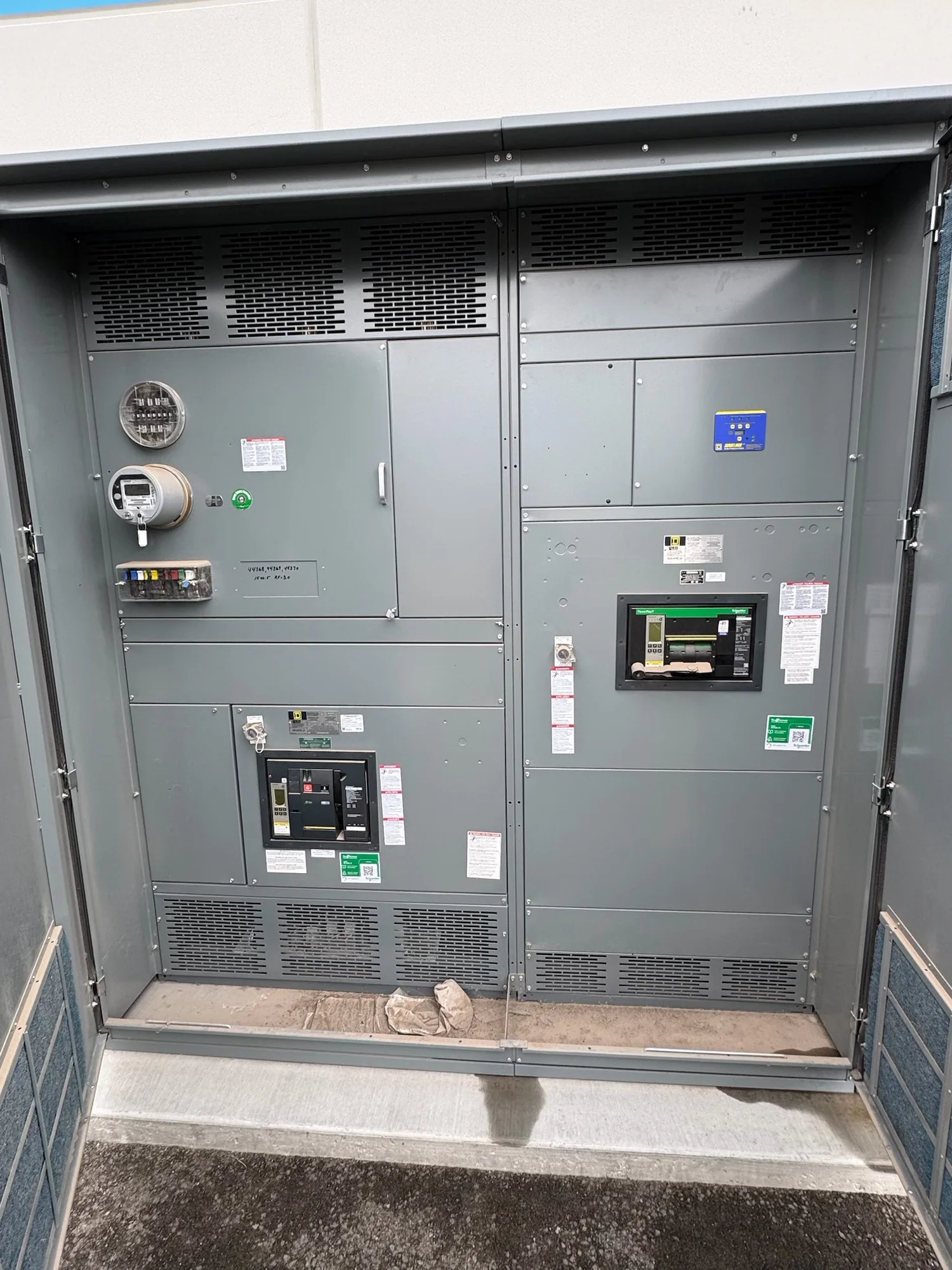
Read the 277/480 V grounded-wye system correctly
In a typical 277/480 V grounded-wye system, 480 V is measured phase to phase, while 277 V is measured from any phase to the grounded neutral. This relationship supports both three-phase 480 V equipment and line-to-neutral 277 V loads from the same distribution system. The voltage label alone, however, does not establish the grounding method, neutral arrangement, available fault current, or suitability for a particular installation. Confirm those details against the one-line diagram, service information, and project electrical design. Specify the nominal system voltage and frequency, number of phases and wires, grounding configuration, and any required neutral treatment. Where an existing system is being extended, verify field conditions rather than relying solely on legacy drawings. These inputs help the equipment builder define a configuration for review and reduce the risk of mismatched connections or assumptions during procurement and installation.
Separate 277 V lighting from 480 V three-phase loads
The grounded-wye arrangement can serve 277 V lighting circuits connected phase to neutral and 480 V three-phase loads connected phase to phase. Those uses have different circuit and equipment requirements, so identify them separately in the load schedule. For lighting, document the circuit voltage, connected load, switching or control approach, and neutral requirements. For three-phase loads, provide voltage, phase, horsepower or other applicable load data, starting characteristics, and operating duty where known. Include significant nonlinear loads, electronic drivers, variable-frequency drives, and equipment with unusual inrush so their effects can be evaluated. Do not assume that a device marked for 480 V three-phase is suitable for a 277 V line-to-neutral circuit, or that a 277 V load can be connected phase to phase. A clear circuit schedule lets the design team check phase balance, feeder sizing, neutral loading, and protective-device coordination in context.
| System | Voltage, phase, current and available fault current |
|---|---|
| Configuration | Lineup, protection, controls and enclosure as specified |
| Compliance | Applicable standards and listing confirmed for the assembly |
| Delivery | California and nationwide; schedule confirmed by quote |
Verify the rating of every assembly and device
Treat the system voltage, assembly rating, and individual device ratings as related but separate checks. The proposed switchgear or distribution assembly must be identified for the system it will serve, while breakers, switches, meters, instrument transformers, control power components, and connected accessories each have their own applicable voltage and application limits. Confirm the rated voltage shown for the complete assembly and verify each specified device against its intended circuit, including phase-to-phase or phase-to-neutral use. Also review interrupting or short-circuit ratings, continuous-current requirements, frequency, and any other ratings that affect the application; voltage agreement alone is not a complete selection. If a schedule uses shorthand such as “277/480,” clarify whether it describes the system or a particular device. Qualified electrical professionals should establish protection and code requirements, and the final submittal should make the proposed ratings explicit for engineering review before release.
Coordinate protection, grounding, and distribution details
Protection and grounding decisions depend on more than nominal voltage. Provide the available fault-current information at the equipment location, upstream protective-device data, grounding details, and the intended selective-coordination or arc-energy objectives where applicable. The engineer can use these inputs to evaluate protective-device selection, interrupting capability, settings, and coordination with downstream panels and loads. Document whether a neutral is required throughout the distribution path, how neutral and equipment-grounding conductors are handled, and whether any loads are sensitive to voltage quality or interruption. Review feeder quantities, bus and conductor requirements, enclosure conditions, environmental exposure, and space or access constraints with the project team. Applicable codes and standards depend on equipment type and jurisdiction; identify the specific requirements for the proposed equipment and installation. For applicable low-voltage switchboards, UL 891 is a standard to address in project requirements, but a standards reference does not itself establish a third-party listing.
Prepare a complete specification for review
A useful request for quotation or design review includes the one-line diagram, load schedule, service and grounding information, fault-current data, upstream protection, and the ratings required for the assembly and its devices. Identify whether the work is new distribution or an addition to an existing system, and state constraints such as available footprint, cable entry, metering, control interfaces, and operating environment. Mark open items rather than leaving the builder to infer them; unresolved inputs can affect layout, component selection, coordination, and schedule. Switchgear Builder California manufactures and builds new equipment in the USA with American components for customers in California and nationwide. Share the project requirements and target milestones for review, including any schedule-sensitive needs. Expedited possibilities, if appropriate, depend on project scope and review and are not guaranteed. Before procurement and installation, have qualified professionals verify the final design, ratings, protection, and applicable codes.