Start With the Manufacturer’s Storage Instructions
Before arranging storage, review the documentation supplied for the specific switchgear and confirm requirements with the manufacturer. Storage conditions can vary with equipment design, materials, accessories, shipping configuration, and the intended installation environment. Check instructions for temperature and humidity limits, allowable storage duration, heater or desiccant requirements, inspection intervals, and whether any temporary shipping materials should remain in place. Do not assume that guidance for one lineup or component applies to another. Record delivery condition and note any visible damage, missing parts, moisture indicators, or disturbed packaging as soon as the equipment arrives. If instructions are unclear or storage will extend beyond the stated period, request direction before changing the enclosure or energizing auxiliary devices. Keep the documentation accessible to the responsible storage and installation teams. A documented plan based on the actual equipment helps prevent well-intentioned steps—such as opening doors for ventilation—from creating new exposure or affecting warranties.
Choose a Dry, Controlled Storage Area
Use a secure, clean indoor location protected from rain, snow, standing water, construction washdown, and condensation. The storage surface should be level, stable, and capable of supporting the equipment’s weight without creating a risk of tipping or distortion. Avoid areas near exterior doors, plumbing, roof leaks, open windows, or operations that generate dust, corrosive fumes, or conductive debris. Temperature changes matter because warm, humid air contacting cooler metal can cause condensation inside an enclosure, even when water does not enter directly. Where environmental control is available, maintain conditions within the manufacturer’s stated limits and consider monitoring temperature and relative humidity. If the site cannot provide a suitable indoor space, do not improvise an outdoor arrangement without written guidance on approved protection and inspection. Keep switchgear separated from damp materials and other work that could expose it to impact or contamination. Good housekeeping around the equipment is part of preserving it, not merely a convenience.
| System | Voltage, phase, current and available fault current |
|---|---|
| Configuration | Lineup, protection, controls and enclosure as specified |
| Compliance | Applicable standards and listing confirmed for the assembly |
| Delivery | California and nationwide; schedule confirmed by quote |
Handle and Position Equipment Carefully
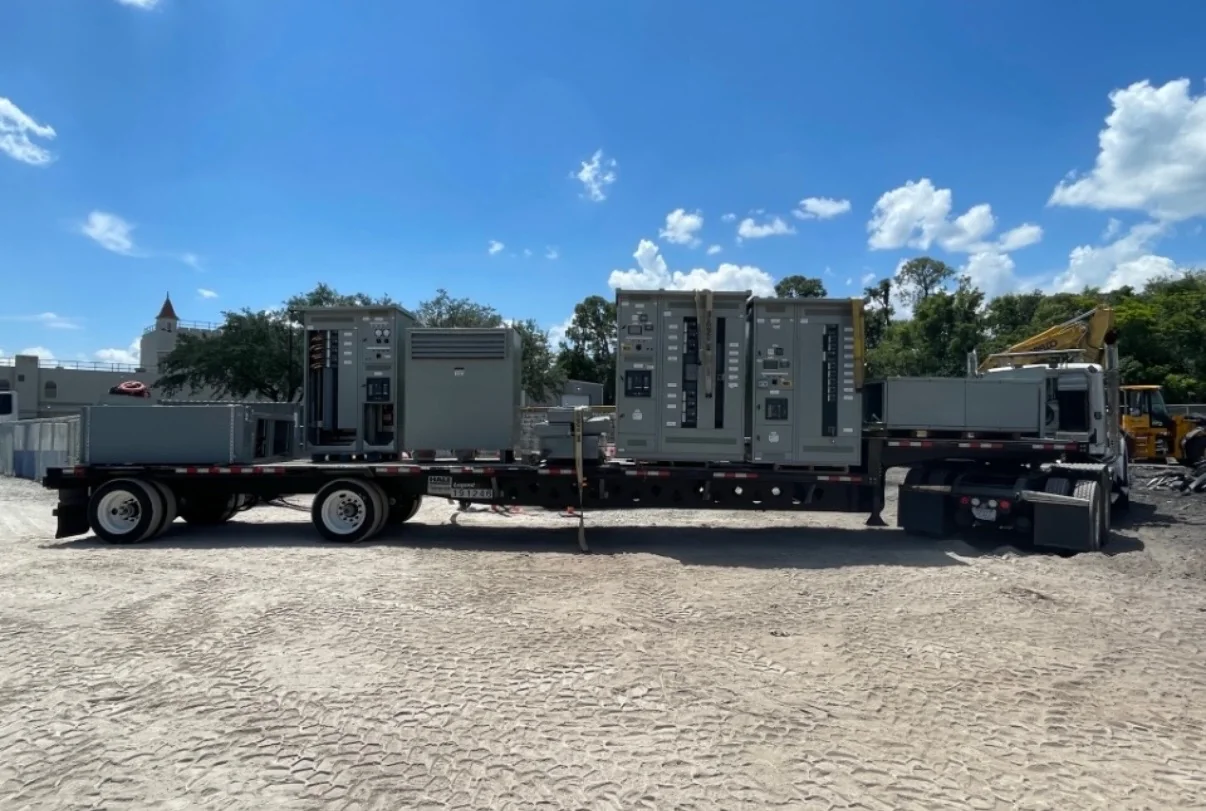
Follow the shipping markings, lifting points, and manufacturer’s handling directions for each section. Switchgear can be heavy and its center of gravity may not be obvious; qualified personnel should plan lifting and movement using equipment with adequate capacity and suitable rigging. Do not lift from bus supports, doors, handles, or other parts unless the instructions specifically identify them as lifting points. Keep sections upright when required, protect edges and projecting components, and avoid shock loads, dragging, or twisting the enclosure. Before moving equipment, review the route for floor capacity, overhead clearance, turns, obstructions, and changes in elevation. Secure sections against shifting during transport within the building, and preserve any braces or restraints until the manufacturer’s directions permit removal. If a crate or enclosure is damaged, or the equipment has been dropped or struck, stop and obtain qualified inspection rather than assuming the interior is unaffected. Careful movement reduces the chance that hidden mechanical or alignment issues will complicate installation.
Use Protective Coverings Without Trapping Moisture
Retain the original packaging when it remains intact and the manufacturer recommends keeping it in place. For added protection, use coverings suited to the storage environment, but avoid wrapping equipment so tightly that trapped moisture cannot escape or condensation goes unnoticed. A plastic sheet alone is not a substitute for a dry room, and covering damp equipment can worsen corrosion or damage insulation. Keep coverings clear of vents, heaters, warning labels, and any components that require airflow or periodic access. Protect exposed openings from dust and debris using approved caps or barriers; do not insert materials into the assembly or block passages without direction. Keep liquids, cleaning agents, and construction materials away from the enclosure. If temporary protection must be removed for inspection, replace it promptly and verify that it is secure without loading doors, controls, or projecting parts. The right covering depends on the manufacturer’s instructions and actual conditions, so confirm the approach when storage is prolonged or the environment is less controlled.
Inspect, Document, and Prepare for Installation
Assign responsibility for periodic checks and follow the inspection frequency and procedures in the manufacturer’s documentation. Look for roof or plumbing leaks, condensation, corrosion, dust accumulation, damaged packaging, loose restraints, pest activity, and signs that the equipment has shifted. Record observations, environmental readings where applicable, and any corrective action; photographs can help establish condition over time. Do not open compartments, remove protective materials, operate heaters, or perform electrical tests unless the instructions authorize the action and qualified personnel are responsible. Before installation, compare delivered sections and accessories with project documents, inspect for transport or storage damage, and confirm that installation conditions are ready. Any signs of moisture, contamination, impact, or deterioration warrant review by the manufacturer and qualified electrical professionals before proceeding. They can determine appropriate inspection, cleaning, testing, and repair steps for the specific assembly. Coordinating storage checks with the installation schedule helps identify issues early, protect equipment condition, and avoid preventable disruption when the site is ready.