Start with the contract documents and review path
Before assembling drawings, establish what the contract documents require and who must review each item. Check the project specifications, one-line diagram, equipment schedules, scope notes and applicable addenda together; requirements may be distributed across several documents or revised at different stages. Identify the engineer of record, contractor, owner, utility and other parties whose comments or approvals affect the package. Confirm the required submission format, file naming, revision conventions, due date and whether review is sequential or concurrent. A simple contents page can map each requirement to its drawing, schedule or supporting document and show where open questions remain. This makes omissions easier to catch before submission. Record the basis of design and flag any discrepancy between specifications and drawings rather than quietly choosing one interpretation. Early clarification helps avoid redesign, conflicting markups and delays in releasing approved information for production.
Build drawings around the project configuration
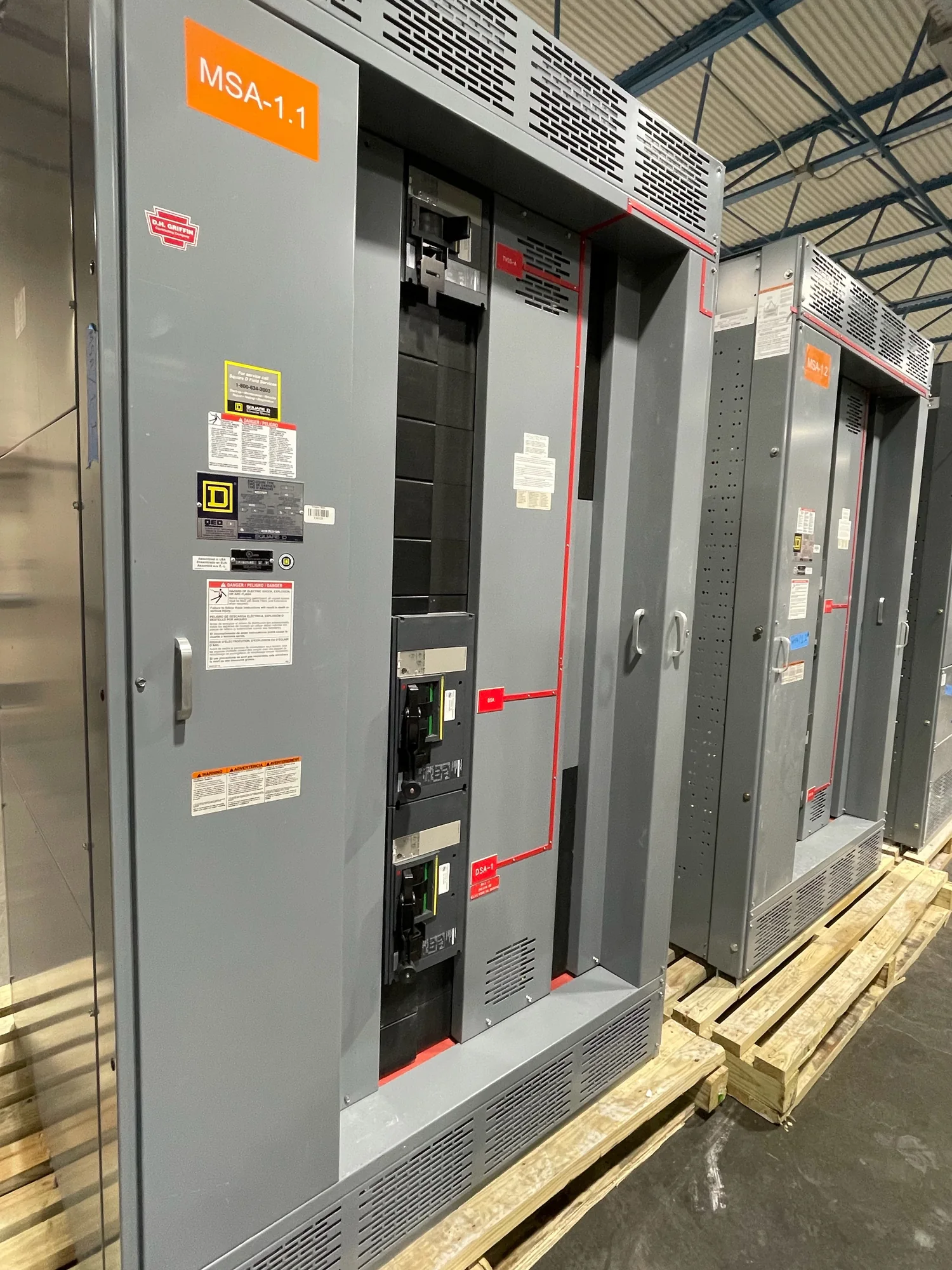
The drawing set should let reviewers understand the proposed lineup and how it fits the electrical system and physical space. Include the project-specific one-line representation and identify equipment sections, incoming and outgoing circuits, bus arrangements, metering and protective devices as required by the design. Provide plan, elevation and relevant section views with dimensions, access clearances, cable entry locations, anchorage details and connection information where specified. Show interfaces with adjacent equipment and indicate whether connections are top or bottom entry when that affects installation. Coordinate the drawings with room layouts, conduit plans and architectural constraints; a lineup that works electrically may still conflict with doors, walls, overhead services or maintenance access. Distinguish confirmed dimensions from items awaiting field verification. Use consistent equipment tags and circuit identifiers across every sheet. When a project has unusual site constraints, include a clear note or detail that directs reviewers to the issue instead of expecting them to infer it from a general arrangement.
| System | Voltage, phase, current and available fault current |
|---|---|
| Configuration | Lineup, protection, controls and enclosure as specified |
| Compliance | Applicable standards and listing confirmed for the assembly |
| Delivery | California and nationwide; schedule confirmed by quote |
Make device schedules and ratings traceable
A device schedule should connect each breaker, switch, fuse, meter or relay to its circuit designation and intended function. Include the information the project requires for review, such as device type, frame or sensor details, trip settings where established, accessory provisions and control voltage. Coordinate those entries with the one-line, equipment schedule and protection study; mismatched identifiers or settings create avoidable review questions. Present voltage, frequency, continuous current, interrupting or withstand requirements, bus ratings and short-circuit information as project design inputs to be confirmed against the system study and governing specifications. Do not treat a single rating as a substitute for checking the assembly and system conditions together. Qualified professionals must determine protection, ratings and applicable codes for each project. Identify assumptions, coordination responsibilities and any values pending confirmation. A concise schedule with consistent units and clear status notes is more useful than a dense table that obscures which values are specified, calculated or still under review.
Include supporting documents without creating conflicts
Supporting materials can clarify the design, but they should reinforce rather than contradict the drawings. Gather the relevant product data, control schematics, wiring diagrams, nameplate information, finish or environmental details, and installation or operation documents required by the specification and review stage. Include only information applicable to the proposed configuration, and mark representative or preliminary documents so they are not mistaken for project-approved details. Check that document revisions, device designations and stated ratings agree with the drawing set. For applicable low-voltage switchboards, identify any project requirement concerning UL 891 and address it specifically; that standard does not apply to every medium- or high-voltage equipment type. For medium- or high-voltage equipment, identify and verify the standards applicable to that specific equipment rather than carrying over assumptions from a low-voltage package. A standards reference is not itself evidence of a third-party listing or certification. Route any uncertain compliance question to the responsible project professionals before approval.
Control revisions and close review comments
Submit one coordinated package with a revision date, revision identifier and concise description of changes. Keep a comment log that records each reviewer’s note, the responsible party, disposition and drawing or document affected. Separate comments accepted as shown from items requiring clarification, design change or a formal deviation request. If a response changes device selection, rating, layout or interface, update every affected schedule and drawing before resubmission; revising only the marked sheet can leave the package internally inconsistent. Distribute the same current revision to all parties and clearly supersede prior versions. Before release, verify that required signatures or review stamps are present where the project process calls for them, and resolve open items that could affect manufacture, installation or safety. If schedule-sensitive handling is important, communicate the required decision dates and dependencies early; options depend on project review and cannot be assumed. A complete, traceable package supports efficient approval and gives the project team a reliable basis for its next steps.