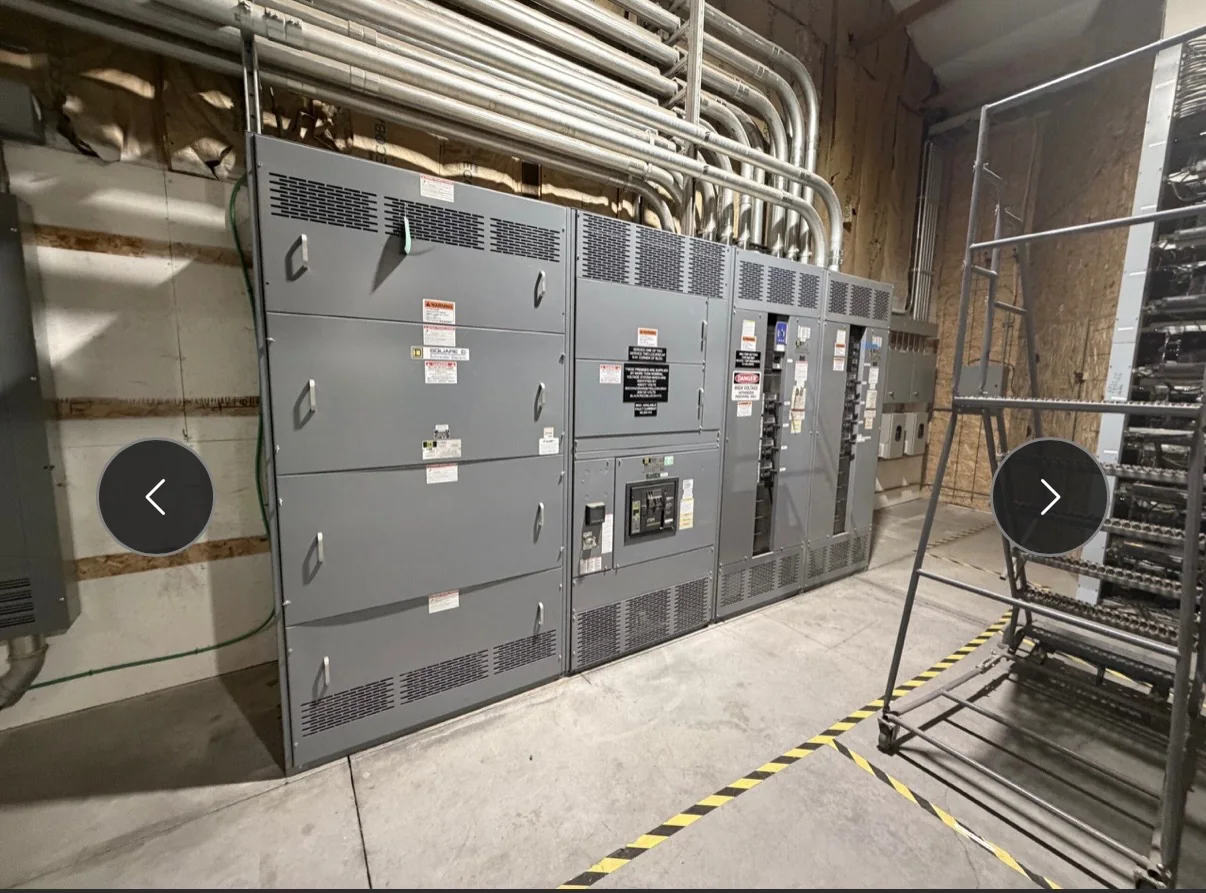
Start with the Electrical System Basis
Begin with the project’s electrical one-line diagram and design criteria, then record the system information that governs equipment selection. Identify nominal voltage, phase, frequency, grounding arrangement and the available source configuration. Distinguish utility service from generator, transformer or alternate sources, and show whether sources operate separately or in parallel. Note the design’s stated short-circuit conditions and the point at which they apply; do not substitute a general assumption for a value established by the project’s electrical study. The schedule should identify what is known, what remains under review and who is responsible for confirming each item. This prevents preliminary data from being mistaken for a final design basis. For medium- or high-voltage equipment, identify the standards and code requirements applicable to that specific equipment and project. Qualified professionals must determine protection, ratings and applicable codes. A manufacturer can review the defined inputs, but the schedule should not imply that a listed voltage alone establishes suitability.
Separate Equipment Types and Functional Sections
Give each lineup, switchboard, switchgear assembly, distribution panel or other scheduled item a consistent tag that matches the one-line diagram, plans and specifications. Describe the equipment type and its function rather than using a vague label such as “electrical gear.” Where a lineup contains multiple sections, identify section numbers and indicate which devices or functions belong in each one. Record whether an item is service entrance, main distribution, transfer, tie, feeder distribution or another defined role, as applicable to the design. Keep distinct assemblies as separate schedule entries even when they share a room or source; this makes responsibility, quantities and interfaces easier to review. Describe indoor or outdoor placement only when established by the project documents, and flag environmental or enclosure requirements for confirmation when incomplete. For low-voltage switchboards, note whether UL 891 is an applicable project requirement for that equipment. Do not treat a standards reference as proof of a third-party listing or approval; document the requirement and verify the applicable evidence during procurement review.
| System | Voltage, phase, current and available fault current |
|---|---|
| Configuration | Lineup, protection, controls and enclosure as specified |
| Compliance | Applicable standards and listing confirmed for the assembly |
| Delivery | California and nationwide; schedule confirmed by quote |
Build a Consistent Voltage and Current Record
For every scheduled assembly, provide the system voltage and the current values relevant to its role. Depending on the equipment and design, these may include main bus rating, main device rating, feeder device ratings and continuous-load information. Keep bus and overcurrent-device values in separate fields: they describe different parts of the design and should not be collapsed into a single number. State units and identify whether a value is nominal, calculated, specified or still to be confirmed. Include short-circuit or interrupting-duty requirements only where the responsible design documentation establishes them, and identify the reference study or drawing when useful. Check that the schedule agrees with the one-line, protective-device coordination work and equipment specifications. If documents conflict, mark the discrepancy for resolution rather than choosing a value silently. Voltage class, current capacity, fault duty and enclosure details all affect the design and should be reviewed as a coordinated set. A clear schedule helps the manufacturer assess the defined requirements without presenting preliminary values as guaranteed equipment capabilities.
Count Feeders and Describe Their Loads
List each feeder by a stable identifier that can be traced to the one-line diagram, panel schedule or load list. Record the destination, quantity, device or disconnect information required by the design, and the feeder’s intended load. Useful load descriptions identify function—such as a motor control center, transformer, HVAC equipment or downstream distribution—rather than relying on a room name alone. Include load data and demand assumptions when available, with units and a reference to the calculation or schedule that supports them. Note spare and space requirements separately: a spare device, an unused provision and an empty section are not interchangeable. Where the design has not settled feeder counts, ratings, trip functions or future provisions, identify those items as open decisions with an owner and target review point. Check that feeder totals and destinations reconcile with the project documents. This disciplined cross-check helps expose omissions, duplicated loads and mismatched device counts before they become procurement or installation questions.
Make the Schedule Reviewable and Ready to Share
Use one row per assembly or clearly defined section, with consistent columns for tag, equipment type, source, voltage, phases, bus and main ratings, feeder count, load destinations, location and document references. Add a revision date, schedule status and project identifier so reviewers can distinguish current information from earlier drafts. Mark each entry as confirmed, preliminary or unresolved; avoid burying qualifications in a general note that may be separated from the relevant row. Before issuing the schedule, compare tags and quantities against the one-line, floor plans, load schedules and specifications, and route technical questions to the responsible engineer. Share the schedule alongside the drawings and criteria needed to interpret it, then request review of assumptions, interfaces and open items. If a project is schedule-sensitive, communicate the required decision dates and ask whether an expedited option may be considered; timing is subject to project review and confirmation. Complete, consistent inputs make equipment review more efficient while leaving final design decisions with qualified project professionals.