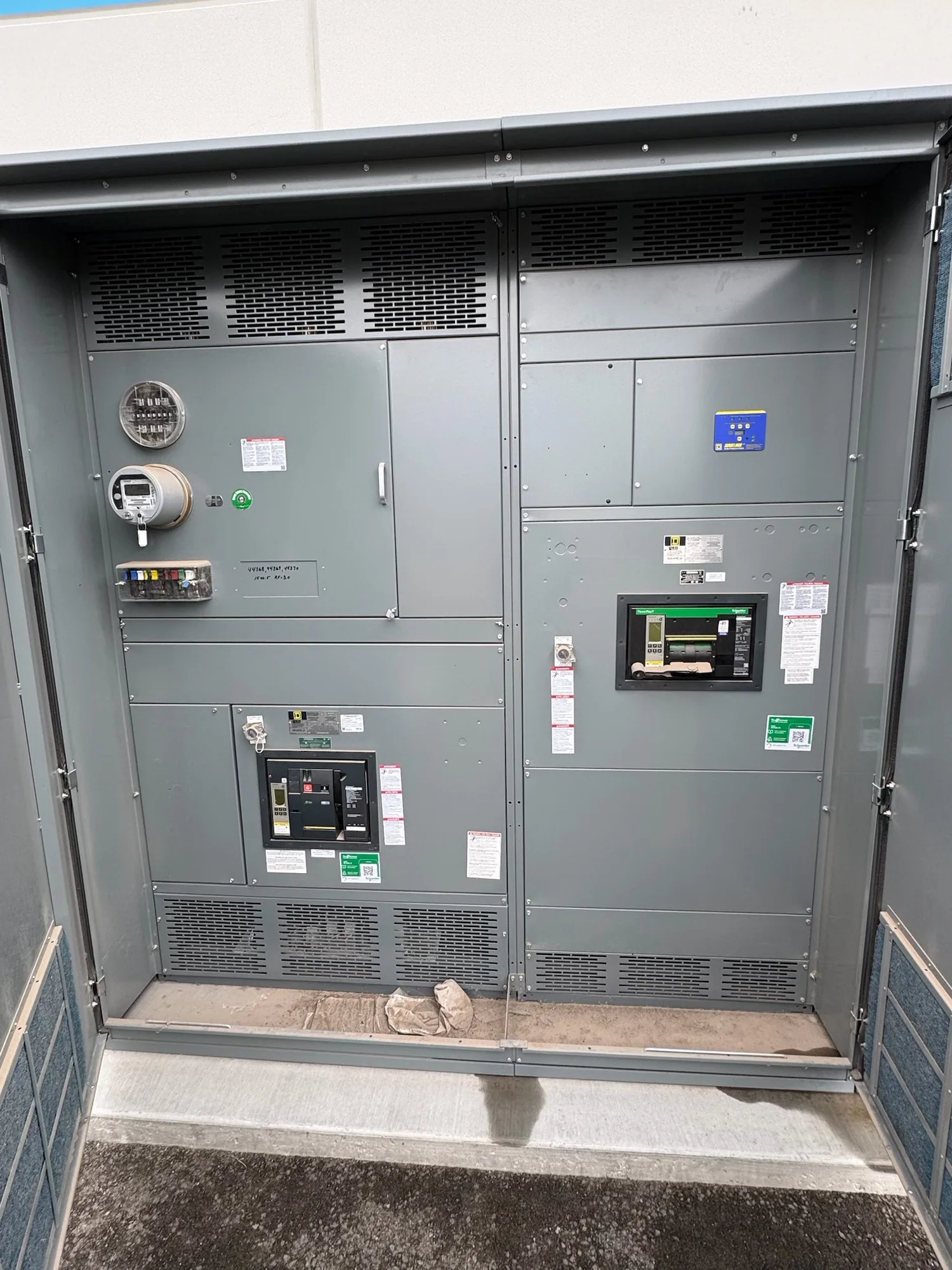
Start With Safe Access and a Clear Record
Nameplate information is useful only when it can be gathered without exposing people to electrical hazards. Have a qualified professional determine whether the equipment can be safely accessed, whether covers may be opened, and what site procedures apply. Do not remove barriers, reach into energized compartments, or rely on a photograph taken from an unsafe position. If a label is obscured or inaccessible, note that limitation and arrange an appropriate inspection rather than guessing. Before recording details, create a simple equipment log with the date, building or site, switchgear lineup, and the specific section or cubicle associated with the label. Photograph the full exterior and each legible nameplate, keeping the images sharp and square to the plate when practical. Include a wider view that connects the label to the equipment. Preserve original images and make a separate transcription; this makes it easier to resolve a character that is blurred or partly hidden later.
Capture Manufacturer, Model, and Serial Number
Transcribe the manufacturer name exactly as printed, including punctuation or a division name if shown. Record the model, catalog, type, or assembly designation without shortening it. These identifiers can help distinguish equipment families and construction details, but one number rarely establishes that a replacement is interchangeable. Include the serial number exactly, preserving leading zeros, letters, hyphens, and suffixes. If a character could be either a zero or the letter O, mark it as uncertain and attach the photograph instead of silently choosing one. Look for additional identification on doors, internal compartments, drawings, or labels associated with individual sections. Record where each identifier appears, since a lineup may contain multiple devices and labels. If the main plate is missing, damaged, or inconsistent with a component label, document the discrepancy. Do not assume a nearby breaker or relay plate identifies the complete switchgear assembly. A manufacturer can use the equipment’s identifiers as a starting point for review, while engineering confirmation may still require drawings, dimensions, and project-specific operating information.
| System | Voltage, phase, current and available fault current |
|---|---|
| Configuration | Lineup, protection, controls and enclosure as specified |
| Compliance | Applicable standards and listing confirmed for the assembly |
| Delivery | California and nationwide; schedule confirmed by quote |
Record Ratings Exactly as Labeled
Copy each visible electrical rating with its unit and context. Depending on the equipment, the plate may state voltage, phases, frequency, continuous current, short-circuit or withstand values, interrupting ratings, and other characteristics. Record the wording as printed rather than translating it into a different rating category. For example, an interrupting rating associated with a device is not automatically the same as an assembly short-circuit rating. Preserve any stated conditions, such as a time duration or a value tied to a particular configuration. Note the equipment type and any environmental or enclosure designation shown, but do not treat a partial transcription as a complete design specification. A nameplate may not capture the present system conditions, later modifications, or all coordination requirements. Qualified professionals must determine the protection, ratings, and applicable codes for the project. For medium- or high-voltage equipment, identify and verify the standards applicable to that specific equipment; standards and evaluation requirements depend on equipment type and use. Flag missing values rather than estimating them from appearance or adjacent gear.
Add Lineup and Site Context
A replacement inquiry needs more than a plate transcription. Explain what the equipment serves, its location in the electrical system, and whether the request concerns a complete lineup, a section, or a particular function. Describe incoming and outgoing arrangements, feeder count, bus configuration, and any known connection or cable-entry constraints. Where available, attach one-line diagrams, elevations, control schematics, and prior equipment schedules. Identify drawing revisions and dates so reviewers can distinguish current documents from older records. Record practical installation information as well: approximate dimensions, access and handling limitations, room clearances, conduit or cable locations, and whether the existing gear must remain operational during replacement work. Note known changes since installation, such as breaker substitutions, added sections, or revised loads, and identify which details are verified versus reported. These observations help frame the engineering discussion, but they do not establish suitability. A replacement design must be evaluated against the actual system, interface requirements, site conditions, and applicable safety practices.
Prepare a Useful Replacement Inquiry
Organize the inquiry so the manufacturer can quickly understand what is known and what still needs confirmation. Include the equipment log, clear nameplate photographs, transcribed identifiers and ratings, available drawings, site context, and a contact who can answer technical questions. State the project location, desired scope, decision stage, and any schedule constraints. If timing is critical, explain the required milestones; schedule-sensitive or expedited options can be considered only after project scope, engineering needs, and feasibility are reviewed. Before sending, compare the transcription against the images and make uncertainties explicit. Avoid filling gaps with assumed values or describing a component rating as an assembly rating. Ask which additional records, measurements, or site observations would help evaluate a new-equipment solution. Switchgear Builder California supplies new switchgear built in the USA with American components; project requirements and equipment details are reviewed to determine an appropriate path forward. California customers and projects elsewhere in the United States can inquire about equipment and shipping needs, with arrangements subject to project review. A complete, candid information package helps make that first discussion more productive.