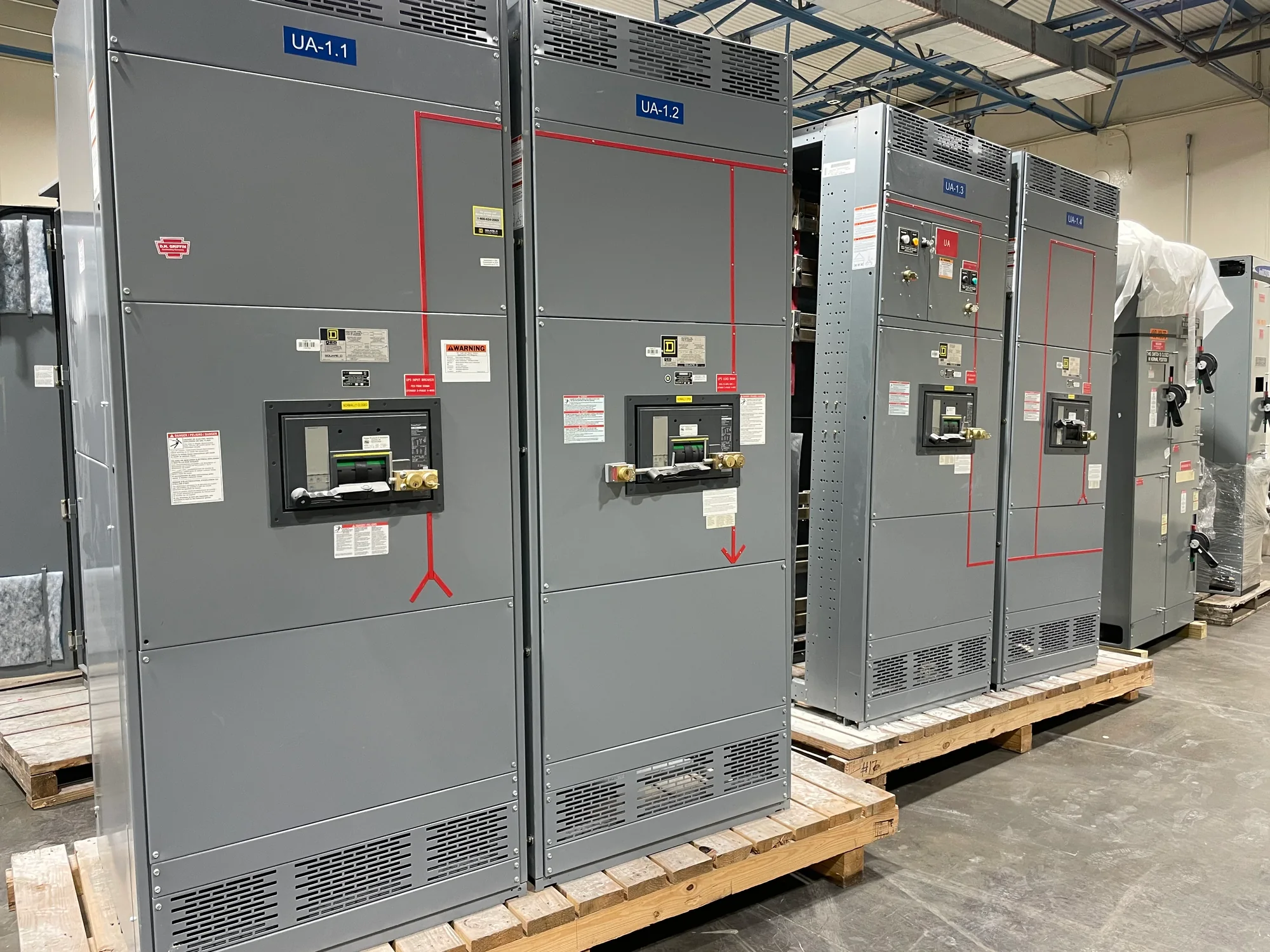
Start with the condition and the consequence of failure
An evaluation should begin with verified field conditions, not an assumption that aging equipment automatically needs replacement—or that a recent repair makes it dependable. Document the equipment type, manufacturer and model where available, nameplate data, one-line diagram, operating history, inspection findings, maintenance records, and any known faults or component obsolescence. Qualified professionals should assess condition and determine applicable safety, protection, and code requirements. Consider what loss of the equipment would mean: which loads would be interrupted, whether redundancy exists, and how long operations could tolerate an outage. A repair may be reasonable when a discrete, understood defect can be corrected and the remaining assembly is serviceable. Repeated failures, widespread deterioration, unavailable parts, or uncertain condition can change that calculus. Record uncertainties explicitly; they can drive investigation or contingency planning. The goal is to establish a defensible baseline for comparing options, rather than choosing a scope based on age or a single symptom.
Test repair against the full operating need
Repair typically addresses a specific failure or wear item while retaining most of the existing assembly. It can limit immediate scope, but its value depends on whether the cause is understood, compatible replacement parts can be identified, and the rest of the equipment remains suitable for service. Confirm component dimensions, ratings, control interfaces, connection details, and manufacturer information before treating a substitute as interchangeable. A repair does not necessarily resolve obsolete protection, limited maintainability, or a broader reliability concern. Compare its expected service contribution with the likelihood and consequence of another outage, and account for inspection, testing, and recommissioning appropriate to the work. Ask what evidence will demonstrate the repair is complete and what follow-up maintenance is needed. If diagnostics reveal damage beyond the original fault, the work may grow or cease to be practical. Define decision points in advance so the project team can reassess when inspection uncovers conditions not visible during initial planning.
| System | Voltage, phase, current and available fault current |
|---|---|
| Configuration | Lineup, protection, controls and enclosure as specified |
| Compliance | Applicable standards and listing confirmed for the assembly |
| Delivery | California and nationwide; schedule confirmed by quote |
Evaluate retrofit compatibility beyond the component
A retrofit or modernization can update selected elements while retaining some existing gear, potentially reducing the extent of replacement. Its feasibility is an engineering question: assess mechanical fit, bus and termination interfaces, insulation and clearances, control wiring, protection functions, and interaction with upstream and downstream equipment. Confirm fault-duty and continuous-current requirements against the actual system study and nameplate information; do not assume a new device is suitable simply because it fits physically. Review how the modified assembly will be isolated, tested, labeled, and maintained, and whether technicians can access parts and drawings in the future. Existing enclosure condition and undocumented field changes may constrain the work. Retrofit scope can also shift risk to the interfaces between new and retained components, so define responsibility for design review and commissioning. For the customer's own equipment, modernization should be scoped around its verified configuration and operating requirements. When compatibility or condition cannot be established confidently, compare the cost and risk of further investigation with a new-equipment alternative.
Compare replacement by life-cycle value, not first cost alone
Replacement offers an opportunity to specify new equipment around current project requirements, but it brings design, procurement, installation, and integration work. Compare options over an appropriate planning horizon, including initial engineering and equipment costs, outage and temporary-service costs, maintenance labor, parts availability, testing, and the consequence of failure. Account for the value of retaining familiar equipment and procedures as well as the risks of keeping an aging assembly in service. New switchgear must be selected to match system voltage, current, interrupting and withstand duties, enclosure and environmental conditions, metering, controls, and coordination needs; qualified professionals determine ratings and protection for the application. For low-voltage switchboards where applicable, UL 891 may be a relevant standard; for medium- or high-voltage equipment, identify and verify standards applicable to that specific equipment. A standard reference is not proof of third-party listing. Evaluate documentation, interfaces, and future maintainability alongside cost, and compare like-for-like scopes rather than headline prices.
Build the decision around outage and execution constraints
Downtime can outweigh differences in equipment cost, so map the work sequence before selecting a path. Identify loads that can be transferred, isolation boundaries, access limitations, required shutdown windows, temporary power needs, and the testing required before energization. Replacement may require more extensive demolition, new connections, or coordination with building systems; a repair or retrofit may reduce physical scope but still require a controlled outage and careful verification. Ask bidders or the equipment builder to identify assumptions, owner-furnished information, interface points, and schedule dependencies. Provide current one-lines, equipment photographs, dimensions, nameplate details, available studies, load information, and the preferred outage window. Schedule-sensitive or expedited approaches can be discussed after project review, but timing depends on engineering, scope, materials, and site readiness. A useful next step is a documented comparison showing technical fit, remaining risks, expected outage impact, life-cycle implications, and open questions. That record supports an informed choice and gives the project team a basis for refining scope.