What short-circuit current rating means
Short-circuit current rating (SCCR) is the stated ability of an electrical assembly to withstand a specified short-circuit condition under defined circumstances. It describes a withstand limit, not the amount of current the assembly normally carries and not a prediction that a fault will occur. A short circuit can produce exceptionally high current for a brief period, imposing thermal and mechanical stress on conductors, bus, supports, joints, and connected equipment. The rating helps engineers assess whether an assembly is suitable for its intended point in the electrical system. It must be read with the applicable voltage, duration or protective-device conditions, and the assembly’s design documentation; a number without its context can be misleading. SCCR is also not a general guarantee that equipment will remain undamaged after a fault. The design objective is to coordinate equipment and protection so hazards and system consequences are appropriately managed.
SCCR and available fault current are different
Available fault current is the prospective current that the electrical system could deliver at a particular location during a fault, based on such factors as source characteristics, transformer impedance, conductor length and impedance, and system configuration. SCCR is the assembly’s rated withstand capability. The two values answer different questions: what the system may deliver, and what the equipment is rated to withstand. For a sound application, qualified professionals compare the available fault current at the installation point with the applicable assembly rating and evaluate the protective scheme and any permitted conditions. The calculation depends on the actual one-line, utility or source data, transformer information, conductor details, and operating arrangements. Changes such as a larger transformer, a different source, parallel conductors, or a revised tie arrangement can change fault current. A value from an earlier design should therefore be confirmed against the final configuration rather than assumed to remain valid.
| System | Voltage, phase, current and available fault current |
|---|---|
| Configuration | Lineup, protection, controls and enclosure as specified |
| Compliance | Applicable standards and listing confirmed for the assembly |
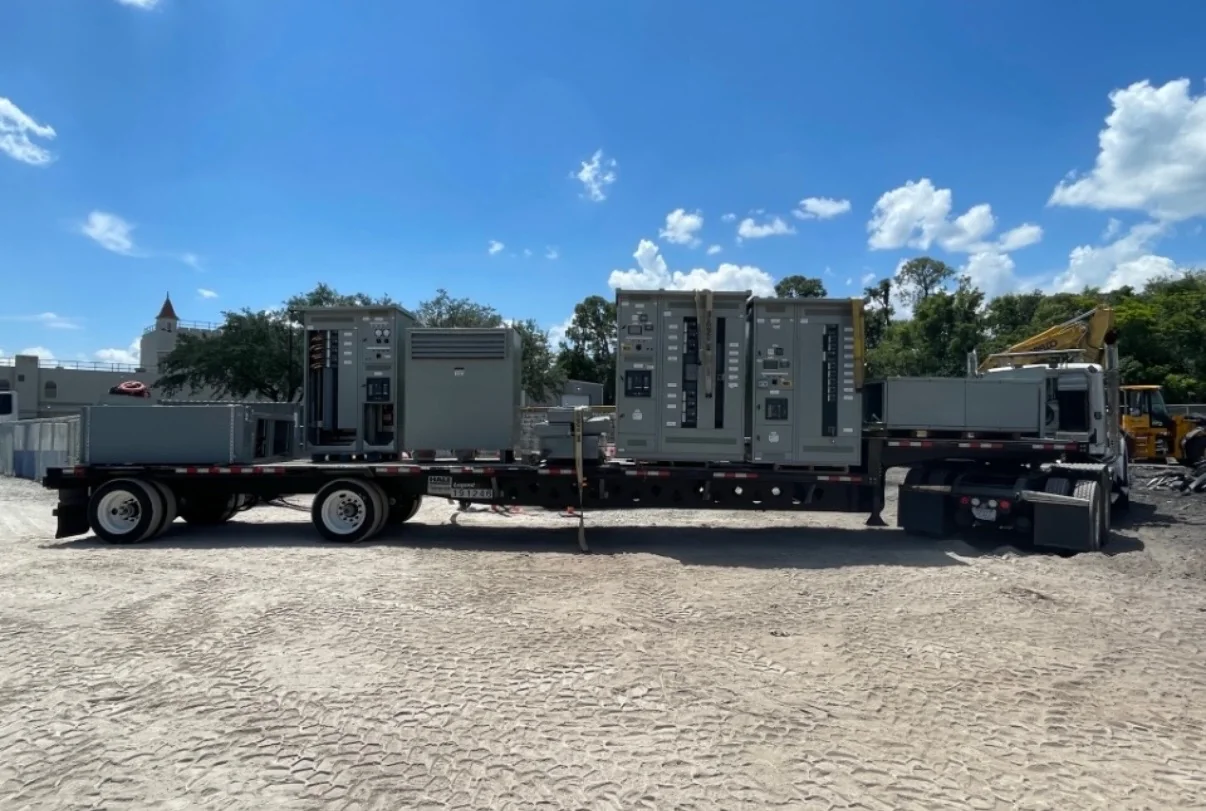
| Delivery | California and nationwide; schedule confirmed by quote |
How protective devices affect the evaluation
A fuse or circuit breaker can limit or interrupt fault current, but the presence of a protective device does not automatically make an assembly suitable for every fault level. The device’s interrupting rating, trip or clearing characteristics, let-through energy, placement, and coordination with downstream and upstream protection all matter. Some equipment ratings depend on a specifically evaluated combination of devices or conditions; substitutions may change that basis. Engineers should confirm the exact device types and ratings shown in the assembly documentation, along with any required upstream protection, rather than relying on a generic description such as current-limiting. Selective coordination may also be a project objective, but it must be evaluated alongside equipment protection and fault-clearing requirements. Protection settings and device selection are engineering decisions, not assumptions to make from the SCCR label alone. Qualified professionals should review the complete system and applicable codes to establish a safe, coordinated design.
What to verify in specifications and submittals
When specifying new switchgear or reviewing a submittal, identify the required voltage, system configuration, calculated available fault current at the equipment location, and the protective devices that define the intended application. Ask how the stated rating applies to the proposed assembly and whether any series combination, upstream device, or other limitation is part of its basis. Review the one-line diagram, equipment schedule, short-circuit study, and protection documentation together; mismatched assumptions can invalidate an otherwise plausible comparison. For low-voltage switchboards where applicable, UL 891 is a standard relevant to the switchboard, but referencing a standard does not by itself establish a third-party listing or demonstrate suitability for a particular fault level. Medium- and high-voltage equipment requires identification and verification of standards applicable to that specific equipment. Confirm revisions and project-specific requirements with the manufacturer and responsible engineer before release, especially when system data or protective devices have changed.
Why the rating needs project context
SCCR is useful only when tied to the installation it is meant to serve. The same assembly rating may be adequate at one point and insufficient at another because source strength and system impedance vary. Future utility changes, generator additions, transformer replacements, or operating configurations can increase available fault current, so project teams may need to consider expected changes as well as initial conditions. Conversely, a design change intended to reduce fault current must be analyzed and documented, not treated as a substitute for verifying the equipment and protection. Provide a manufacturer with the latest one-line, fault-current study or source data, voltage and grounding details, and specified protective-device information to support a focused review. Ask which assumptions and limitations govern the stated rating, then have qualified professionals determine protection, applicable codes, and final suitability. This coordination helps prevent late redesign and supports a safer, better-documented installation.