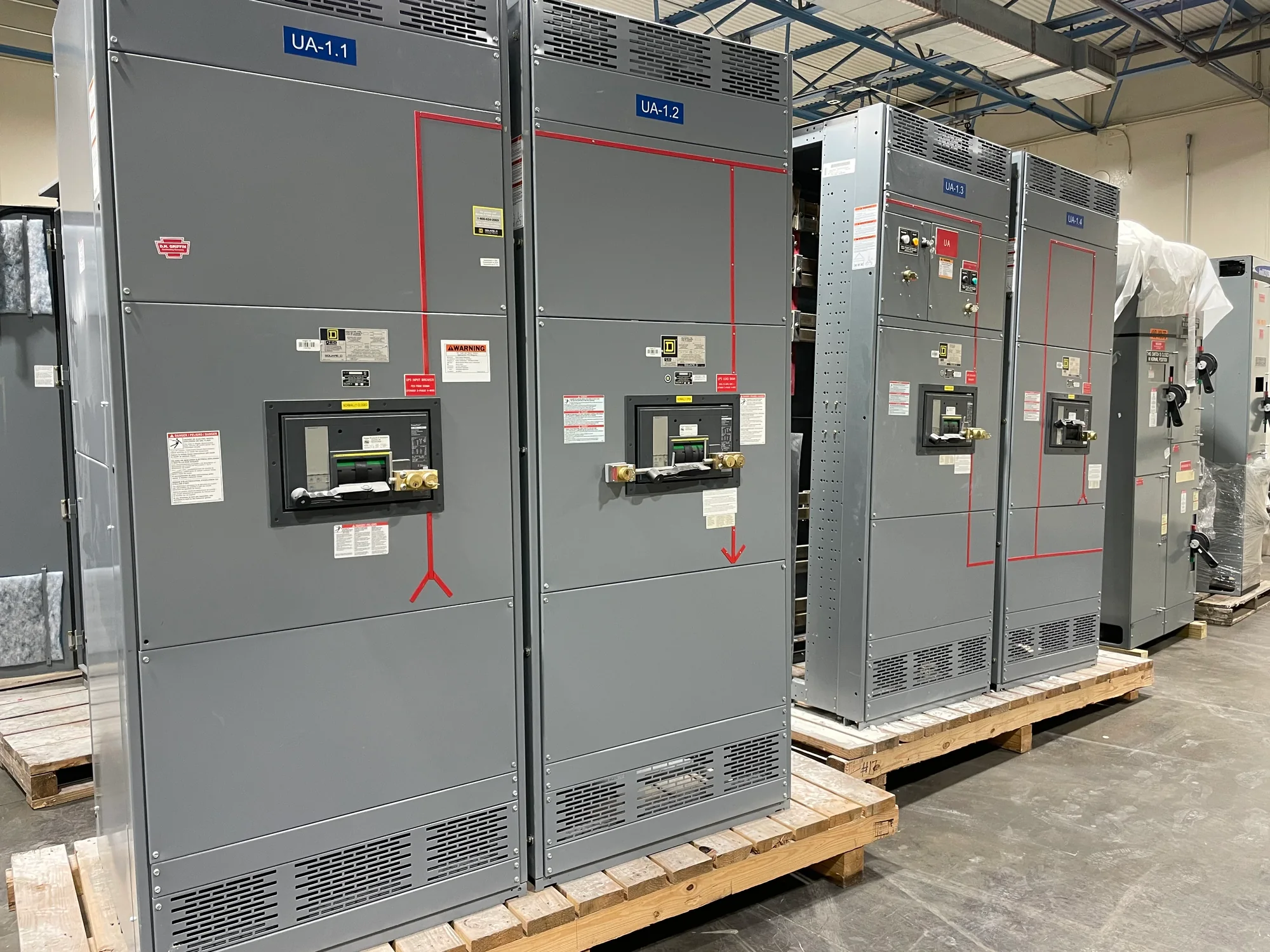
What an Arc Flash Is
An arc flash is a sudden release of energy caused by an electrical arc through air or another insulating medium. An arc is a conductive path that forms when electrical current jumps between conductors or from a conductor to ground. The event can produce intense heat and light, molten metal, sound, pressure, and hot gases. It is distinct from electric shock, which results from current passing through a person’s body, although both hazards can arise from the same electrical fault. An arc flash is not simply a visible spark: depending on available electrical energy and the conditions around the fault, it can create a severe hazard for people nearby and damage equipment. The term describes the event and its effects; it does not, by itself, state how likely an event is or how severe it would be in a particular installation.
How an Arc Can Begin
An arc may begin when insulation fails, a conductive object bridges energized parts, or a loose connection, contamination, moisture, or mechanical damage creates an unintended current path. Human activity can also contribute: inserting or withdrawing components, testing, maintenance, or working near exposed energized parts may disturb equipment or introduce a fault. These are possible initiating conditions, not a prediction that a particular task or assembly will produce an arc. The electrical system’s operating voltage, available fault current, protective-device behavior, conductor spacing, enclosure design, and the time required to clear a fault all influence the event and its consequences. A small change in system configuration or protection settings can alter the analysis. For this reason, identifying hazards requires project-specific system information and qualified evaluation, rather than relying on a general definition or a label from another installation.
| System | Voltage, phase, current and available fault current |
|---|---|
| Configuration | Lineup, protection, controls and enclosure as specified |
| Compliance | Applicable standards and listing confirmed for the assembly |
| Delivery | California and nationwide; schedule confirmed by quote |
Energy and Potential Effects
Arc-flash energy can expose a person to thermal burns, intense visible and ultraviolet light, hot particles, and pressure or sound from the rapidly expanding gases. Equipment may be damaged by heat, metal vapor, and force; smoke and debris can create additional hazards. The level of exposure depends on factors such as fault current, clearing time, working distance, equipment construction, and the task being performed. These variables interact, so nominal voltage alone does not describe the hazard. An arc-flash study may calculate incident energy and an arc-flash boundary for defined equipment and operating conditions, using appropriate system data and methods. Results are not universal properties of a switchgear model, nor do they guarantee a particular outcome. System modifications, changed settings, maintenance condition, or a different task can make prior assumptions or labels unsuitable and may call for review.
Why Switchgear Design and Protection Matter
Switchgear brings together conductors, switching devices, protective devices, and control components, so its design and application influence how a fault may develop and how quickly it can be interrupted. Engineers consider the system voltage, available fault current, equipment arrangement, grounding, protection coordination, and the interface with upstream and downstream devices. A faster clearing time can reduce exposure under applicable conditions, but protection settings must also preserve selectivity and coordinate with the broader system. Design choices that affect access, compartmentalization, maintenance, and operation should be evaluated alongside electrical performance. No single feature eliminates arc-flash risk, and a manufacturer’s equipment description cannot substitute for a site-specific hazard assessment. For a new equipment inquiry, useful inputs include one-line diagrams, system studies, ratings, protective-device information, installation conditions, and applicable project standards. Qualified professionals determine the requirements for each application.
Assessment, Work Planning and Next Steps
Arc-flash safety depends on more than selecting equipment. A qualified electrical professional should evaluate the installation, verify system data and protective-device settings, determine applicable code and standard requirements, and establish safe work practices. Depending on the task and conditions, planning may address de-energization, lockout/tagout, boundaries, access controls, training, and suitable personal protective equipment. PPE is a last line of defense, not a way to make otherwise unsafe work acceptable. Labels and study results should reflect the analyzed configuration and be reviewed when equipment, settings, or system conditions change. Buyers and project teams can help by sharing accurate fault-current and coordination data early, clarifying operating and maintenance needs, and identifying any schedule constraints for review. Switchgear Builder California supplies new equipment built in the USA with American components; project requirements and equipment applicability should be discussed and confirmed during engineering review.