Start with the project’s electrical requirements
Treat an in-stock assembly as a candidate, not a match, until its electrical data has been compared with the project documents. Confirm system voltage, phase, frequency, continuous current, bus ratings, short-circuit withstand or interrupting requirements, and the available fault current at the installation point. These values are related but not interchangeable: a breaker’s interrupting rating, for example, does not by itself establish the short-circuit rating of the complete assembly. Review the one-line diagram, protective-device coordination, grounding arrangement, and any requirements for service entrance use. A qualified electrical professional should determine the ratings and protection appropriate to the system and applicable codes. If any value is unknown or differs between drawings and field information, resolve that discrepancy before selecting equipment. A seemingly close rating can create a coordination, safety, or approval problem that outweighs a schedule advantage.
Verify the circuit arrangement and devices
Compare the actual circuit schedule with the proposed lineup, not just the number of sections or a general description. Check main and feeder quantities, breaker type and frame, trip functions, sensor or rating plug details where applicable, control power, metering, and provisions for future circuits. Confirm whether the project requires particular interlocks, ground-fault functions, communications, transfer arrangements, or other control features, and identify which are included versus separately engineered. Device names that sound similar may conceal differences in trip technology, mounting, or compatibility. Obtain the equipment schedule and available drawings, then have the project engineer or responsible contractor review them against the approved design. A circuit that can be added or changed in principle is not necessarily a field-ready modification. Any proposed alteration should be evaluated for engineering impact, manufacturer support, code implications, and review or approval needs before it is treated as part of the solution.
| System | Voltage, phase, current and available fault current |
|---|---|
| Configuration | Lineup, protection, controls and enclosure as specified |
| Compliance | Applicable standards and listing confirmed for the assembly |
| Delivery | California and nationwide; schedule confirmed by quote |
Check dimensions, access, and installation conditions
Physical fit is more than confirming that the overall lineup fits within a room. Compare section widths, height and depth, shipping splits, enclosure construction, cable entry and termination space, and the locations of conduits or bus connections. Verify front, rear, and side access requirements, working clearances, door swing, aisle conditions, floor loading, anchorage, and the path from the delivery point to the final position. Existing rooms can have obstructions or dimensional constraints that are not visible on a one-line diagram. Site measurements should be checked against manufacturer drawings, including the orientation of mains and feeders and any transition or connection details. Consider environmental conditions and installation location, such as indoor or outdoor exposure, temperature, contamination, and seismic requirements where applicable. If a mismatch calls for changes to the enclosure, bus, or site layout, assess those changes early; an apparent fit on paper may still require substantial redesign.
Confirm applicable listing and project standards
Determine which codes, standards, inspection requirements, and owner specifications apply to the equipment in its intended use. Ask what documentation is available for the specific assembly and configuration, and verify that it addresses the project’s required scope; a statement about a component does not automatically establish the status of the complete assembly. UL 891 applies to applicable low-voltage switchboards, not to every switchgear product or voltage class, and a reference to that standard should not be treated as proof of a third-party listing. For medium- or high-voltage equipment, identify and verify the standards applicable to that specific equipment and application. Also clarify whether the authority having jurisdiction, engineer of record, utility, or owner requires particular documents or review. Qualified professionals must determine applicable code and safety requirements. If a required evaluation, marking, or configuration cannot be verified, resolve that issue before purchase or installation rather than assuming it can be addressed later.
Verify actual new-equipment inventory and next steps
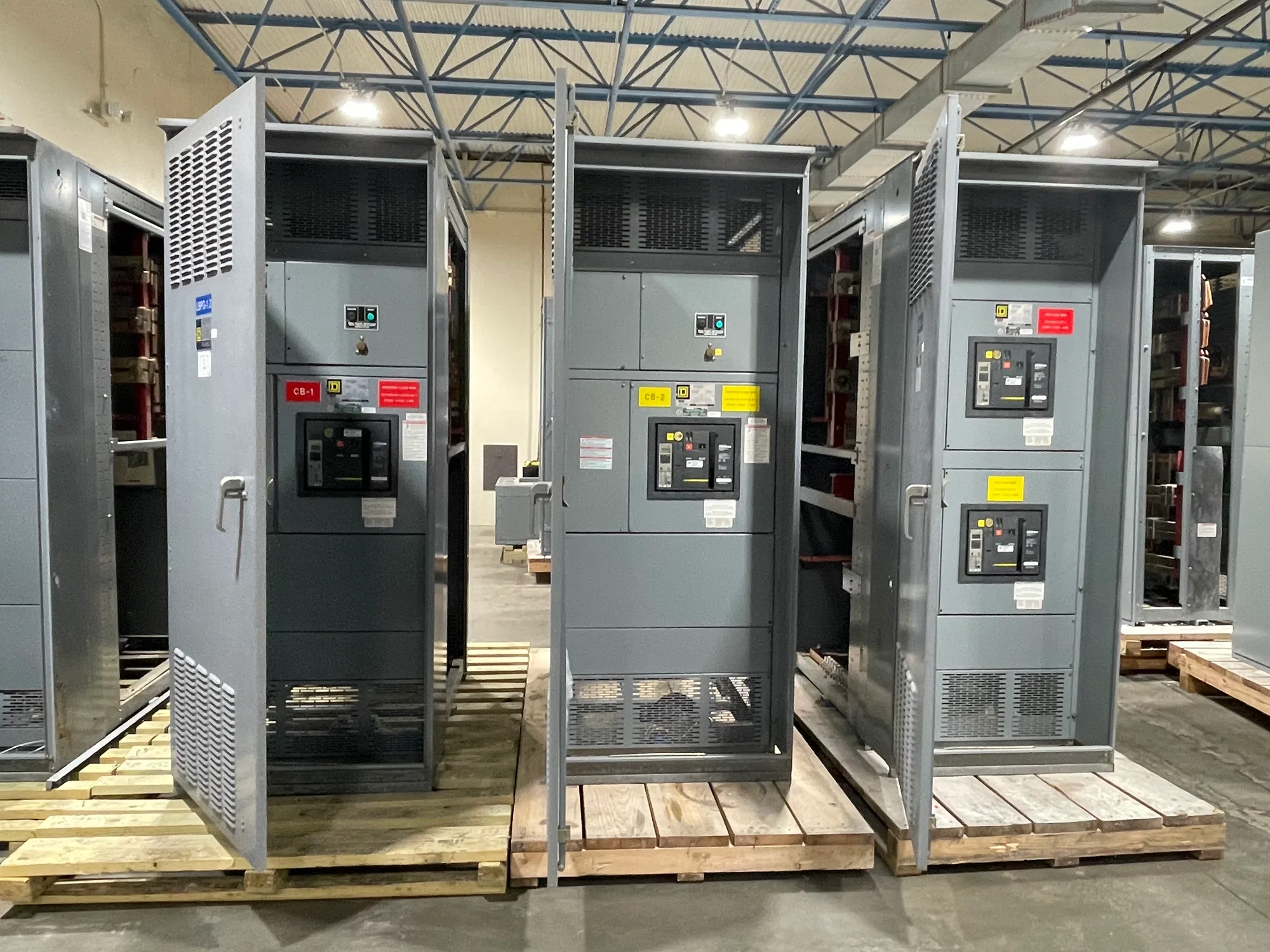
The phrase “in stock” should be confirmed against the specific equipment being considered. Request identification of the actual new assembly, its current configuration, condition, included devices and accessories, available drawings, and what remains subject to confirmation. Distinguish physical inventory from a standard design, an anticipated build, or a configuration that may require engineering changes. Ask whether revisions to meet the project could affect documentation, schedule, shipping arrangement, or scope. Switchgear Builder California builds and supplies new equipment in the USA with American components; inventory and project fit should still be reviewed for the particular order. Share the one-line diagram, equipment schedule, required ratings, room and access dimensions, applicable specifications, and target need date for a practical comparison. Schedule-sensitive or expedited options may be considered after project review, but timing is not guaranteed. A disciplined document review can establish whether the equipment is a viable match, needs further engineering, or should be replaced by a different specification.