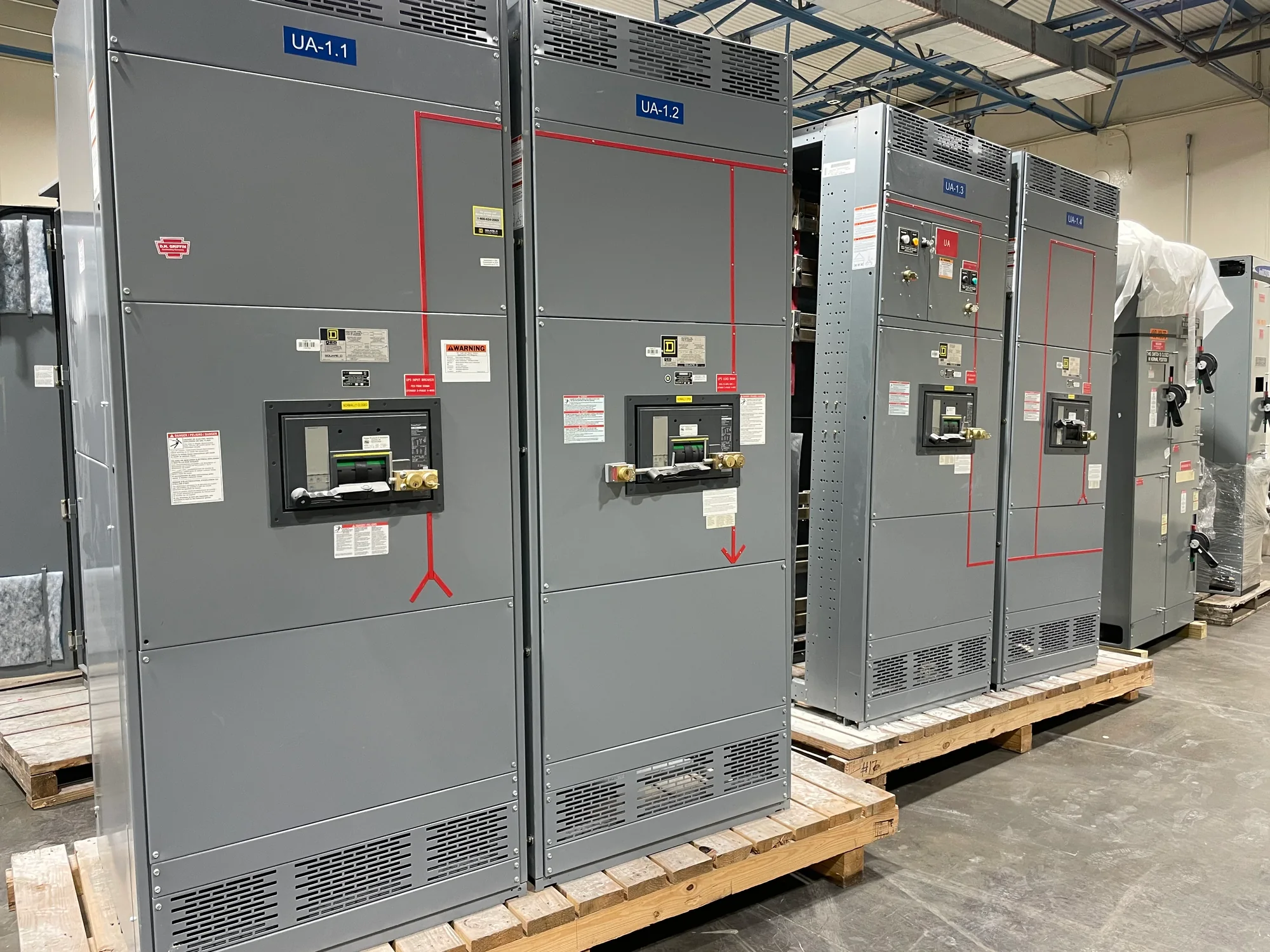
What information should I provide when requesting switchgear?
Start with the project’s one-line diagram, equipment schedule and the intended application. Identify system voltage, frequency, phases, bus requirements, available fault current and the protective-device arrangement. Include the service or feeder function, connected loads, incoming source details, grounding approach and any required metering or control features. These are design inputs, not assumptions about what a particular assembly can accommodate; qualified professionals must confirm ratings, protection and applicable codes for the installation. Also describe the physical setting: indoor or outdoor use, available floor space, access route, room clearances, cable entry and termination preferences, and environmental conditions such as temperature, dust or moisture. Share the project location, requested delivery window, drawing milestones and relevant specifications. If information is incomplete, say so and identify who can resolve open items. A focused review of known requirements and unresolved questions helps the manufacturer develop a useful scope and identify coordination needs before equipment details are finalized.
How do I choose between low- and medium-voltage equipment?
The system voltage and the role of the equipment in the distribution scheme are primary starting points, but voltage alone does not settle the design. Consider the source, load characteristics, protection philosophy, fault levels, expansion plans, operating procedures and how equipment interfaces with transformers, generators or downstream distribution. Low-voltage switchboards and medium-voltage switchgear serve different parts of a power system and are designed against different applicable requirements. For low-voltage switchboards, UL 891 may be relevant where applicable; that standard is not a blanket requirement for medium- or high-voltage equipment. For medium- or high-voltage equipment, identify and verify the standards applicable to the specific equipment and project. Standards compliance should not be confused with a third-party listing. Ask the engineer of record and other responsible professionals to confirm the system study, ratings and code requirements, then provide those decisions to the equipment builder. Reviewing the whole distribution arrangement reduces the risk of selecting equipment that fits one component but conflicts with the system.
| System | Voltage, phase, current and available fault current |
|---|---|
| Configuration | Lineup, protection, controls and enclosure as specified |
| Compliance | Applicable standards and listing confirmed for the assembly |
| Delivery | California and nationwide; schedule confirmed by quote |
What should be coordinated before installation?
Treat installation planning as a shared effort among the electrical contractor, engineer, equipment supplier, utility or source provider, and other trades with work in the electrical room. Before shipment is planned, compare approved equipment drawings with room dimensions, working clearances, door swings, housekeeping pads, overhead obstructions and the route from unloading point to final position. Verify that cable sizes, conduit locations, bending space and termination access align with the design. Confirm interfaces for control wiring, communications, metering, grounding and any external protection or automation. Establish who is responsible for lifting plans, rigging, temporary storage, assembly, anchoring, field connections and commissioning; these tasks depend on the equipment and project scope. Review delivery access and site readiness early, particularly where equipment must pass through tight corridors or be placed in a restricted room. Use current, approved documents rather than preliminary layouts to guide field work. Raise discrepancies before installation, because correcting a room or connection conflict after equipment arrives can affect cost, sequencing and safe access.
How should delivery and project timing be managed?
Build the equipment schedule around decisions that can affect engineering and fabrication: approved one-lines, finalized ratings, device and control requirements, dimensional constraints, drawing review, and resolution of interface questions. Identify which approvals are needed from the owner, engineer, contractor or utility, and set realistic review windows with clear responsibility for returning comments. Procurement planning should also account for site readiness, access, receiving capacity, storage conditions and the sequence of related construction work. If the project has a schedule-sensitive need, explain the required dates and the reason for them when requesting a proposal. Expedited options may be considered only after project review; timing depends on scope, design status, materials and other constraints, so no schedule should be assumed until it is confirmed. Keep a record of the current equipment scope and communicate changes promptly, since adjustments to ratings, components, enclosure dimensions or interfaces may require renewed review. A coordinated schedule is more reliable than relying on a single delivery date without confirming the decisions and site conditions behind it.
What maintenance helps keep switchgear dependable?
Use the equipment manufacturer’s documentation, the owner’s maintenance program and applicable codes to establish inspection and service intervals. Maintenance should be performed by qualified professionals using safe work practices and an appropriate plan for isolation, verification and control of electrical hazards. Depending on the equipment and service conditions, inspections may include checking for contamination, moisture, corrosion, overheating evidence, loose or damaged connections, abnormal noise, and deterioration of insulation or wiring. Protective devices, interlocks, mechanisms, control circuits and meters may require inspection or testing in accordance with their instructions and the site’s maintenance program. Keep records of findings, test results, corrective work and changes to settings or configuration; these records help reveal trends and support future troubleshooting. Do not assume that a visual check establishes operating condition or that a generic interval suits every installation. Exposure, loading, operating frequency and equipment design all matter. When an issue appears, document the observed symptoms and equipment identification, then consult the responsible electrical professional and manufacturer before returning affected equipment to service.