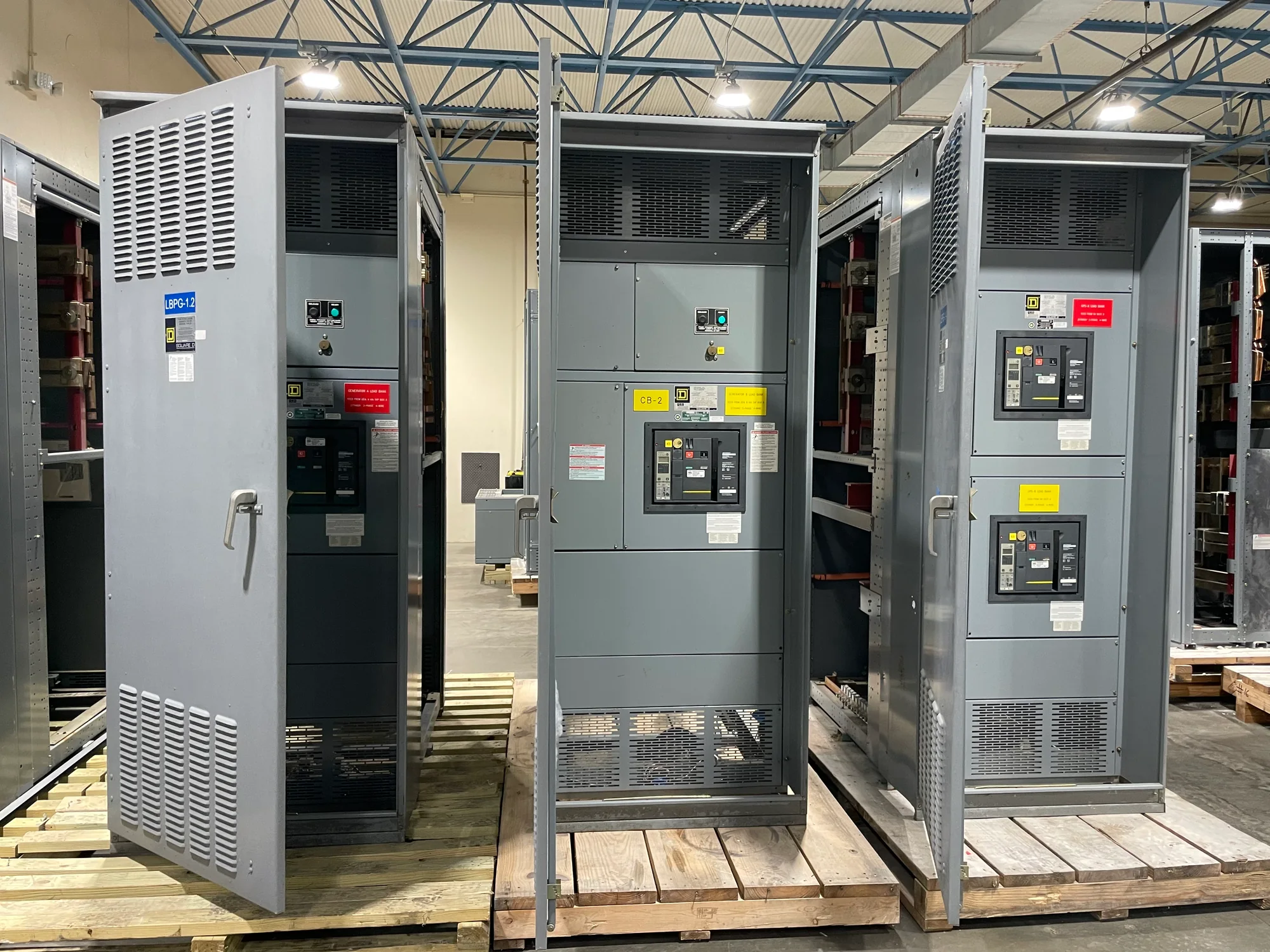
Start With the Breaker and Lineup Identification
Replacing a failed breaker without a new lineup can be feasible, but the answer depends on the specific assembly and breaker—not simply on matching the ampere rating. Begin by documenting the switchgear or switchboard manufacturer, lineup model, section and breaker designation, plus any nameplate data, catalog numbers and revision information. Record the breaker type, frame, poles, mounting arrangement and whether it is fixed, drawout or otherwise connected. Photographs of the nameplates, breaker face, rear connections and compartment can help an engineer or manufacturer review the equipment, but they do not replace legible identification or inspection. Older lineups may have undergone prior modifications, and markings may not reflect the installed configuration. If information is missing or conflicting, treat identification as unresolved rather than selecting a breaker by appearance. A careful first review can establish whether a replacement path merits investigation and what further documentation or site assessment is needed.
Confirm Mechanical Fit and Interface Details
A replacement must interface correctly with the existing equipment. Relevant details include the compartment dimensions, mounting rails, primary disconnects, bus connections, secondary plug, control wiring, interlocks and any racking or operating mechanism. Even breakers described as interchangeable may differ by generation, accessory package or lineup revision. A unit that can be physically inserted is not necessarily a safe or functional match: misaligned contacts, incompatible shutters, altered interlocks or unsuitable control connections can prevent proper operation. Review the breaker and cell as a coordinated assembly, including evidence of wear, heat damage, corrosion or previous field changes. Where records are incomplete, qualified personnel may need to inspect the equipment and verify dimensions and interface points. Do not force, modify or energize a breaker to test presumed fit. Any proposed adaptation should be evaluated and documented by professionals responsible for the equipment and installation, with attention to applicable codes, manufacturer instructions and the consequences for the lineup.
| System | Voltage, phase, current and available fault current |
|---|---|
| Configuration | Lineup, protection, controls and enclosure as specified |
| Compliance | Applicable standards and listing confirmed for the assembly |
| Delivery | California and nationwide; schedule confirmed by quote |
Check Ratings and Protection Coordination
Mechanical compatibility alone does not establish that a replacement is electrically suitable. Compare the existing system and breaker requirements, including voltage, continuous current, interrupting or withstand ratings as applicable, frequency, pole configuration and control voltage. Protection functions and trip characteristics also matter: a different trip unit or setting range may change coordination with upstream and downstream devices, affect selective operation or fail to address the circuit’s protection needs. Available fault-current information, grounding arrangement, load characteristics and the condition and ratings of connected bus and cables should inform the review. Qualified electrical professionals must determine the required protection, ratings and applicable code provisions for the specific installation. Do not assume the original nameplate alone answers every question, particularly if the system has changed since installation. Confirm which documents govern the design, and have the proposed device evaluated against the complete application. A breaker that fits and carries the expected load may still be unsuitable if its interrupting capability or protective behavior does not match system conditions.
Evaluate Retrofit Options and Lineup Condition
If an exact replacement is unavailable or the lineup has changed, a retrofit or modernization assessment may identify alternatives for the customer’s own equipment. Options depend on the condition and design of the existing gear and could involve a compatible replacement, an engineered breaker adaptation, or broader work to a section or lineup. Each path has tradeoffs. A narrowly scoped replacement may reduce the extent of work, while adaptation can require detailed engineering, installation planning and verification of interfaces, protection and interlocks. Extensive deterioration, obsolete components, damaged bus or unsuitable ratings may make a larger scope more practical than a breaker-only approach. The decision should account for outage constraints, maintenance access, future operating needs, project documentation and the effect of changes on the original assembly. Retrofit work is not a presumption that every legacy lineup can accept a new breaker. A review should define its limits, required field information, responsibilities and acceptance checks before work is authorized.
Prepare Information for a Technical Review
For a useful initial assessment, gather clear nameplate photographs, breaker and trip-unit markings, lineup drawings, wiring diagrams, available fault-current or coordination studies, maintenance records and a description of the failure. Include the operating symptoms, protective-device events, visible damage and any recent system changes; avoid disturbing or re-energizing equipment to obtain information. A failed breaker may be evidence of a wider problem, so inspection should consider the compartment, bus connections and associated circuit rather than treating the device in isolation. Share the project location, required outage window and applicable specifications so the scope can be reviewed in context. Switchgear Builder California manufactures and builds new switchgear in the USA with American components and supplies new equipment to customers. For an existing lineup, discuss the equipment and project conditions to determine whether a replacement or retrofit evaluation is appropriate; a new lineup may also warrant consideration if the existing gear cannot be responsibly adapted. Any schedule-sensitive approach remains subject to project review.