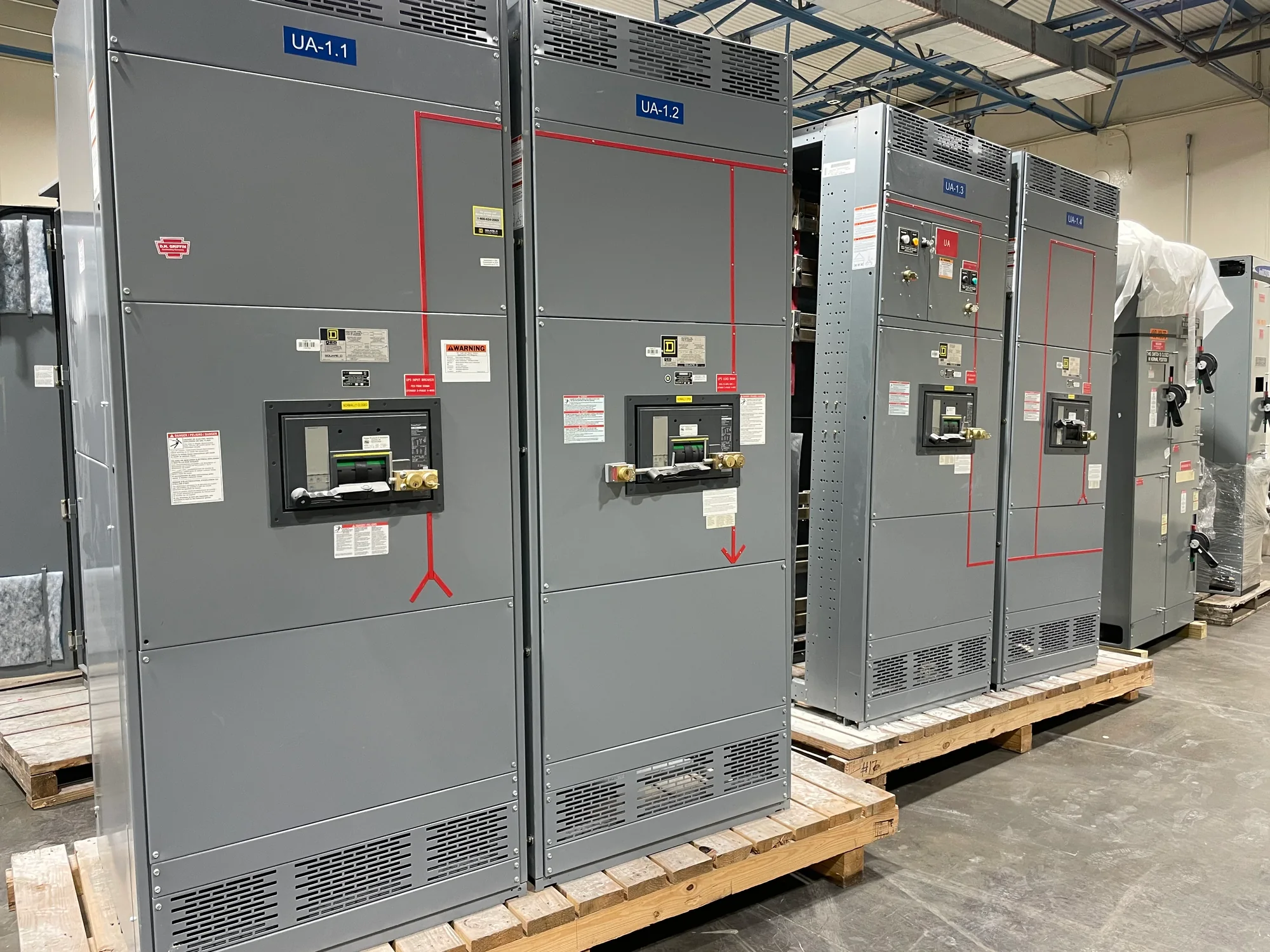
Describe the equipment or service you need
Start by identifying whether you are requesting a quote for new switchgear or a service for equipment your organization already owns. For new equipment, describe its intended role, such as a service entrance, distribution lineup, motor control application, or facility expansion. Include the type of equipment under consideration and any known system voltage, phase, frequency, bus rating, short-circuit duty, enclosure, and environmental requirements. These details are design inputs, not assumptions about a standard configuration; qualified professionals must establish the applicable ratings and protection for the project. If your request concerns customer-owned gear, explain the desired scope, the equipment’s present condition, and the outcome you need. Modernization or retrofit work applies to your equipment; it is separate from a request for new equipment. If you are unsure which category fits, explain the application in plain language and ask us to help clarify the scope.
Share drawings, specifications, and operating context
Useful documents help connect the requested scope to the electrical system around it. When available, attach a one-line diagram, equipment schedules, specifications, site photos, existing nameplate information, and relevant control or protection details. For new equipment, indicate the source and downstream loads, existing interfaces, space constraints, cable entry preferences, and any anticipated future capacity. For work on customer-owned gear, provide the manufacturer and model if known, approximate age, prior modifications, and clear photographs of the equipment and work area. Do not rely on a photograph alone to establish ratings or safe work conditions. Identify the standards, codes, project specifications, or owner requirements that the responsible design team expects to apply. UL 891 is relevant to applicable low-voltage switchboards, not every type of switchgear. For medium- or high-voltage equipment, identify the standards applicable to that specific equipment and have them verified for the project.
| System | Voltage, phase, current and available fault current |
|---|---|
| Configuration | Lineup, protection, controls and enclosure as specified |
| Compliance | Applicable standards and listing confirmed for the assembly |
| Delivery | California and nationwide; schedule confirmed by quote |
Identify the project location and site conditions
Provide the project city, state, ZIP code, and, if known, the installation address. Location helps us understand the project context, delivery considerations, and whether the request concerns a California site or a project elsewhere in the United States. Switchgear Builder California serves customers in California and ships nationwide, with shipment arrangements and availability reviewed for each project. Include the building type, indoor or outdoor placement, access limitations, and any relevant site conditions such as ambient temperature, elevation, moisture, dust, corrosive exposure, or seismic criteria. These factors can affect enclosure and equipment decisions, so they should be stated rather than left for assumptions. If the equipment must fit an existing footprint or connect to existing conduits, bus, or cables, share measured dimensions and interface details where possible. For service work, identify access rules, operating constraints, and who can coordinate a site visit or provide additional information.
Explain schedule priorities and project milestones
A useful schedule request includes more than a desired delivery date. Share the project phase, the date by which a proposal is needed, the anticipated release or approval milestone, and the planned installation or outage window. Note whether equipment dimensions or electrical requirements are still being developed, since unresolved design inputs may affect the scope and the timing of a quote. If the project is schedule-sensitive, say so and identify which milestones are fixed and which may have flexibility. Expedited options may be considered for some requests, subject to project review, scope, design completeness, and other constraints; no timing should be assumed until the requirements are reviewed. For services on customer-owned equipment, describe any access window, outage coordination, operational restrictions, and required approvals. Sharing these details early helps distinguish a firm project constraint from a planning target and supports a more practical discussion of sequence, information gaps, and next steps.
Submit a complete request and prepare for review
Include the organization name, project name, primary contact, role, email, and phone number, along with the equipment or service scope and requested location. Attach relevant files in readable formats and label revisions or preliminary documents clearly. If you do not yet have a complete specification, submit the information available and identify open questions, assumptions, and decisions still pending. That allows the request to be reviewed without treating incomplete details as confirmed requirements. After submission, be prepared to clarify ratings, interfaces, quantities, delivery needs, and the division of responsibility between the equipment supplier, engineer, contractor, and owner. Pricing and scope depend on the project information provided and subsequent review; a request does not itself confirm configuration, compliance, availability, or schedule. Qualified professionals remain responsible for determining protection, ratings, applicable codes, and safe installation or service practices. A focused, well-documented request gives the project team a stronger starting point for discussing a suitable proposal.