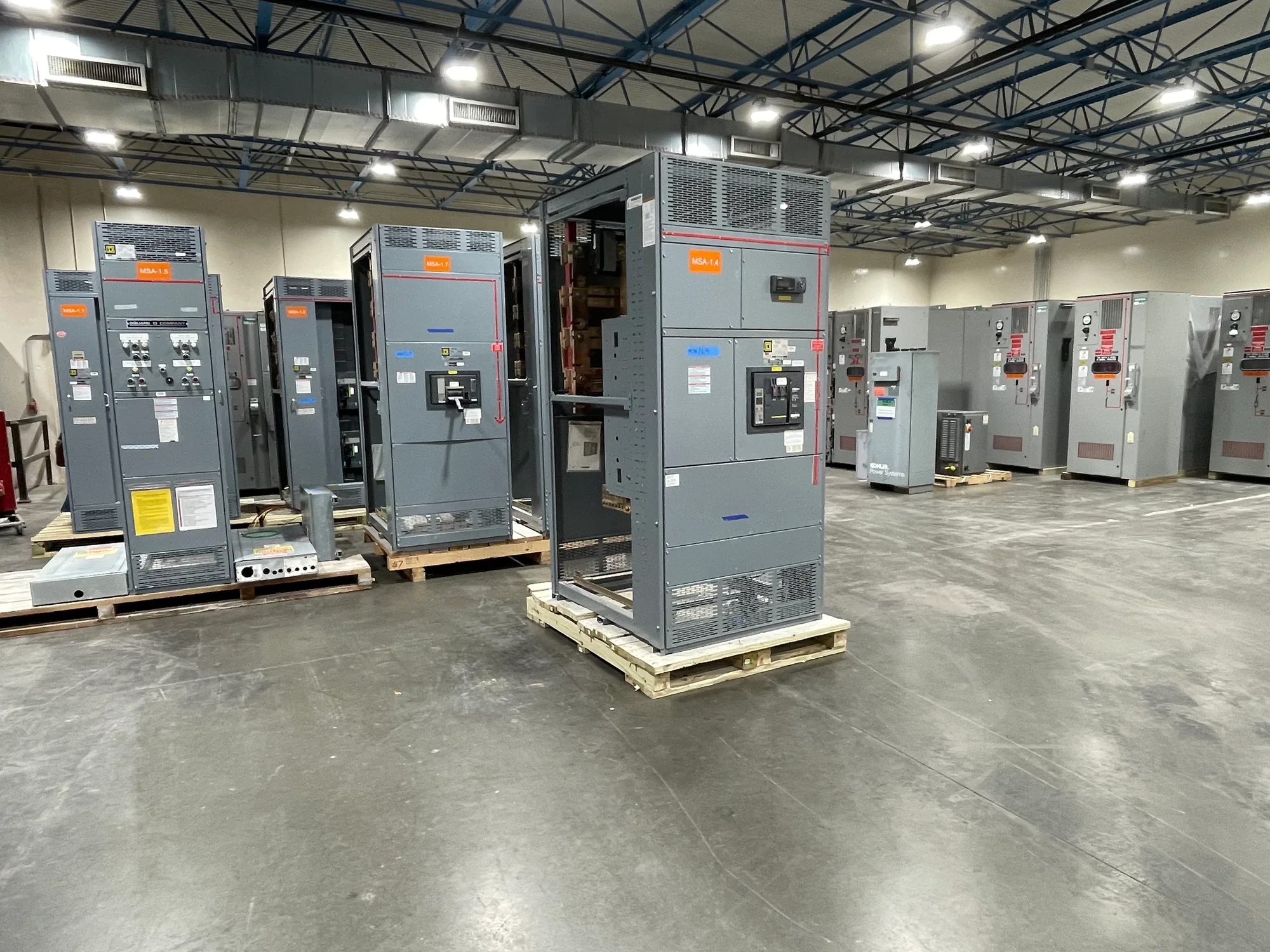
Start with a Complete Project Inquiry
A useful inquiry gives the project team enough context to identify the equipment scope and the decisions that need review. Share the project location, application, system voltage, available fault-current information, intended installation environment and required in-service date, if known. Include one-line diagrams, specifications, equipment schedules and relevant site constraints when available. For a replacement project, explain what existing equipment serves and which interfaces must be maintained; photographs or field measurements can clarify conditions but do not replace qualified engineering review. Identify the owner, engineer, electrical contractor and purchasing contact, along with who can answer technical questions and approve changes. At this stage, unresolved details should be labeled as open items rather than treated as settled requirements. Switchgear Builder California supplies new equipment built in the USA with American components. The inquiry starts a project discussion; it is not a commitment to a particular configuration, rating, price or schedule.
Review Scope, Interfaces and Responsibilities
After receiving the project information, the parties can review what the requested equipment must do, what information remains missing and where scope boundaries fall. Confirm whether the request concerns a low-voltage switchboard, medium-voltage equipment or another assembly, since terminology and applicable standards depend on the equipment type. Identify incoming and outgoing connections, bus requirements, protective-device functions, metering, controls, enclosure conditions and any space or access limits that affect the design. The engineer of record and other qualified professionals determine protection, ratings and applicable codes for the project; equipment requirements should be checked against the actual system and installation. Agree who provides utility data, cable details, control diagrams, communications requirements and site dimensions, and who reviews each item. Also clarify responsibility for foundations, conduits, cable termination, field installation, testing and commissioning. A written responsibility matrix and list of exclusions reduce assumptions and help keep later reviews focused.
| System | Voltage, phase, current and available fault current |
|---|---|
| Configuration | Lineup, protection, controls and enclosure as specified |
| Compliance | Applicable standards and listing confirmed for the assembly |
| Delivery | California and nationwide; schedule confirmed by quote |
Develop and Approve Submittals
Submittals translate the reviewed requirements into documents the project team can examine before production decisions are finalized. Depending on scope, the review package may address arrangement, dimensions, access, connections, device functions, control interfaces and other project-specific details. The exact documents and review sequence should be agreed by the parties; not every project requires the same package. The engineer, contractor and owner should route comments through designated reviewers, consolidate conflicting feedback and identify which comments affect safety, coordination, operation or appearance. Confirm who has authority to approve the documents and how revisions will be identified. If a requirement changes, such as a feeder arrangement, control point or room constraint, assess its effect on related components and interfaces rather than editing one drawing in isolation. Applicable standards must be identified for the specific equipment; UL 891 applies to applicable low-voltage switchboards, not to all switchgear. Standards compliance and any third-party listing are separate matters to verify.
Coordinate Production and Open Decisions
Production planning depends on an approved, coordinated scope and timely resolution of the information needed to build the specified equipment. Before release, confirm document status, approved deviations, device and material selections, connection details and any remaining customer-furnished information. Keep a dated record of decisions, approvals and changes so the project team can distinguish the current requirements from superseded instructions. The manufacturer can explain which open items require resolution before affected work proceeds, while the customer’s authorized technical reviewers remain responsible for confirming project requirements. Changes after approval may require renewed engineering review and can affect cost, sequence or schedule; the impact should be assessed before authorizing the change. If a project is schedule-sensitive, discuss the constraints and possible options early. Any expedited approach is subject to project review, scope, information readiness and production conditions, and should not be treated as a guaranteed completion date. Regular communication helps expose blockers while there is still time to address them.
Plan Delivery, Receipt and Site Readiness
Delivery coordination should begin well before equipment is ready to leave production. Confirm the delivery destination, receiving contact, access hours, unloading arrangements, storage conditions and any restrictions on vehicle access or equipment movement. Agree how the shipment will be identified and what documentation the receiving team needs, then make sure the site has appropriate space and handling resources. The contractor should coordinate installation sequencing, lifting and rigging plans, required clearances and protection of equipment after receipt with qualified personnel. Confirm who inspects the shipment on arrival, records visible damage or shortages, and promptly communicates any discrepancy through the agreed project contacts. Shipping arrangements and timing depend on the project and must be confirmed rather than assumed; service to California customers and nationwide shipping may be discussed during planning without implying that every destination or schedule is available. Before installation and energization, qualified professionals verify that the equipment, site conditions, connections and protection align with approved project documents and applicable requirements.