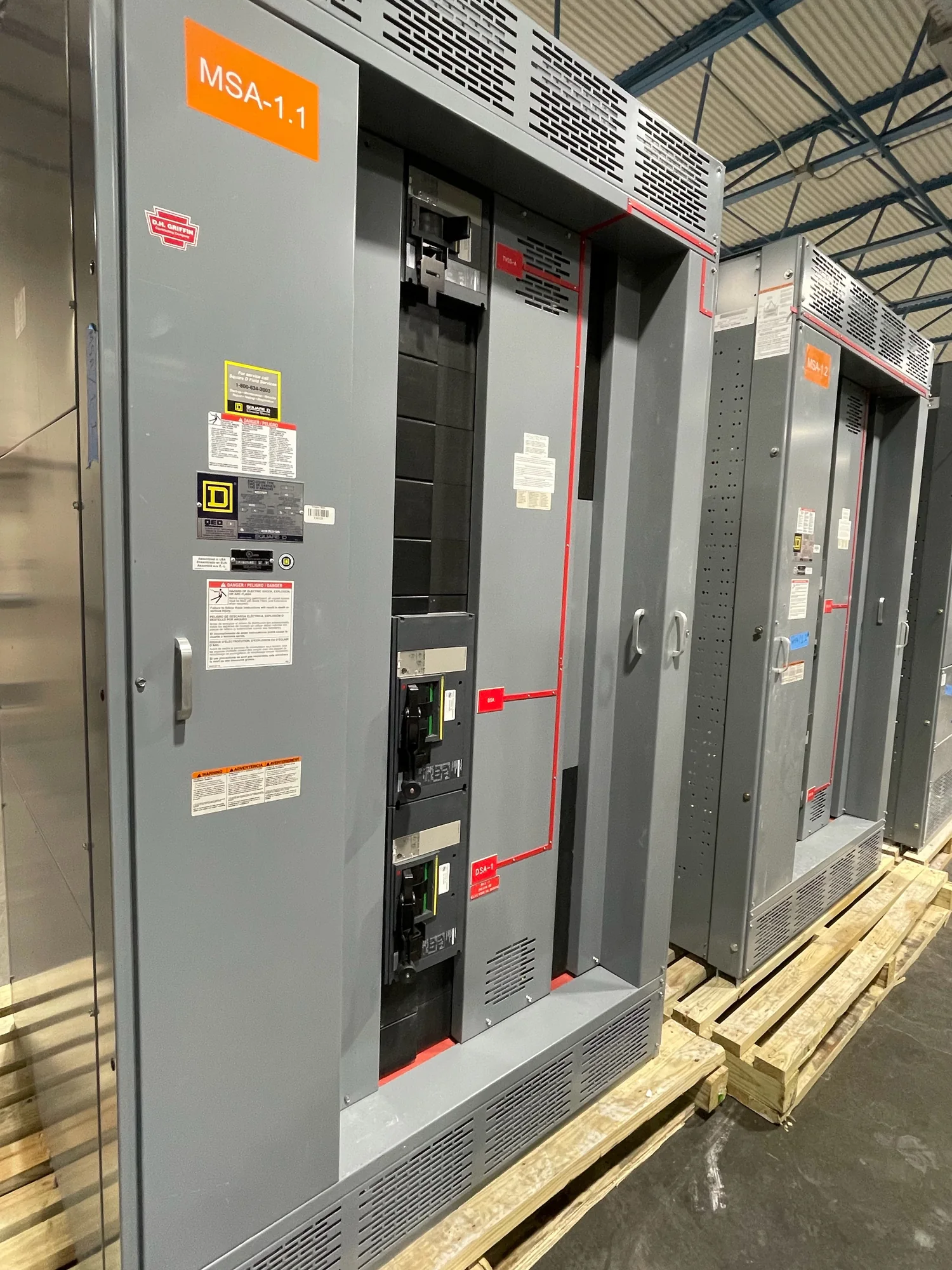
How a Fusible Switch Switchboard Protects a Feeder
A fusible switch switchboard combines a disconnecting switch with fuses selected to interrupt overcurrent under specified conditions. The switch provides a means to open the circuit; the fuses provide the overcurrent response. This arrangement can suit feeders or loads where the project calls for fused protection, but it is not interchangeable by default with a circuit breaker. Fuse characteristics, switch ratings, available fault current and the equipment being protected must all be considered together. Start with the system voltage, phase and frequency, the load type and magnitude, and the calculated or documented fault-current conditions at the installation point. Also identify applicable code requirements and the intended operating environment. Qualified electrical professionals must determine protection, ratings and code compliance for the specific project. The switchboard builder can use these inputs to evaluate the requested configuration and identify details that need clarification before design proceeds.
Compare Fuse and Breaker Protection on Project Needs
Fuse and breaker approaches differ in operating characteristics, maintenance practices and how protection is coordinated. A fuse is replaced after it operates, so the correct replacement type and rating must be available and installed as a complete, appropriate set when required by the design. A breaker may instead be reset or replaced depending on its condition and the cause of operation. These differences affect outage planning, spare-parts strategy and the procedures used by maintenance personnel. Neither device is inherently the best choice for every application: compare the load’s inrush or starting behavior, conductor protection, equipment withstand ratings, fault-current exposure and the desired response to faults. Review the device’s time-current characteristics rather than comparing ampere ratings alone. Where a project specifies a particular fuse class, manufacturer, or performance criterion, provide that information for review. Confirm that any proposed substitution is acceptable to the engineer of record and compatible with the protection study.
| System | Voltage, phase, current and available fault current |
|---|---|
| Configuration | Lineup, protection, controls and enclosure as specified |
| Compliance | Applicable standards and listing confirmed for the assembly |
| Delivery | California and nationwide; schedule confirmed by quote |
Plan Practical Access for Fuse Inspection and Replacement
Replacement access is an operational design issue, not merely a matter of locating a fuse compartment on a drawing. Confirm how qualified personnel will identify the affected circuit, reach the fuse position and remove and install the specified fuse using the required safe work practices. The room layout, working clearances, door swing, cable entry, adjacent equipment and anticipated maintenance tools can all affect access. Ask whether fuse indicators, circuit identification and spare-fuse storage requirements should be addressed in the project documents. A maintenance plan should establish the approved replacement type and rating, keep spares controlled and traceable, and require investigation of why a fuse operated before restoring service. A blown fuse may indicate a fault that remains present; replacing it without assessing the cause can expose workers and equipment to renewed risk. Access and maintenance arrangements should be reviewed by the responsible electrical team before the switchboard layout is finalized.
Coordinate Fuses Selectively Across the Distribution System
Selective coordination aims to have the protective device nearest a fault operate first, limiting interruption to unaffected portions of the system where the design can achieve that result. Fuse selection at a switchboard therefore needs to be reviewed in relation to upstream and downstream protective devices, not in isolation. Compare manufacturer time-current curves and applicable coordination data over the relevant range of fault current, including conditions that may affect the result. Consider the available fault current at each device, conductor and equipment damage limits, motor starting or transformer inrush, and any required operating scenarios. A nominal ratio between fuse sizes is not, by itself, proof of selectivity across all fault levels. The engineer responsible for the study should define the required coordination objective and document assumptions, device selections and limitations. Provide the proposed one-line diagram and protective-device information early so that potential conflicts can be identified before the switchboard design is released.
Prepare Design Inputs and Verify Applicable Requirements
For a useful configuration review, provide a one-line diagram, equipment schedule, system voltage and grounding information, source and transformer data, available fault-current values, load details, and the protection study or coordination criteria when available. Identify the requested disconnect arrangement, fuse requirements, incoming and outgoing cable details, enclosure and installation conditions, and any project-specific interface constraints. Distinguish required values from preferences, and flag assumptions that still need confirmation. For applicable low-voltage switchboards, UL 891 may be a relevant standard to address; that reference does not establish that a particular assembly is listed. For medium- or high-voltage equipment, identify and verify the standards applicable to that specific equipment rather than applying low-voltage switchboard criteria. Switchgear Builder California builds new equipment in the USA with American components and supplies projects in California and nationwide, subject to project review. Share schedule-sensitive needs at inquiry; any expedited option depends on design scope and review, and timing is not guaranteed.