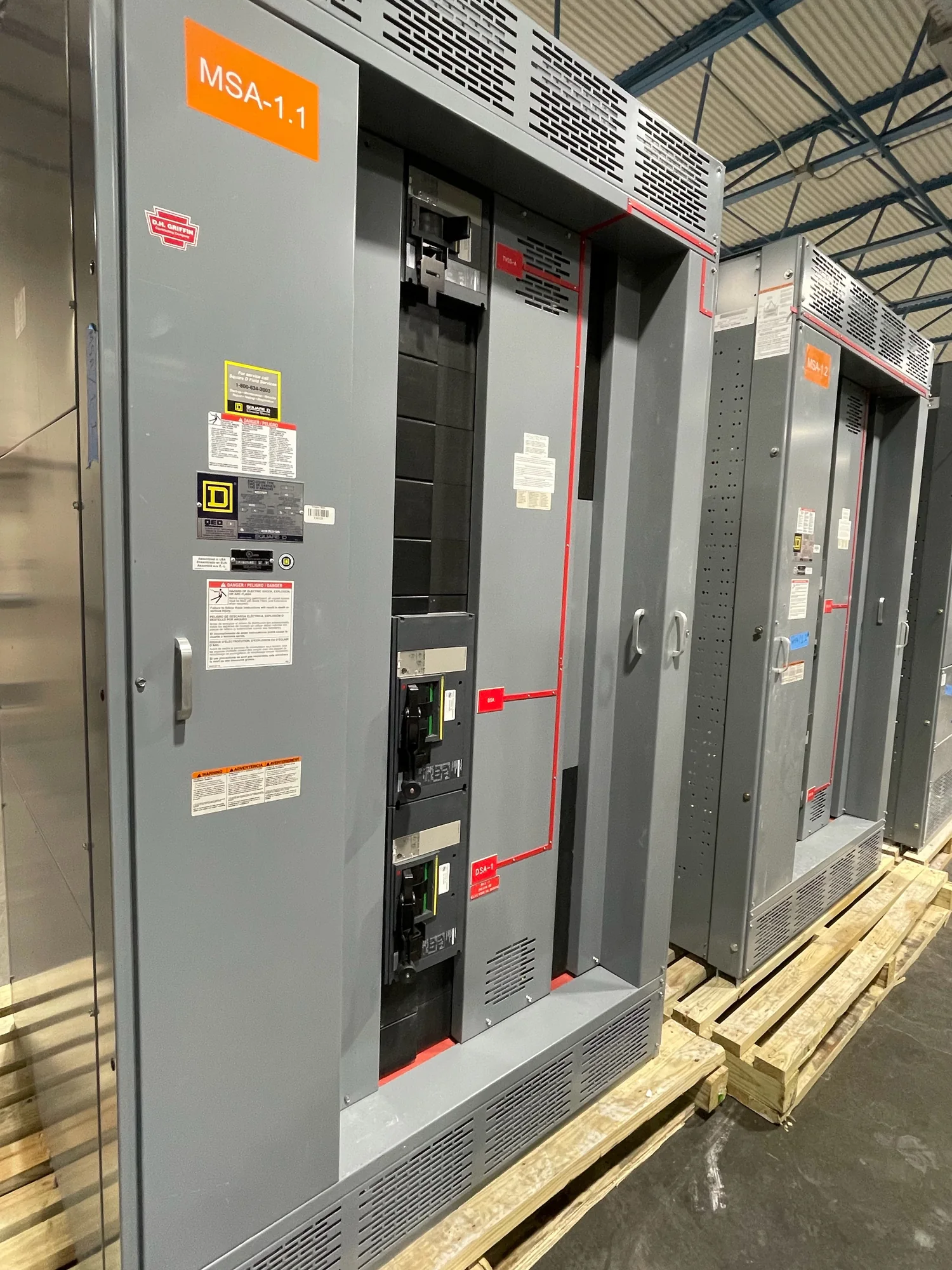
Planning New Switchgear for Stockton Projects
Stockton projects can involve industrial facilities, utilities, commercial buildings, and infrastructure with very different electrical demands. The right starting point is a clear description of the application, existing system, and work scope—not a location-based assumption about equipment. Share the one-line diagram, system voltage, frequency, available fault-current information, load requirements, and the functions the assembly must perform. Identify whether the project calls for a low-voltage switchboard, medium-voltage equipment, or another configuration, and note any interfaces with transformers, generators, controls, or adjacent gear. These details help establish the design inputs and identify questions to resolve before drawings and delivery plans advance. For a replacement or expansion, document existing dimensions, cable entry and exit, connections, and operating constraints. A qualified electrical professional should determine protection, ratings, and applicable code requirements. Early coordination can reduce late changes, but final suitability depends on the project-specific review.
Central Valley Delivery Logistics
Getting equipment to a Stockton site requires more than selecting a destination on a freight document. Discuss the delivery address, site contact, receiving hours, unloading equipment, staging area, and the route from the property entrance to the installation point. Large or heavy assemblies may need careful coordination around turning clearances, overhead obstructions, restricted access roads, pavement limits, and occupied loading areas. Confirm whether a truck can reach the intended drop location or whether the site team must arrange transfer with a forklift, crane, or other qualified handler. Share delivery restrictions early, including appointment rules, security check-in, permits, limited dock access, or work-hour constraints. These details help evaluate feasible transport and unloading arrangements; they do not establish that a particular method or date is available. Shipment planning is confirmed for the specific equipment and destination. Keep the project manager, carrier, site representative, and installation contractor aligned on responsibilities, handling requirements, and the sequence for receiving and inspecting the equipment.
| System | Voltage, phase, current and available fault current |
|---|---|
| Configuration | Lineup, protection, controls and enclosure as specified |
| Compliance | Applicable standards and listing confirmed for the assembly |
| Delivery | California and nationwide; schedule confirmed by quote |
Industrial Site Access and Installation Readiness
Industrial locations around Stockton can have active production, vehicle movement, hazardous-area boundaries, strict security procedures, or limited shutdown windows. Before equipment arrives, determine who controls site access and what credentials, safety orientation, personal protective equipment, or advance notices are required. Map the delivery path and installation space, then compare them with the equipment drawings and handling plan. Check doorway and corridor dimensions, floor capacity, working clearances, cable trench or conduit locations, and any obstacles that could affect movement or placement. If the assembly is part of a phased upgrade, identify temporary power needs, cutover boundaries, outage approvals, and dependencies on other trades. The site’s electrical and safety leads should review isolation, lifting, and installation procedures; delivery coordination is not a substitute for those controls. Providing current photographs and measured site conditions can help surface access questions before dispatch. If conditions change, update the project team so that revised handling or staging arrangements can be evaluated.
Coordinate Drawings, Interfaces, and Schedule
A reliable project handoff connects equipment design with the realities of the Stockton installation. Establish who will review drawings, answer technical questions, approve interfaces, and receive shipping updates. Confirm the project’s drawing milestones and the information needed for review, such as cable sizes and entry directions, conduit locations, control wiring, communications requirements, and connection details to upstream or downstream equipment. Coordinate with the electrical contractor and engineer of record on protection and system studies, and identify any utility or facility approvals that must be completed independently. Agree on a target delivery window and the events that must precede it, including design review, site readiness, and receiving arrangements. Schedule-sensitive or expedited possibilities can be discussed, but depend on design scope, material requirements, manufacturing status, and logistics review; no timing should be assumed until confirmed. A shared responsibility list and a single current drawing set help prevent conflicting instructions and make changes easier to assess.
Confirm Coverage and Next Steps
To confirm whether project support and delivery arrangements can serve a Stockton address, provide the site location, equipment type, project stage, desired delivery window, and any unusual access or receiving requirements. Include available drawings, specifications, photographs, and the name of the person coordinating the installation. The project team can review the request, clarify technical inputs, and discuss practical delivery considerations for the particular destination. Coverage, transport method, schedule, and any site-specific coordination remain subject to review and confirmation; service to California customers does not mean every project condition can be accommodated automatically. Switchgear Builder California supplies new equipment built in the USA with American components. If a project involves standards, ratings, seismic considerations, environmental conditions, or special operating requirements, identify them for evaluation rather than assuming they are included. For low-voltage switchboards, discuss whether UL 891 applies to the project; medium- or high-voltage equipment requires identification and verification of standards applicable to that specific equipment. Confirm the final design and logistics with qualified project professionals before committing to installation plans.