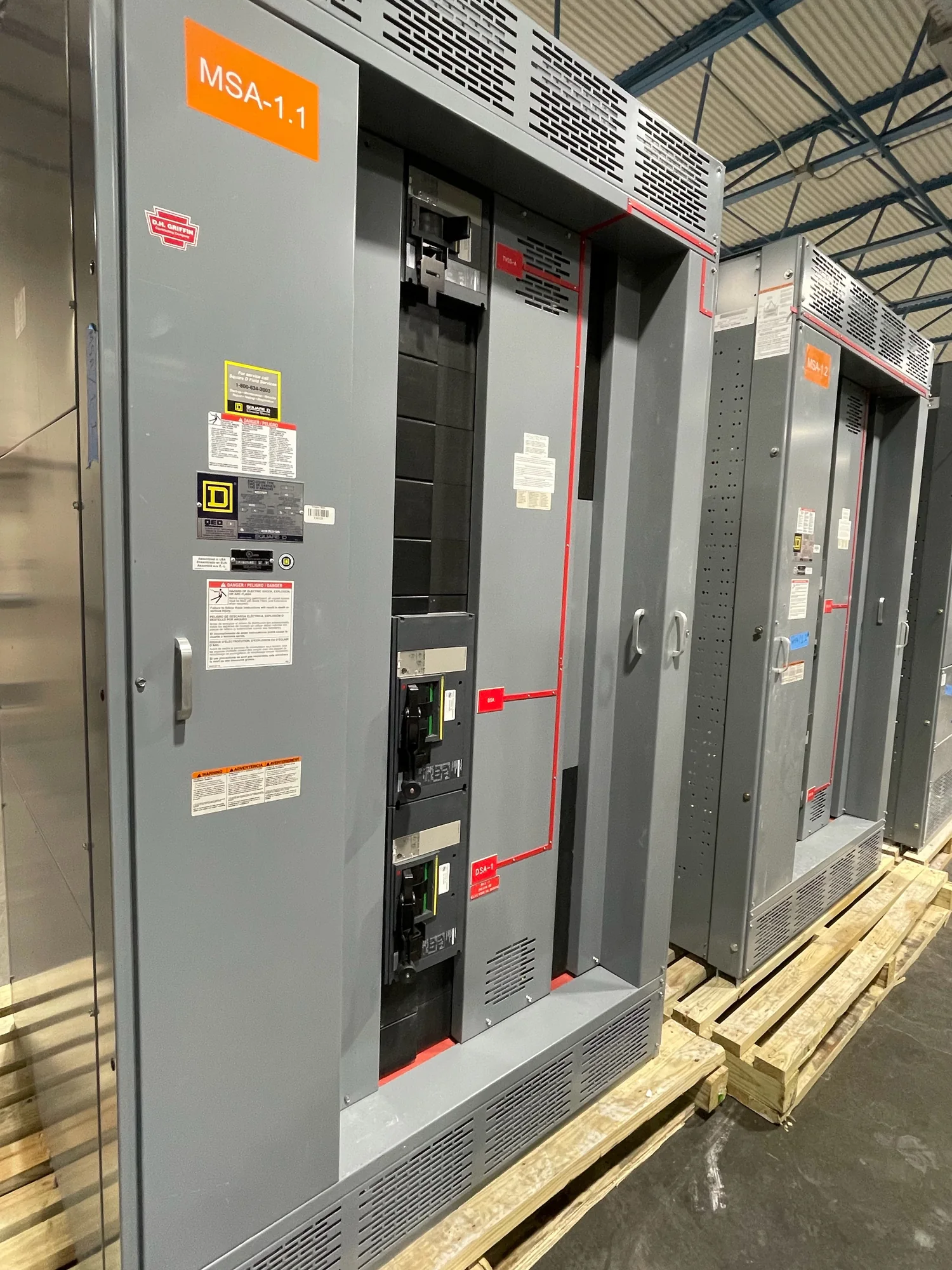
New Switchgear for San Diego Projects
Switchgear Builder California supplies new switchgear to customers in San Diego and supports project planning around the equipment’s intended application. Each project begins with the electrical design basis: system voltage, frequency, available fault current, continuous load, configuration, protection approach and the interfaces with upstream and downstream equipment. These inputs help establish what must be reviewed and confirmed before design proceeds; they are not assumptions about a standard configuration. Share one-line diagrams, equipment schedules, specifications and relevant site information as early as practical. If drawings are preliminary, identify open decisions and the responsible parties so the review can focus on unresolved details. California projects can have distinct utility, permitting and installation considerations, and the project team should establish which requirements govern this particular facility. We serve San Diego customers, while coverage, equipment scope and delivery arrangements are confirmed for each project. This early alignment helps buyers and contractors evaluate fit, identify coordination needs and plan next steps without relying on generic assumptions.
Account for Coastal Exposure
San Diego’s coastal conditions can make enclosure and installation choices especially important. Salt-laden air, humidity, wind-driven moisture and the possibility of corrosive contaminants vary by distance from the coast, shielding, building ventilation and the equipment’s actual location. Describe the intended indoor or outdoor setting, enclosure location, nearby process conditions, washdown practices and any known corrosion-control requirements. The design team can then review suitable materials, finishes, enclosure construction and environmental provisions against the project specification. Temperature, condensation, ventilation and access for inspection also affect long-term reliability, so consider the equipment room and operating environment rather than relying only on a general regional description. Where the switchgear connects to a larger system, confirm that proposed environmental measures do not conflict with clearances, cable entry, heat dissipation or maintenance needs. Applicable enclosure and environmental requirements should be stated in the procurement documents and verified for the specific assembly. Qualified professionals should determine the required protection and installation practices for site conditions.
| System | Voltage, phase, current and available fault current |
|---|---|
| Configuration | Lineup, protection, controls and enclosure as specified |
| Compliance | Applicable standards and listing confirmed for the assembly |
| Delivery | California and nationwide; schedule confirmed by quote |
Coordinate Utility Service Requirements
The serving utility’s service requirements are a key design input, but they depend on the facility, service arrangement and utility review. Confirm the serving utility and obtain current service manuals, design criteria, metering requirements, approved interface details and any project-specific correspondence. Provide those documents alongside the single-line diagram so the equipment arrangement can be evaluated against the service point and the utility’s stated requirements. Clarify responsibility for service entrance components, metering provisions, disconnecting means, grounding and coordination with utility-owned equipment. Also verify who will submit drawings, respond to comments and secure any required utility acceptance before construction. Utility requirements can change and should be checked for the specific project rather than assumed from another San Diego installation. Protection settings, interrupting ratings, grounding and applicable codes must be determined by qualified professionals using project data. When medium- or high-voltage equipment is involved, identify and verify the standards applicable to that specific equipment; do not treat a general switchgear reference as confirmation of a listing or approval.
Plan Delivery and Facility Access
A workable delivery plan starts with the route from the receiving point to the final equipment location. San Diego sites may involve constrained streets, limited loading areas, security procedures, active campuses, renovation work or occupied buildings. Confirm delivery hours, truck access, turning clearances, dock dimensions, elevator or ramp limits, staging space and any permits or escorts required by the site. At the building, check door and corridor widths, overhead clearances, floor loading, equipment-room access and the path needed to move each section into position. Coordinate the expected delivery configuration with the installer’s rigging plan and the manufacturer’s handling information; do not assume the equipment can be moved through the site as one assembled unit. Identify who will receive and inspect the shipment, manage temporary storage and protect equipment from weather or construction dust. Provide photographs, access drawings and site restrictions during planning. Delivery timing and logistics are confirmed for each project, and schedule-sensitive arrangements require project review.
Confirm Coverage and Project Logistics
To confirm whether a San Diego project can be supported, provide the project address, required equipment type, voltage class, target milestones, delivery constraints and the current status of engineering documents. Include the project specification, one-line diagram, load or equipment schedule, utility criteria and known environmental requirements. Note whether the request concerns new equipment supply, design coordination, installation planning or another defined project need. A clear responsibility matrix helps distinguish manufacturer, electrical contractor, engineer, utility and owner tasks, particularly for approvals, field measurements, installation, testing and energization. We can review the requested scope and discuss delivery or project-support logistics with the customer; the precise scope and coverage are confirmed after project details are available. Nationwide shipping may be arranged as appropriate, subject to project review and logistics. Any expedited or schedule-sensitive option is likewise a possibility to assess, not a guaranteed delivery date. For a useful first discussion, send current documents and identify unresolved decisions, site contacts and the person coordinating utility communication.