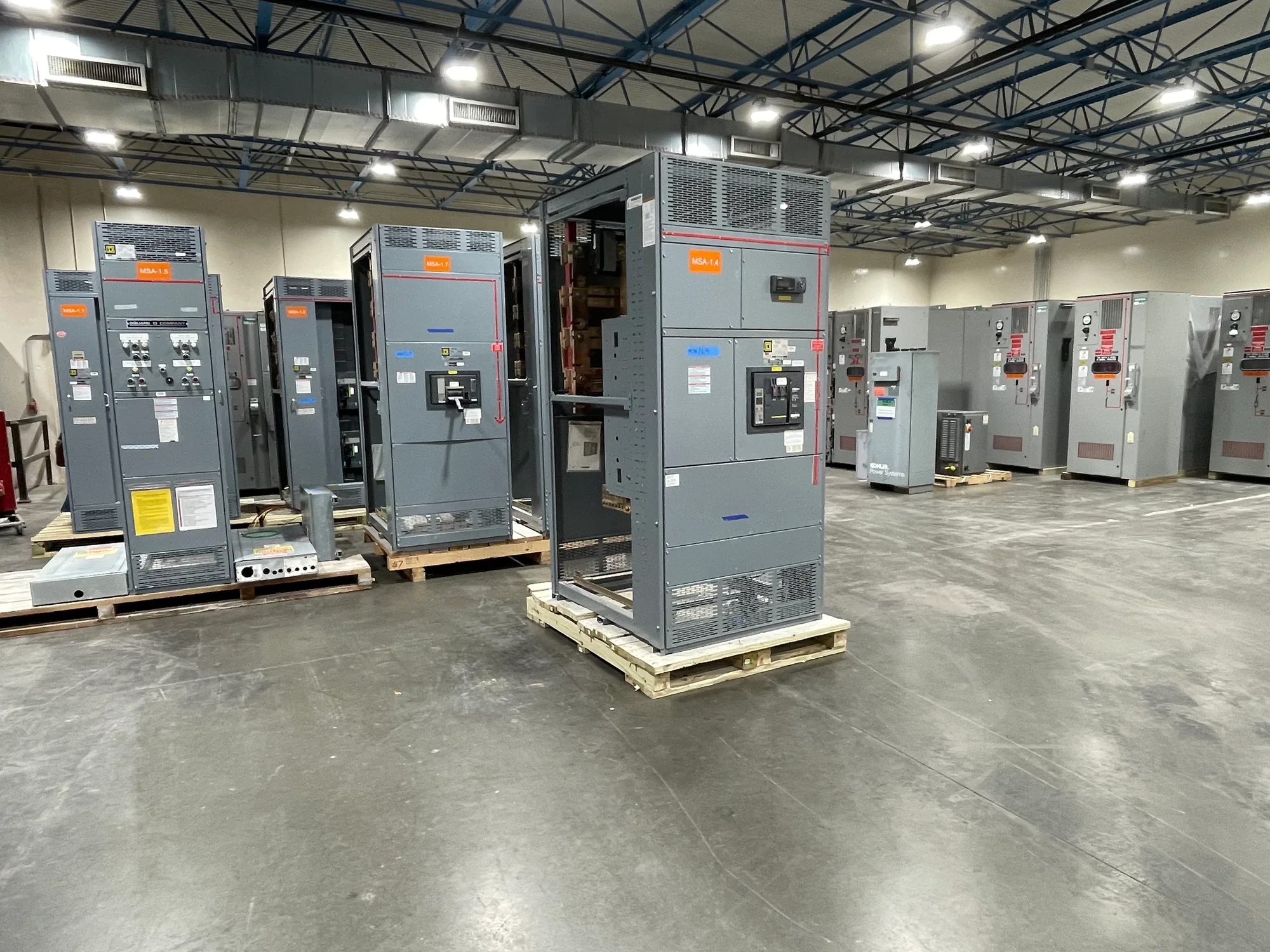
Planning New Switchgear for Los Angeles
Los Angeles projects can involve tight construction sites, active streets, limited staging areas and several parties whose work must align. Switchgear Builder California supplies new switchgear built in the USA with American components, and can review project requirements for customers in Los Angeles. The appropriate equipment and delivery approach depend on the electrical design, site conditions and project schedule; service coverage and logistics should be confirmed for each request. Begin with the project’s electrical documents and operating needs. Identify the system voltage, anticipated load, fault-current information, metering and protection requirements, intended installation environment, and any interfaces with existing equipment. These are design inputs for qualified professionals to evaluate, not assumptions about a standard configuration. Also identify the project phase, required submittal dates and the parties responsible for engineering, procurement, installation and commissioning. Early discussion helps surface decisions that could affect equipment dimensions, access planning or coordination before the site is ready to receive a shipment.
Account for Urban Access and Receiving Conditions
In a dense urban setting, delivery feasibility may depend as much on the route and receiving point as on the equipment itself. Narrow streets, loading restrictions, building entrances, overhead obstructions, security procedures, active pedestrian areas and limited truck maneuvering space can all affect planning. Provide the delivery address, receiving hours, site contact and any known restrictions when requesting a logistics review. If the equipment must pass through a gate, loading dock or interior route, share verified dimensions and access details so the project team can assess the path. Clarify who can receive the shipment, where it can be unloaded, and whether a crane, forklift or other handling equipment is being arranged by the project. Confirm the responsible party for permits, street or curb access, traffic control and any building approvals. These requirements vary by location and project, so they should be checked with the appropriate authorities and site management. Avoid relying on an assumed delivery window or unloading arrangement; access conditions and carrier coordination should be reviewed against the actual site plan and shipment details.
| System | Voltage, phase, current and available fault current |
|---|---|
| Configuration | Lineup, protection, controls and enclosure as specified |
| Compliance | Applicable standards and listing confirmed for the assembly |
| Delivery | California and nationwide; schedule confirmed by quote |
Coordinate Requirements with the Serving Utility
Utility coordination is an important part of planning equipment that connects to a Los Angeles electrical service. The serving utility, project engineer and electrical contractor should establish applicable service requirements, metering arrangements, protection expectations, connection points and approval steps for the specific project. Requirements can differ by service type and project circumstances, so confirm them directly with the utility and responsible design professionals before finalizing equipment details. Useful information to assemble includes the utility’s service documentation, one-line diagram, available fault-current data, grounding approach, metering requirements and any written review comments. Identify who will submit drawings, respond to technical questions and schedule utility-related work. The equipment design should be evaluated against the project’s electrical criteria and the applicable codes and standards; the relevant requirements depend on the equipment and application. For medium- or high-voltage equipment, determine and verify the standards applicable to that specific equipment. Qualified professionals must determine protection, ratings and code compliance. Utility coordination does not replace those engineering responsibilities or guarantee approval.
Build Delivery and Installation Around the Site
A useful delivery plan connects equipment details to the construction sequence. Confirm the planned receiving date range, site readiness, storage conditions, installation location and the activities that must precede energization. Compare the shipment’s documented dimensions and handling requirements with doorways, corridors, equipment-room clearances and the route to the final position. Where access is constrained, the contractor and site team should decide how the equipment will be moved and set, including responsibility for rigging and protection of surrounding property. Keep the delivery contact and site superintendent informed as the project advances. Establish how schedule changes, access problems or site-readiness issues will be communicated, and whether temporary storage is available if installation cannot proceed at receipt. Any schedule-sensitive or expedited option is subject to project review and cannot be assumed until requirements, equipment scope and logistics have been assessed. A realistic plan accounts for coordination among the manufacturer, carrier, contractor, building management and utility, while leaving time for required inspections and commissioning activities.
Confirm Coverage and Prepare a Project Review
To determine whether a project can be supported in Los Angeles, share the project location, equipment type, electrical requirements and anticipated delivery needs with Switchgear Builder California. Include drawings or a concise equipment specification, the required project milestones, site access constraints and utility documentation already available. Note whether the equipment is for new construction, a replacement installation or another application, and identify the engineer or contractor who can resolve technical questions. This information supports a focused review of scope and logistics without presuming a particular rating, configuration or approval. California customers and projects elsewhere in the country may be served, with nationwide shipping considered according to project requirements; confirm coverage, route and handling arrangements for the specific destination. Before placing an order, align the equipment scope, submittal expectations, receiving responsibilities and schedule assumptions with the parties involved. Ask about open technical decisions early, especially those that affect utility interfaces or physical access. A clear exchange of project information is the practical first step toward assessing fit, delivery logistics and next actions.