Planning Switchgear Projects in Oxnard
Oxnard projects can involve manufacturing facilities, utilities, commercial properties and other sites where electrical equipment must fit a defined operating and construction plan. Early coordination helps align the switchgear design inputs with the electrical one-line, available space, incoming service, load requirements and planned installation sequence. Switchgear Builder California builds new equipment in the United States with American components and supplies it to customers in Oxnard and elsewhere. Project scope and equipment requirements are reviewed individually; a location alone does not establish a particular configuration, rating or delivery arrangement. Share the project address, application, requested equipment type, drawings and target milestones so the team can assess fit and discuss next steps. For a replacement or expansion, clarify whether the work is a new installation or modernization of the customer's own equipment. Qualified electrical professionals should determine system protection, ratings and applicable codes for the specific project.
Account for Coastal Site Conditions
Oxnard's coastal setting makes the installation environment an important design and coordination input. Salt-laden air, moisture, wind-driven rain, temperature variation and nearby process conditions may affect enclosure selection, materials, protective measures and maintenance planning. The relevant exposure depends on the actual site: equipment indoors, in a conditioned electrical room, under a canopy or outdoors may face very different conditions. Provide the intended installation location and describe ventilation, washdown, corrosive agents, condensation risk and any enclosure or environmental requirements specified by the engineer or owner. These factors should be reviewed alongside voltage, current, fault-duty and service details rather than treated as a separate afterthought. Do not assume a standard enclosure or finish is suitable for every coastal application. The project engineer and qualified professionals establish the environmental criteria and verify that the proposed design and installation satisfy applicable requirements.
| System | Voltage, phase, current and available fault current |
|---|---|
| Configuration | Lineup, protection, controls and enclosure as specified |
| Compliance | Applicable standards and listing confirmed for the assembly |
| Delivery | California and nationwide; schedule confirmed by quote |
Coordinate Industrial Facility Access
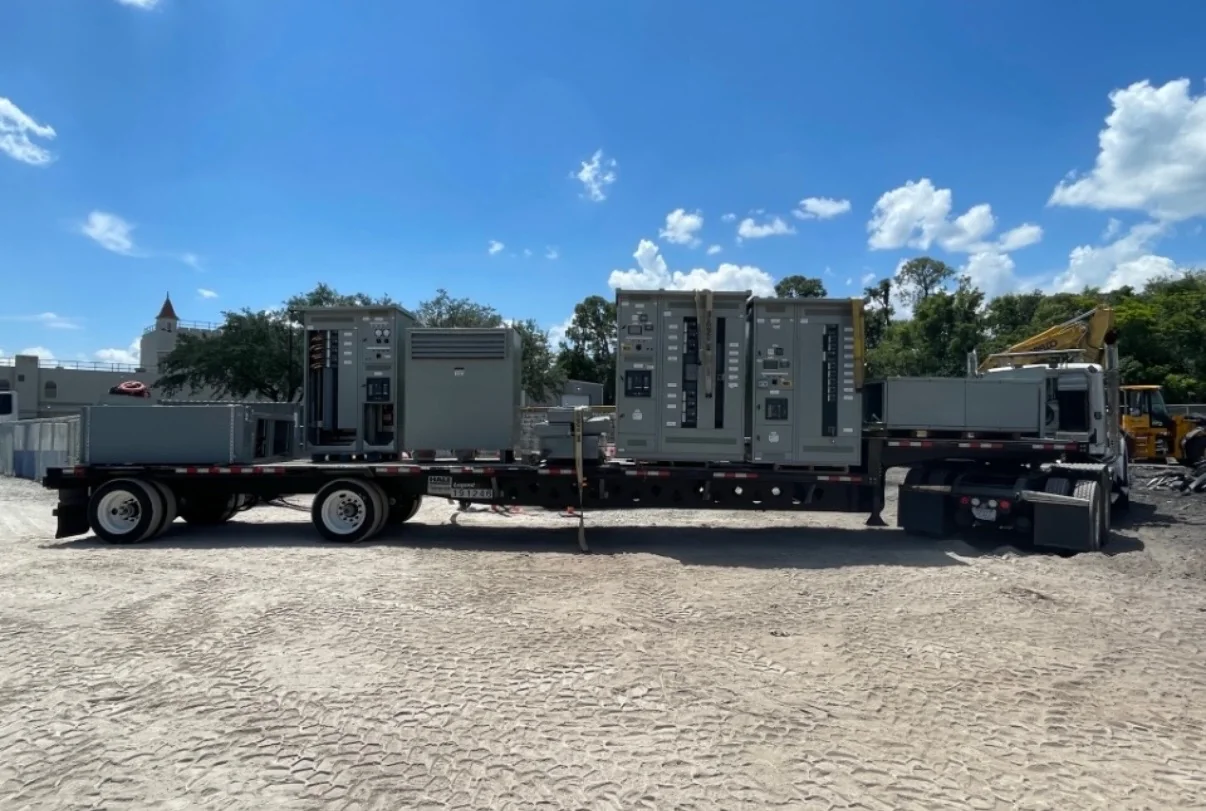
A successful delivery depends on more than the equipment design. Industrial facilities may have controlled entry, scheduled receiving windows, limited staging areas, active production traffic or restrictions on contractor vehicles. Confirm the receiving contact, site access procedure, delivery hours and any advance notice requirements before a shipment is planned. Identify gate dimensions, overhead clearances, turning constraints, dock or unloading arrangements, and the path from the receiving point to the electrical room. Equipment dimensions and shipping configuration must be considered against that route, including doorways, corridors, elevators and floor-loading limits where relevant. If a crane, forklift, rigging crew or temporary closure is needed, coordinate responsibility and timing with the facility team and installation contractor. These details help surface constraints early, but they do not establish that a particular delivery method is available. Final handling plans should be confirmed for the actual equipment and site.
Review Delivery and Schedule Logistics
Delivery planning should connect the equipment scope to construction readiness. Provide the requested delivery location, site contact, receiving restrictions, preferred delivery window and current project milestones. Discuss whether the site can accept equipment when it arrives, how long staging is possible, and whether unloading and secure storage are arranged. If construction sequencing, an outage window or a commissioning date creates schedule pressure, raise that constraint during project review. Schedule-sensitive or expedited options may be considered where appropriate, but timing depends on the equipment scope, engineering review, materials and other project conditions; no delivery date should be assumed until confirmed. Nationwide shipping may be arranged subject to project review and logistics. For Oxnard destinations, verify that the address, access route and receiving plan are complete before dispatch coordination. Clear communication among the owner, contractor, engineer, carrier and equipment supplier reduces avoidable delays and helps the installation team prepare.
Prepare Information for Project Review
A focused inquiry gives the project team a practical starting point. Include the equipment type, system voltage, bus or feeder arrangement, available fault-current information, load data, metering and protective-device requirements, and the latest one-line diagram when available. Identify applicable codes and standards for the specific equipment, along with any owner specifications, environmental criteria or interface requirements. For medium- or high-voltage equipment, identify the standards that apply to that equipment and have qualified professionals verify them; standards compliance should not be confused with third-party listing or approval. For applicable low-voltage switchboards, UL 891 may be a relevant standard, but its applicability and any required evidence must be confirmed for the project. Add Oxnard site access details and schedule constraints so logistics can be reviewed alongside technical scope. The next step is a project discussion to clarify open requirements, determine what can be addressed and establish a suitable path forward.