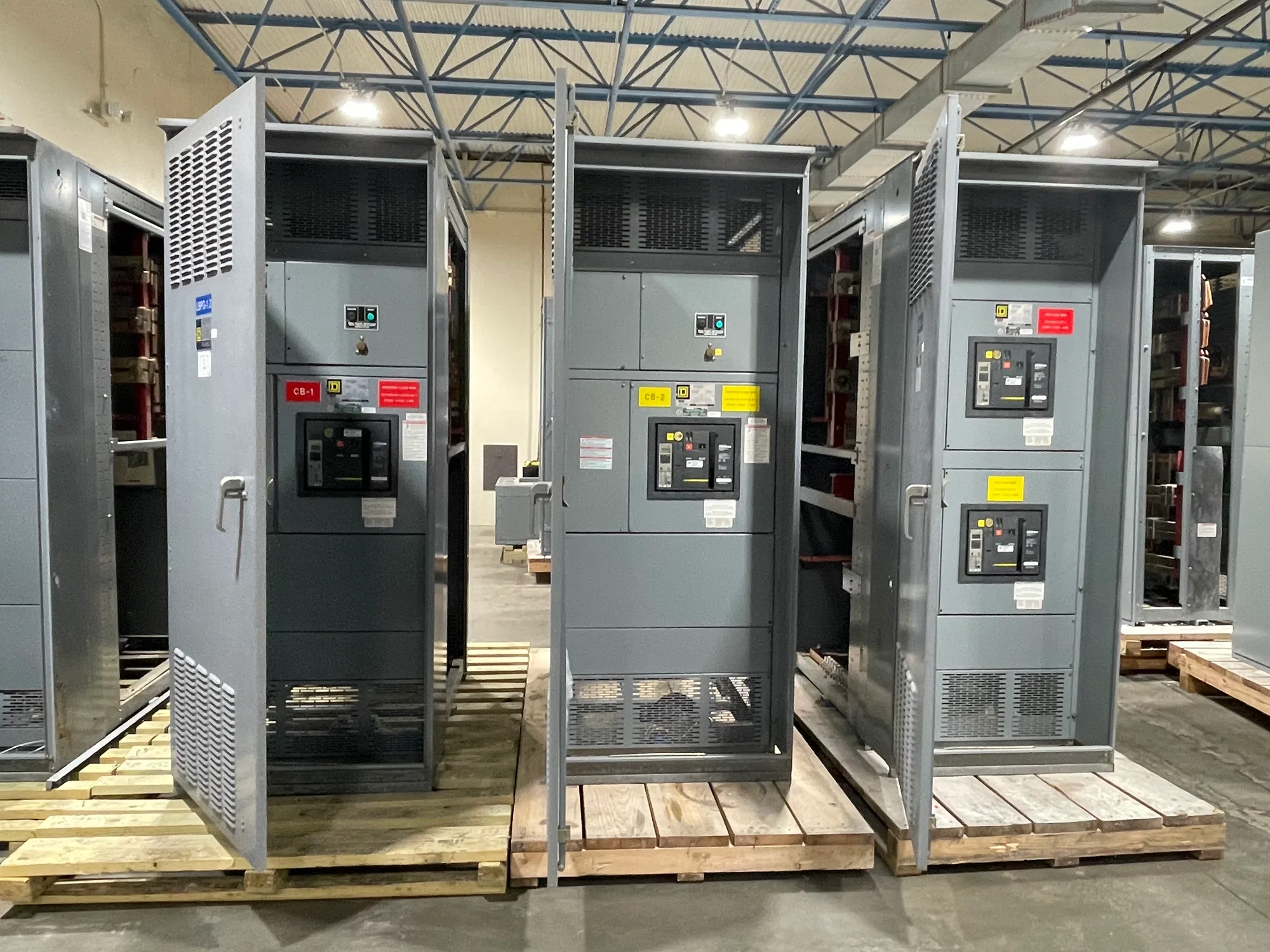
Switchgear Planning for Anaheim Facilities
Anaheim commercial and industrial projects can involve very different electrical demands, from tenant improvements and building expansions to production facilities and infrastructure upgrades. The right switchgear scope starts with the service conditions and operating goals of the specific site—not with a generic equipment assumption. Identify whether the project calls for a low-voltage switchboard, medium-voltage equipment, or another defined assembly, then document system voltage, available fault current, load requirements, utility interface, and the intended arrangement. For an existing facility, include the available one-line diagram and information about the equipment being replaced or connected. These details help establish a practical design basis and reveal questions that need resolution before fabrication planning. Switchgear Builder California supplies new equipment built in the USA with American components. Project requirements, applicable standards, and equipment ratings must be reviewed for the actual application; qualified professionals remain responsible for engineering, protection, code compliance, and acceptance.
Confirm Delivery Coverage and Site Logistics
Delivery to an Anaheim address depends on the equipment, destination, route, and site conditions. Before treating a proposed delivery plan as workable, confirm the exact jobsite address, receiving hours, truck access, unloading method, and any limits on vehicle size or staging. A downtown commercial site, a fenced industrial campus, and an active construction project may each require a different approach. Share gate procedures, delivery appointment rules, dock or curbside constraints, lift requirements, and the location where the equipment must ultimately be set. Also identify who will receive the shipment and whether the site can accept equipment before installation. We can review delivery coverage and logistics with you as part of project coordination, but coverage and arrangements should be confirmed for the particular order and destination. Do not assume that a standard truck delivery includes cranes, rigging, inside placement, electrical installation, or removal of existing gear; clarify responsibilities and scope before scheduling.
| System | Voltage, phase, current and available fault current |
|---|---|
| Configuration | Lineup, protection, controls and enclosure as specified |
| Compliance | Applicable standards and listing confirmed for the assembly |
| Delivery | California and nationwide; schedule confirmed by quote |
Plan Around Constrained Installation Windows
Many Anaheim facilities have limited opportunities to interrupt service or occupy a loading area. A shutdown may need to align with production breaks, tenant access, utility coordination, or a tightly controlled construction sequence. Treat the installation window as a design and delivery input early: identify the required outage dates, the duration available for setting and connections, temporary power needs, and the sequence for testing and return to service. Verify that the equipment dimensions, shipping sections, doorways, elevators, and final route to the electrical room have been checked against field conditions. If storage space is limited, coordinate delivery as close as practical to the planned set date while allowing for receiving and inspection. Schedule-sensitive or expedited options may be considered after project review, but timing is not guaranteed. A realistic plan includes contingency for site access changes, utility approvals, commissioning tasks, and corrective work, rather than relying on delivery timing alone to protect the outage.
Coordinate Equipment Data and Responsibilities
Clear information at inquiry helps avoid late changes that can affect engineering, procurement, and the site schedule. Provide the current one-line diagram, equipment schedules, load and motor data, system grounding details, fault-current information, and any project specifications. Include preferred bus arrangement, incoming and feeder requirements, metering and control needs, enclosure conditions, and space or cable-entry restrictions where known. Flag interfaces with transformers, generators, transfer equipment, protective relays, or building controls, and identify who will furnish and connect each item. For low-voltage switchboards, determine whether UL 891 applies to the project specification and confirm the required design details; for medium- or high-voltage equipment, identify the standards applicable to that specific equipment and verify them for the application. Applicable ratings and approvals are project-specific and should not be presumed. Qualified engineers and contractors must establish protection settings, safe work practices, code requirements, and commissioning procedures.
Start an Anaheim Project Review
To begin a delivery and project-support discussion, send the project location, desired in-service date, equipment type, preliminary ratings, drawings, and specification package. Include the planned receiving and installation windows, site contact, access restrictions, unloading resources, and any known outage or utility milestones. If drawings are incomplete, explain what is confirmed and what remains under development; a preliminary review can help identify information still needed, but it is not a substitute for approved engineering. Ask specifically which delivery arrangements can be considered for the Anaheim site and what responsibilities belong to the manufacturer, carrier, contractor, and owner. For occupied or operating facilities, align equipment receipt with the construction manager and electrical contractor so storage, protection, and installation sequencing are understood. With those details, the project team can discuss a suitable scope, open technical questions, and logistics for new switchgear. California customers and projects elsewhere in the United States may be served, subject to project review and confirmation of delivery arrangements.