Plan for Bakersfield’s Heat and Site Conditions
High ambient temperatures can affect equipment selection, operating margins and the environment around an electrical room or outdoor installation. For a Bakersfield project, share expected ambient conditions, whether equipment will be indoors or outdoors, ventilation or cooling provisions, exposure to dust, and any enclosure constraints. These details help the design team evaluate temperature-related requirements alongside voltage, current, fault duty and other project criteria; they do not establish a rating without review. Consider conditions during installation as well as normal operation, including limited shade, hot equipment rooms and restricted airflow. Qualified professionals should determine applicable ratings, protection and code requirements for the installation. If site conditions are unusually severe or uncertain, document them early and ask which information is needed to resolve the design. Addressing environmental inputs before equipment is finalized can reduce late revisions and improve coordination with the electrical room, service entrance and surrounding systems.
Match Industrial Loads to the Electrical Design
Industrial facilities may combine large motors, process equipment, variable-frequency drives, standby sources and changing production loads. A useful project review begins with a current one-line diagram and a clear account of the service, load types, operating sequence and planned expansions. Include available fault-current information, protective-device data, grounding approach and utility requirements when available. For motor-heavy or nonlinear loads, identify starting methods, drive characteristics and any concerns about harmonics, voltage drop or coordination. These inputs help engineers assess the application and identify questions that need resolution before equipment is specified. Do not assume that an existing lineup’s ratings or arrangement will suit a new installation; verify system conditions and interfaces for the project. Qualified electrical professionals remain responsible for protection settings, equipment ratings and code compliance. Early coordination between the owner, engineer, contractor and equipment provider helps keep the design grounded in actual operating needs rather than broad assumptions about industrial service.
| System | Voltage, phase, current and available fault current |
|---|---|
| Configuration | Lineup, protection, controls and enclosure as specified |
| Compliance | Applicable standards and listing confirmed for the assembly |
| Delivery | California and nationwide; schedule confirmed by quote |
Confirm Equipment Scope and Project Interfaces
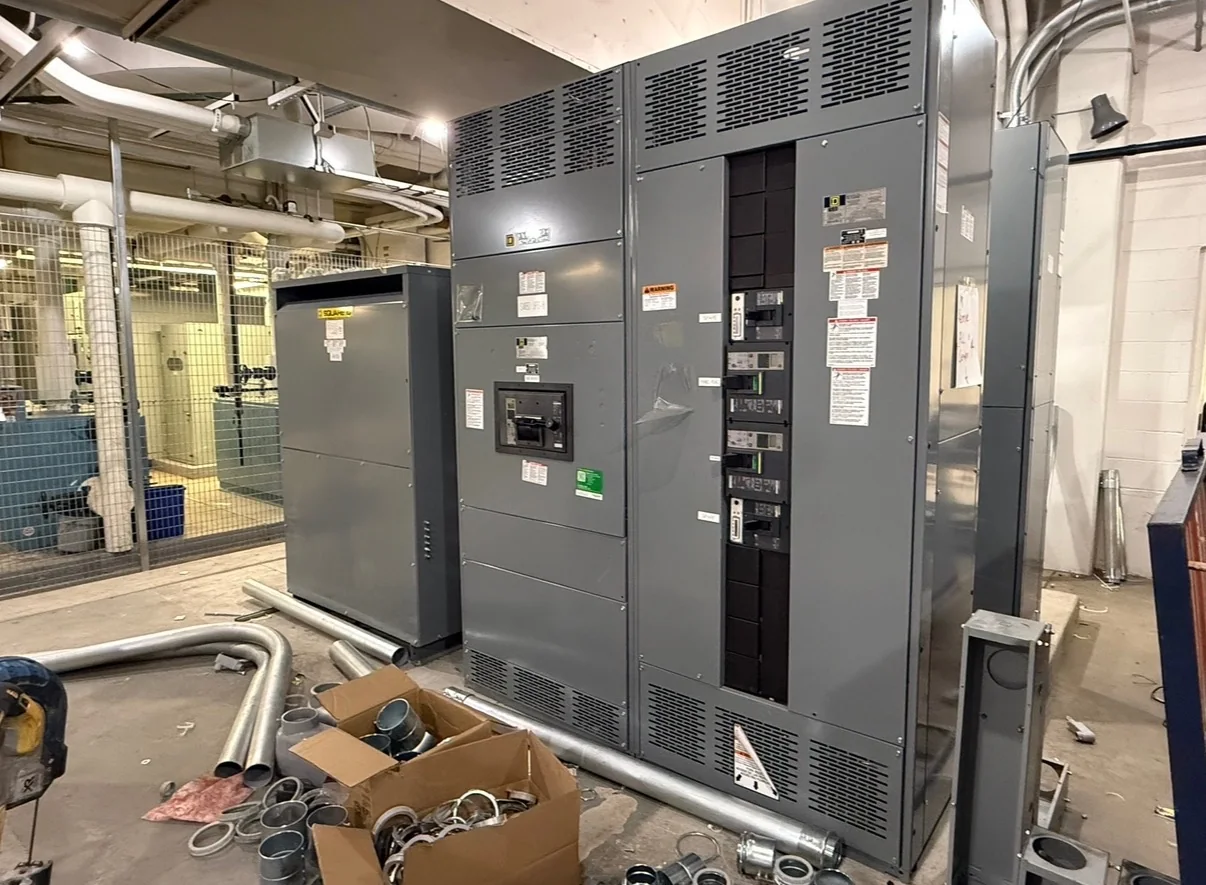
Switchgear scope depends on the project’s electrical architecture, required functions and connection points. Before requesting a proposal, clarify whether the need is for a new lineup, replacement equipment or a defined portion of a larger system. Identify incoming and outgoing circuits, metering and control requirements, available space, cable entry and termination preferences, and any provisions for future circuits. Share drawings, specifications, load schedules and relevant utility or facility standards, noting which documents are current and which remain preliminary. If the installation interfaces with existing equipment, provide dimensions, photographs and verified electrical data where possible; field verification may still be necessary. For low-voltage switchboards, UL 891 may be relevant where applicable, but that reference alone does not establish a listing or approval. For medium- or high-voltage equipment, identify and verify standards applicable to that specific equipment. Clear scope and interface information make technical review more efficient and help avoid mismatches at installation.
Coordinate Delivery to the Bakersfield Site
Delivery planning should begin while the equipment layout and project schedule are being developed, not after the lineup is ready to ship. Confirm the exact delivery address, site contact, receiving hours, truck access, turning clearance, overhead obstructions, unloading equipment and the route from the drop point to the installation area. Determine whether a loading dock is available or whether a crane, forklift or other rigging plan must be arranged by the project team. Check door dimensions, floor capacity, elevator limits and any restrictions on moving sections through the facility. Also establish how equipment will be protected from weather, dust and jobsite activity after arrival. Packaging, shipment configuration and handling needs should be reviewed against the site’s actual constraints. Coverage and logistics for a Bakersfield project should be confirmed with the project team, since destination, equipment dimensions, access and schedule can affect the delivery plan. No delivery date or service arrangement should be assumed until those details are reviewed.
Move from Project Review to Next Steps
To start a useful review, provide the project location in Bakersfield, required-in-service date, equipment type and voltage class, one-line diagram, specifications, load information and known site constraints. Include the engineer’s contact, contractor details and the person responsible for receiving the shipment. If drawings or utility requirements are still being finalized, identify open items and their expected resolution so dependencies are visible. The manufacturer can review the supplied information, discuss equipment scope and confirm whether delivery or other project support can be coordinated for the destination. Schedule-sensitive or expedited possibilities are subject to technical review, material requirements and project conditions; they should not be treated as guaranteed. For complex installations, arrange a coordination discussion before releasing final drawings or committing to site work. A complete information package helps identify questions early, supports a more realistic plan and gives Bakersfield project teams a practical basis for coordinating procurement, site readiness and installation.