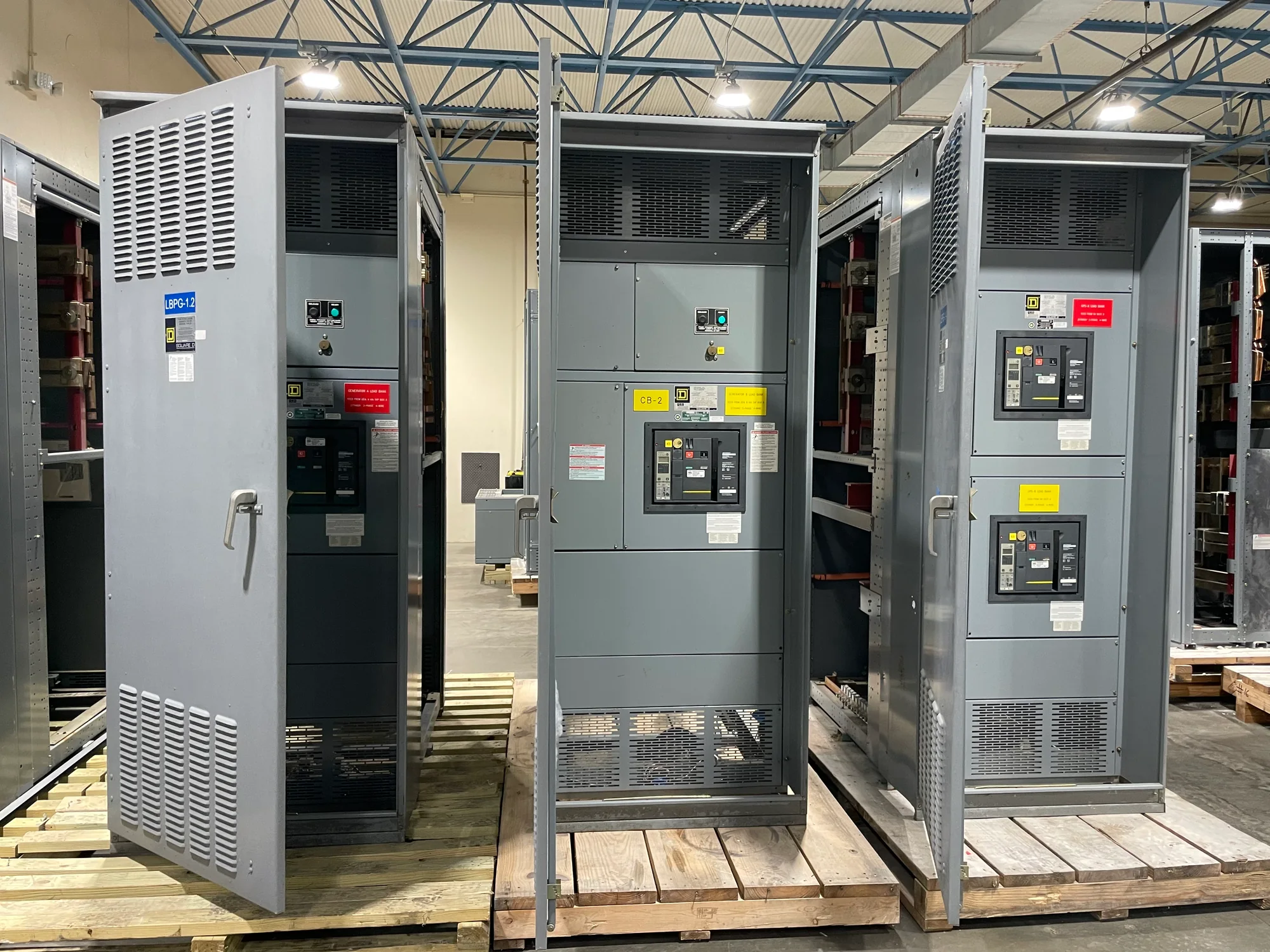
Build a Load Picture Around Research
University laboratories often combine instruments, environmental chambers, pumps, refrigeration, computing, exhaust systems and general-purpose receptacles on the same floor, but their electrical behavior and consequences of interruption differ. Start with an equipment schedule that identifies voltage and phase, connected and demand load where known, starting or inrush characteristics, harmonic-producing electronics, and any manufacturer limits. Distinguish fixed equipment from plug loads that may move or be replaced as research evolves. Include support spaces and shared services, such as cold rooms or central vacuum systems, rather than counting only instruments inside the lab. For proposed equipment without final nameplates, mark estimates clearly and identify who will confirm them before design is frozen. This gives the electrical engineer a defensible basis to evaluate feeder capacity, distribution, and spare provisions. Qualified professionals should verify load calculations and applicable code requirements for the specific building and project.
Set Uptime Priorities by Load
Not every laboratory load needs the same continuity strategy. Work with principal investigators, facilities staff, environmental health and safety personnel, and the electrical design team to identify what can tolerate a brief interruption, what needs an orderly shutdown, and what must remain powered through a transfer or outage. Research samples, controlled environments, data acquisition, life-safety systems, and building services can have very different consequences when power is lost. Record acceptable interruption duration, restart behavior, temperature or pressure limits, and any monitoring or alarm needs. Then distinguish switchgear functions from other systems: standby generation, uninterruptible power supplies, transfer equipment, and controls may each address different portions of the continuity plan. Their interactions require coordinated engineering, not assumptions based on a label such as “critical.” Document the operating sequence and test expectations early, so equipment selection and protection planning support an understandable response to normal, abnormal, and maintenance conditions.
| System | Voltage, phase, current and available fault current |
|---|---|
| Configuration | Lineup, protection, controls and enclosure as specified |
| Compliance | Applicable standards and listing confirmed for the assembly |
| Delivery | California and nationwide; schedule confirmed by quote |
Coordinate Protection and Distribution
Laboratory distribution may serve sensitive electronic instruments alongside motors, heaters, and shared mechanical loads. Protection decisions should reflect available fault current, conductor and equipment ratings, grounding arrangements, upstream devices, and the need to isolate a fault without unnecessarily interrupting unrelated research. Selectivity and coordination are engineering objectives to evaluate using project-specific data; they are not guaranteed by choosing a particular switchgear arrangement. Short-circuit and coordination studies, arc-flash analysis, and review of equipment duty may inform the design, subject to the project scope and applicable requirements. Identify utility service information, transformer data, generator contribution, and existing one-line diagrams when available, and flag missing or provisional inputs. If the project involves low-voltage switchboards, UL 891 may be relevant to applicable switchboards; it does not establish a listing or approval for an assembly. For medium- or high-voltage equipment, identify and verify the standards applicable to that specific equipment. Qualified professionals determine ratings, protection, and codes.
Provide for Future Circuit Changes
Research programs change: new instruments arrive, grants alter project scope, and laboratories are renovated or assigned to different teams. A useful design review asks where likely changes will occur and what kind of flexibility is practical. Consider spare breaker spaces, provisions for future feeders, physical working space, bus capacity, routing paths, and the ability to isolate circuits for maintenance. These are separate considerations: an unused space does not itself confirm that bus, upstream protection, or service capacity can support added load. Likewise, oversizing every element may increase cost and footprint without solving the actual constraint. Ask facilities and research stakeholders to identify probable additions, relocations, and shutdown windows, then have the engineer assess scenarios against the building’s electrical infrastructure. Clear labels, current schedules, and maintainable documentation also make later changes safer and easier to review. Treat future capacity as a defined planning assumption, with limits and confirmation points recorded for subsequent projects.
Prepare a Useful Project Brief
Before requesting a switchgear design or budgetary discussion, assemble the current one-line diagram, service and transformer data, load schedules, equipment cut sheets, and known operating sequences. Mark which information is confirmed, estimated, or still pending. Explain the laboratory’s uptime priorities, planned construction phases, available outage windows, physical constraints, and expected circuit changes over the planning horizon. Include interfaces with generators, UPS systems, transfer equipment, building automation, and any existing distribution that will remain in service. For renovation work, identify what equipment is new and what existing customer-owned equipment must be evaluated as part of the project; modernization applies to that equipment, not to a presumption that it will be replaced. Switchgear Builder California builds new switchgear in the USA with American components and supplies customers in California and nationwide. A project review can clarify design inputs and possible schedule-sensitive options; scope, requirements, and timing must be assessed for each project, with no schedule assumed before review.