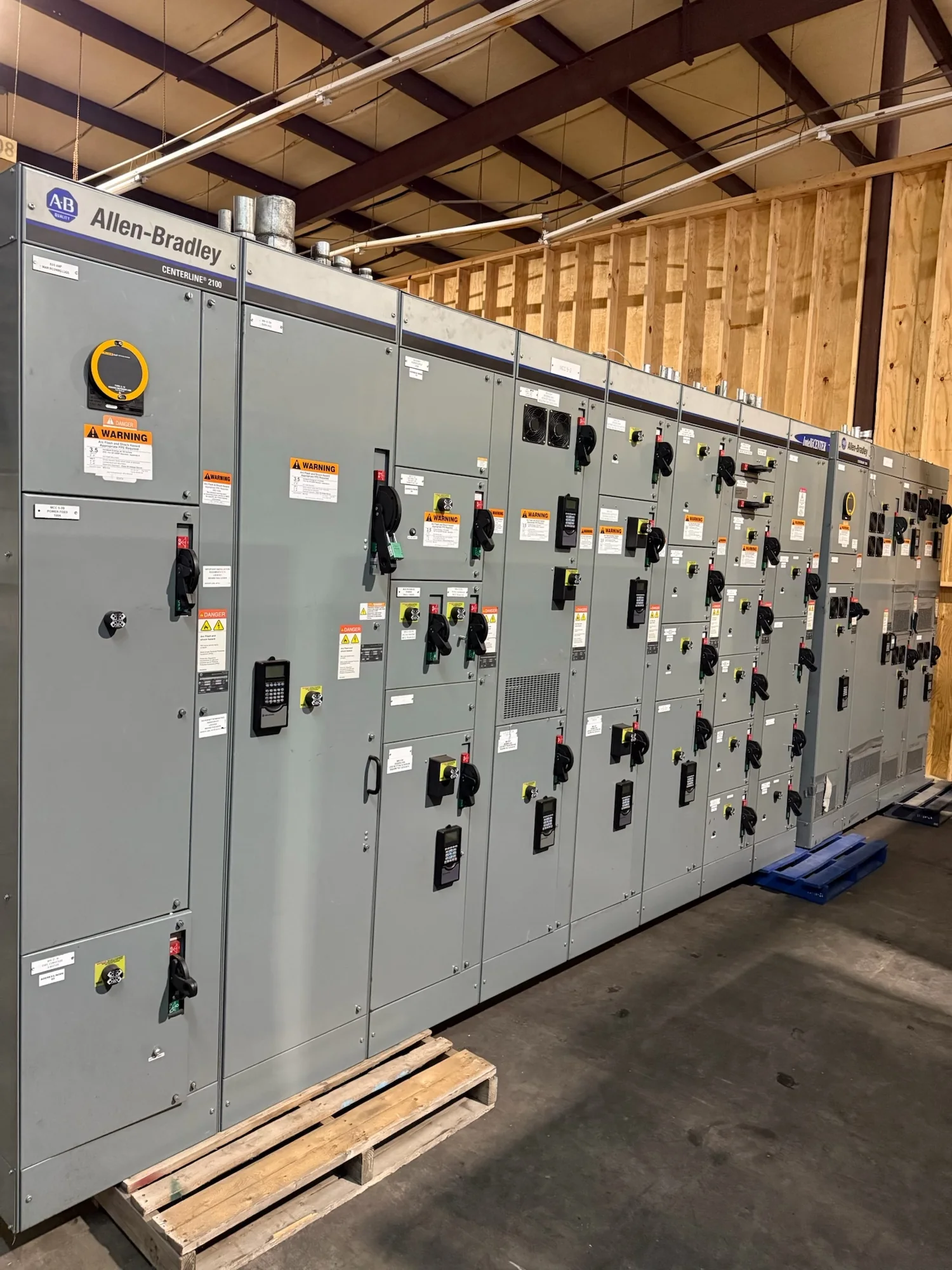
Map the Process Before Arranging Equipment
Motor distribution begins with understanding how the process operates, not simply counting motors. Identify each motor’s function, operating sequence, starting method, normal and peak demand, and consequence of an interruption. A pump serving a critical cooling loop may warrant different feeder and control treatment from a standby conveyor or an auxiliary fan. Show which loads operate together, which can be shed, and which need independent control or isolation. These relationships help engineers organize equipment into practical groups and assess whether a fault or planned maintenance could affect neighboring processes. Provide current one-lines, motor schedules, process diagrams, and available fault-current information early; note assumptions and unresolved data rather than treating estimates as final. The design team can then evaluate distribution topology, feeder allocation, and control interfaces against operating priorities. Qualified professionals must determine ratings, protection, and applicable codes for the specific installation.
Coordinate Feeders and Motor Protection
Feeder selection and motor protection must be considered together. Gather each motor’s nameplate data, voltage, horsepower, full-load current, starting characteristics, duty, and expected operating profile, along with upstream source and transformer details. Starting current and duration can influence voltage drop, protective-device coordination, and whether simultaneous starts are acceptable. Protection should address the intended motor and feeder functions while coordinating with upstream and downstream devices; a setting that reduces nuisance trips must not compromise conductor or equipment protection. Where process continuity matters, review selective coordination needs and the operational impact of a trip before finalizing the arrangement. Document assumptions about available fault current and future load additions, then confirm them as utility and system data are established. Short-circuit and coordination studies may inform final device selection and settings. Do not rely on a generic motor schedule to establish a complete design: the responsible engineers need project-specific data and must verify applicable requirements.
| System | Voltage, phase, current and available fault current |
|---|---|
| Configuration | Lineup, protection, controls and enclosure as specified |
| Compliance | Applicable standards and listing confirmed for the assembly |
| Delivery | California and nationwide; schedule confirmed by quote |
Choose Control Grouping for Operations
The way motor controls are grouped affects both daily operation and fault response. Grouping by process area can simplify operator orientation and make local maintenance planning more intuitive, while grouping by voltage, equipment type, or control function may better suit the electrical design. Compare these approaches against cable routing, control wiring, environmental conditions, and the consequences of isolating a section. Establish which motors need local controls, remote commands, interlocks, status feedback, or integration with a plant control system. Define signal ownership and interfaces with the controls contractor so that communications, permissives, and alarms are not left to assumption. Consider whether a maintenance task on one starter or control section can be performed without unnecessarily disabling unrelated equipment. The final arrangement should reflect actual operating procedures and safe isolation practices, with qualified personnel determining disconnecting means and protection. Clear device identification and consistent naming across drawings and equipment make control groups easier to operate and maintain.
Make Maintenance Access a Design Input
Maintenance access is not a cosmetic layout issue; it influences equipment placement, section arrangement, and the work teams can safely perform. Review room dimensions, door and aisle clearances, cable entry routes, ceiling obstructions, ventilation, and the path for moving equipment into position. Identify which components require routine inspection, testing, adjustment, or replacement, and consider whether access to one device could expose personnel to adjacent energized parts. The project team should coordinate working space and safe work practices with applicable codes and site procedures; qualified professionals determine required clearances and isolation measures. Discuss how feeders can be identified and isolated, how control circuits are documented, and whether drawings and labels will match plant conventions. Plan for realistic maintenance activities, including the tools and access methods technicians use. A compact arrangement may reduce floor area but make troubleshooting or component removal difficult, while greater separation can improve access at the cost of space and additional interconnections.
Prepare a Complete Project Basis
A useful request for equipment begins with a clear project basis. Include the one-line diagram, motor and feeder schedules, control narratives, system voltage, source information, available fault current, environmental conditions, and the applicable standards identified for the specific equipment. Note whether the project is new construction, an expansion, or a replacement, and explain interfaces with existing distribution and plant controls. Provide enclosure and installation constraints, cable entry preferences, access requirements, naming conventions, and any planned future loads. Distinguish confirmed data from items still under review; this helps the design and pricing discussion focus on real decisions rather than hidden assumptions. For schedule-sensitive work, share milestone dates and constraints so feasibility can be reviewed without treating timing as guaranteed. Switchgear Builder California builds new equipment in the USA with American components and supplies customers in California and nationwide, subject to project review. The next step is to submit the available documents and arrange a technical review of scope, interfaces, and open questions.