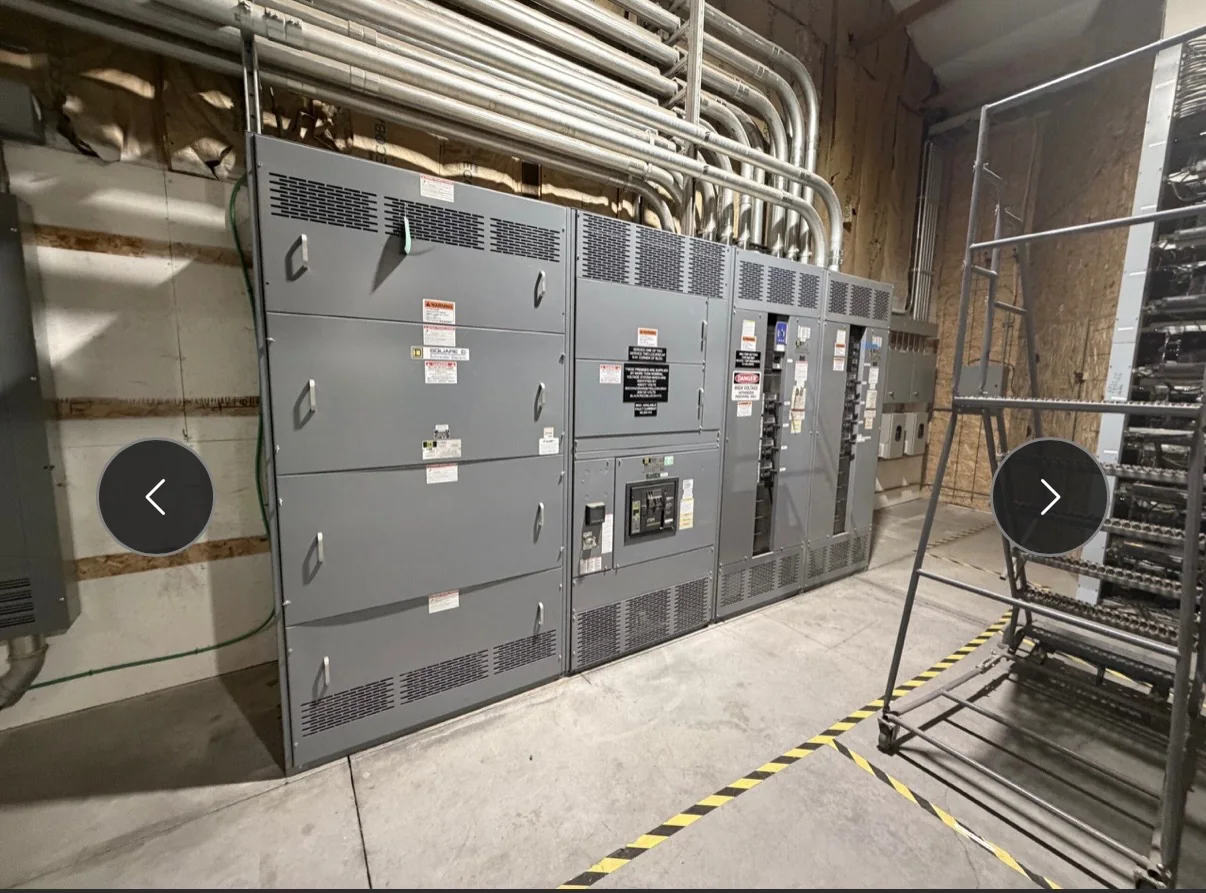
Organize Branch Circuits Around Plant Loads
An industrial plant panelboard should support a clear, usable distribution plan—not simply provide a count of available circuit positions. Start by grouping loads according to process area, equipment function, voltage and operating schedule. Separate essential control or support loads from noncritical convenience loads where the design and operating strategy call for it. This structure can make circuit identification more intuitive during troubleshooting and help maintenance teams understand what may be affected by a planned interruption. Review the connected load, expected demand, conductor arrangements and available fault-current information with the project’s electrical professionals. Circuit quantity and space requirements should reflect both the initial installation and credible future additions. A panelboard that is crowded at turnover can make modifications harder and increase the chance of disruptive work later. Develop a circuit schedule that names the served equipment and location, then confirm that labeling and drawings will remain consistent as the plant changes.
Account for Motors and Starting Conditions
Motor loads need deliberate coordination with the panelboard’s upstream and downstream equipment. Record each motor’s voltage, horsepower or other applicable nameplate data, starting method, duty, and expected operating pattern. Across a plant, simultaneous starts or changing production cycles can affect demand and voltage performance; the actual impact depends on the system and must be evaluated rather than assumed. Panelboard branch-circuit protection is only one part of a motor circuit. The responsible designer must coordinate conductors, motor controllers, overload protection, short-circuit protection and upstream devices under the applicable codes and project requirements. Also consider whether drives, soft starters or other electronic equipment introduce harmonic or environmental concerns that affect the broader distribution design. Keep motor circuits grouped in a way that supports safe access and clear identification without obscuring which process or machine they serve. Confirm equipment ratings and coordination with qualified professionals before finalizing the design.
| System | Voltage, phase, current and available fault current |
|---|---|
| Configuration | Lineup, protection, controls and enclosure as specified |
| Compliance | Applicable standards and listing confirmed for the assembly |
| Delivery | California and nationwide; schedule confirmed by quote |
Protect Process Continuity Through Distribution Choices
A panelboard arrangement can influence how much production is affected when a circuit requires maintenance or a fault occurs. Map the loads whose interruption has operational consequences, including process controls, instrumentation, pumps, ventilation and supporting systems. Determine which loads require independent circuits or distinct distribution paths, and identify any required backup or alternate-source arrangements elsewhere in the electrical system. A panelboard by itself does not guarantee continuity; resilience depends on the complete system, protection scheme, operating procedures and available sources. Avoid placing unrelated critical functions on a common circuit simply for convenience, while also weighing the cost and space implications of added separation. Review how maintenance staff will isolate equipment, verify circuit identity and restore service. For process areas with planned shutdown windows, align the distribution concept with realistic access and outage constraints. Qualified professionals should assess protection, selective coordination goals and applicable codes for the particular installation.
Plan for Industrial Conditions and Safe Access
Plant operating conditions may differ substantially from those in a clean, climate-controlled electrical room. Identify ambient temperature, humidity, dust, conductive debris, corrosive substances, vibration, washdown practices and the possibility of physical impact. These conditions inform enclosure selection, equipment placement and maintenance planning; the required enclosure and environmental provisions must be established for the specific location. Consider working clearances, door swing, cable entry, wire-bending space and access for inspection or replacement. A panelboard installed near process machinery may be exposed to heat or contamination, while a remote location can complicate troubleshooting and increase cable runs. Evaluate both conditions and maintenance needs before fixing the layout. Keep access routes clear and provide durable, legible identification suited to plant practices. Personnel must follow applicable electrical safety procedures, and qualified professionals must determine safe work methods and the ratings, protection and code requirements appropriate to the installation.
Build in Practical Distribution Flexibility
Industrial loads evolve as lines are reconfigured, equipment is replaced and production capacity changes. Discuss likely additions with plant engineering before selecting circuit count and distribution topology. Where future circuits are anticipated, determine what provisions are appropriate and whether spare capacity is meaningful in terms of load, physical space and electrical ratings—not just unused positions. Document expected expansion, reserved circuits and any constraints so future teams do not treat planning assumptions as confirmed capacity. Changes to motor loads or process equipment can alter demand and protection requirements, so additions require engineering review rather than automatic connection to an open space. For a useful project review, provide a one-line diagram, load and motor schedules, available fault-current data, operating environment, preferred circuit organization and known expansion plans. Include applicable voltage, frequency, service and coordination requirements for verification. Switchgear Builder California builds new equipment in the USA with American components and serves California and nationwide customers; project requirements and shipping details are reviewed individually.