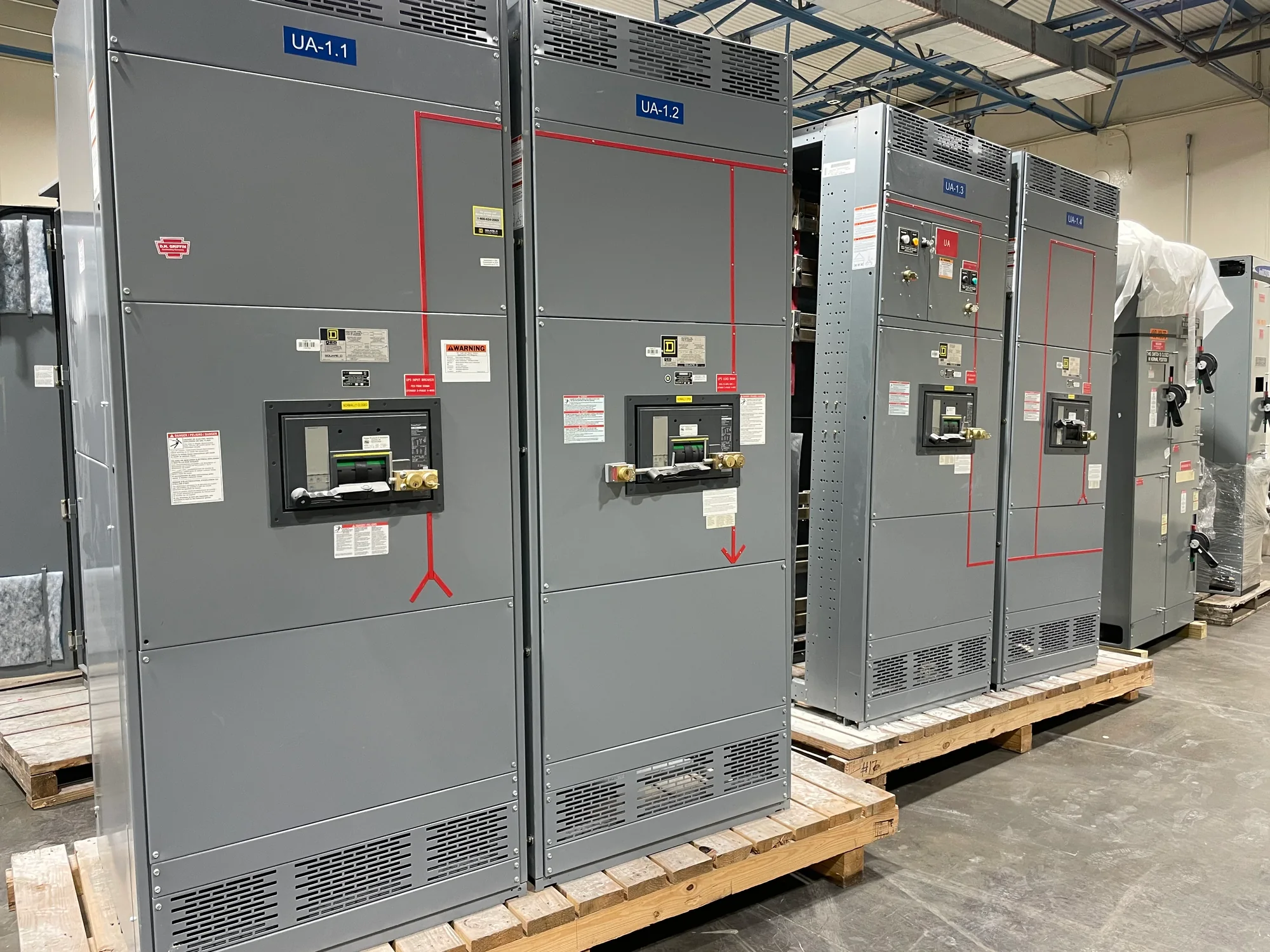
Start with process continuity and load priorities
Industrial power distribution should reflect what a plant must keep running, what can be interrupted, and how quickly operations can recover after an outage. Begin by mapping major process areas, production lines, utilities, and support systems to their electrical sources. Identify loads that require continuous service, loads that can tolerate a planned interruption, and loads that may be shed during an abnormal condition. This hierarchy helps engineers evaluate distribution arrangement, source separation, and the consequences of maintenance or equipment failure. It also clarifies where switching flexibility is valuable and where added complexity could make operation or troubleshooting harder. Document existing utility service, generators or other sources, transfer arrangements, and any planned capacity changes. For brownfield projects, confirm actual field conditions against drawings before defining scope. A useful next step is a load and operating narrative reviewed by plant engineering, operations, and the electrical design team.
Account for motor starting and changing demand
Motor loads can shape both equipment selection and the way a plant distribution system behaves. Large motors may draw substantial starting current, while variable-frequency drives, soft starters, and frequent cycling introduce distinct operating characteristics. Gather motor horsepower, voltage, starting method, duty cycle, acceleration needs, and expected simultaneous operation. Include driven-process requirements: a pump, compressor, conveyor, or mill may have constraints that affect when and how it can restart. Engineers can use these inputs to study voltage drop, starting performance, short-circuit duty, and the effect of motor contribution on fault calculations. Consider future process additions as well as normal demand; designing only around an initial operating snapshot may limit later expansion. Switching and protection decisions should coordinate with upstream sources, downstream motor circuits, and control schemes. Qualified professionals determine ratings and protective-device settings for the actual system, using verified study data rather than assumptions based on equipment labels alone.
| System | Voltage, phase, current and available fault current |
|---|---|
| Configuration | Lineup, protection, controls and enclosure as specified |
| Compliance | Applicable standards and listing confirmed for the assembly |
| Delivery | California and nationwide; schedule confirmed by quote |
Coordinate protection across the plant system
Protective devices need to respond to faults in a way that limits damage while preserving service to unaffected parts of the plant where practical. Coordination depends on source characteristics, available fault current, conductor and equipment withstand, device curves, and the operating modes the plant expects to use. Multiple sources, tie breakers, generator operation, and changes in system configuration can produce different fault conditions, so evaluate each credible mode rather than treating the normal arrangement as the only case. Arc-flash assessment and equipment interrupting and withstand requirements also depend on project-specific analysis and applicable codes. Provide current one-line diagrams, utility fault information, transformer data, generator details, feeder lengths, and protection settings when requesting engineering review. If these records are incomplete, identify the gaps early and plan field verification or studies. A switchgear design should follow the documented system requirements; no general equipment description can substitute for coordination by qualified electrical professionals.
Match construction to industrial conditions
Industrial locations impose conditions beyond electrical ratings. Dust, moisture, corrosive vapors, heat, vibration, washdown practices, and restricted access can influence enclosure decisions, room layout, ventilation, cable entry, and maintenance clearances. Describe the actual installation environment, including whether equipment will be indoors or outdoors, the presence of process contaminants, ambient temperature range, and exposure to cleaning or maintenance activities. Explain how operators access controls and how technicians will isolate, inspect, and service the assembly safely. Physical constraints matter too: room dimensions, door openings, cable routing, overhead services, and equipment-handling paths can affect layout and installation planning. Where conditions vary across the site, distinguish the electrical room from areas nearer the process. The appropriate construction details and environmental protection must be established for the specific application and confirmed during design. Early site information reduces the risk of late revisions, access conflicts, and avoidable interference with production schedules.
Prepare a clear project basis and review path
A focused inquiry helps the manufacturer and project team assess the right scope without treating preliminary information as a final design. Share the service voltage and frequency, source arrangement, bus and feeder needs, anticipated load profile, motor data, fault-study inputs, environmental conditions, and required interfaces with controls or other plant systems. Include the latest one-line diagram, equipment schedules, applicable project specifications, and a description of commissioning and turnover expectations. State whether the work is new construction, a plant expansion, or replacement of existing equipment, and identify outage windows or access limits that affect installation planning. Requirements for standards, codes, and any project-specific approvals should be identified and verified for the equipment type and jurisdiction; medium- or high-voltage equipment requires its own applicable standards review. California projects and customers elsewhere in the United States can discuss project scope and shipping needs. Schedule-sensitive or expedited approaches may be reviewed case by case, without assuming timing before technical and commercial review.