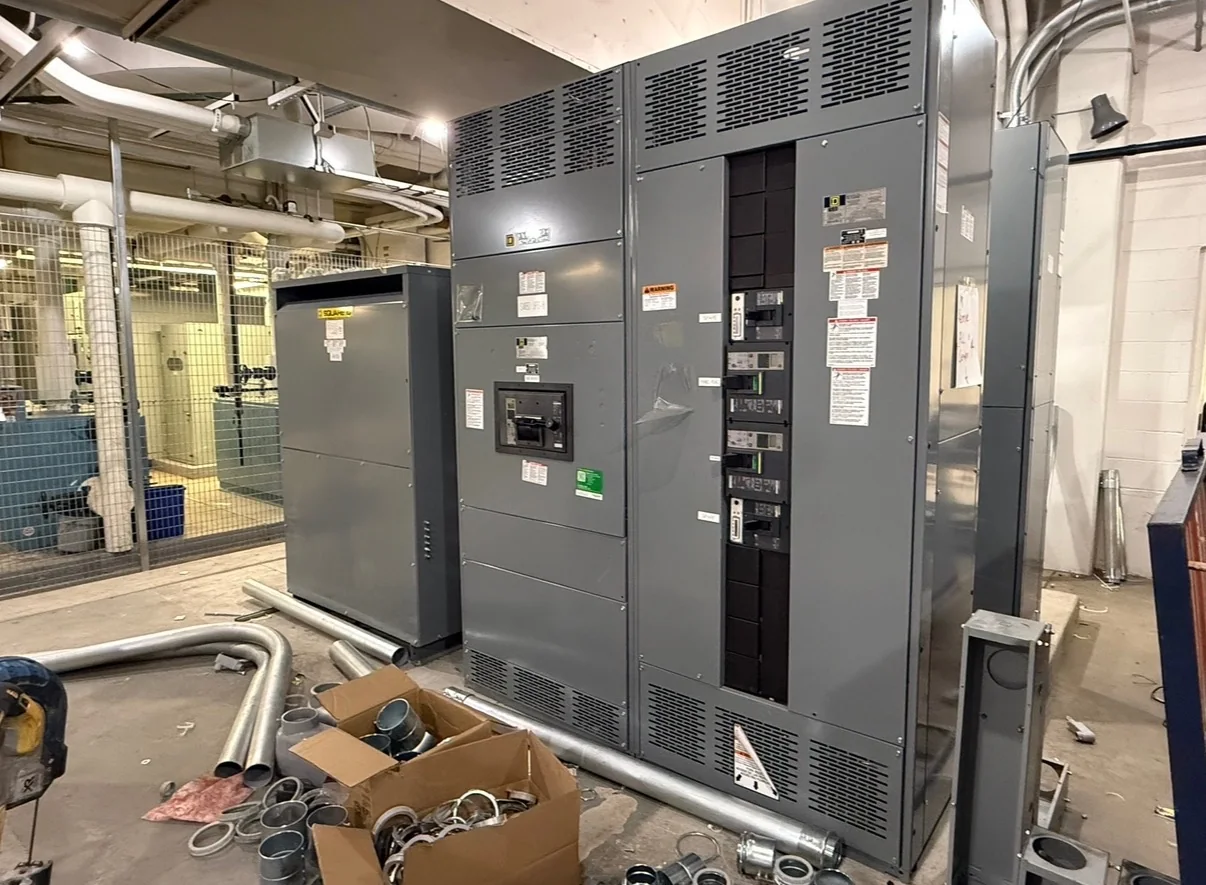
Start with the network and its operating role
Utility switchgear must fit the electrical system and operating purpose it will serve, rather than being selected by a generic equipment label. Define whether the assembly is intended for a substation, distribution circuit, generation interconnection, service point or another application. Then document nominal and maximum system voltage, frequency, available fault current, grounding method, bus arrangement and expected loading. These inputs shape equipment design and help establish which ratings and construction details require review. Consider normal operating conditions alongside planned switching, maintenance, future expansion and credible abnormal conditions. A design that accommodates the present load but leaves no practical path for circuit additions can complicate later work; extra capacity, however, should be weighed against footprint, cost and operational needs. Share one-line diagrams, site constraints, interface details and project specifications early. Qualified professionals should verify system data, applicable codes and the ratings needed for each installation.
Coordinate protection across the distribution system
Reliability depends not only on switchgear ratings but also on how protective devices work together across the network. Utilities and their engineering teams typically evaluate relay functions, breaker characteristics, instrument-transformer data, fault levels and upstream and downstream devices as a coordinated scheme. The goal is to isolate faults selectively while limiting unnecessary interruption, while also ensuring equipment can withstand the stresses it may encounter. A change to one breaker, relay setting or source configuration can affect coordination elsewhere, so review the complete protection context rather than treating an assembly in isolation. Provide current coordination studies or clearly identify which study information is still being developed. Confirm control voltage, trip and close interfaces, communications needs, metering points and alarm requirements with the responsible stakeholders. Protection settings and equipment suitability must be determined by qualified professionals using project-specific system studies; general descriptions cannot substitute for that engineering review.
| System | Voltage, phase, current and available fault current |
|---|---|
| Configuration | Lineup, protection, controls and enclosure as specified |
| Compliance | Applicable standards and listing confirmed for the assembly |
| Delivery | California and nationwide; schedule confirmed by quote |
Balance reliability, maintainability and operating access
Distribution reliability is influenced by how equipment can be operated, inspected and maintained throughout its service life. Discuss switching frequency, expected maintenance practices, access for personnel, cable or bus connections, environmental exposure and the consequences of an outage. The preferred arrangement may depend on whether work can be scheduled during planned interruptions, whether alternate feeds exist and how operators will isolate sections safely. Evaluate compartmentalization, provisions for future circuits, internal separation and physical layout against the project’s operating procedures and space limits. More elaborate arrangements may support operational flexibility, but can add complexity and require careful coordination with protection, controls and site interfaces. Identify indoor or outdoor conditions, temperature range, altitude, contamination, moisture, seismic or other environmental considerations that apply. Share installation clearances, conduit entry locations, lifting and handling limits, and access routes. These details help resolve practical design questions before fabrication, while qualified personnel remain responsible for safe work methods and site-specific decisions.
Confirm utility acceptance and governing requirements
Utility projects may involve owner standards, interconnection rules, procurement specifications, inspection processes and documentation requirements that vary by organization and application. Request the current governing documents from the utility or asset owner, and identify the revision, approval path and responsible reviewers. Clarify required drawings, submittals, testing records, labeling, interfaces, witness points and closeout materials before design is finalized. For medium- or high-voltage equipment, identify and verify the standards applicable to that specific equipment and project; requirements should not be assumed from a different voltage class or product category. Where applicable low-voltage switchboards are specified, UL 891 is a standard to consider for those switchboards, not a blanket designation for medium- or high-voltage equipment. A standards reference alone does not establish a third-party listing or approval. Resolve deviations and open questions with the utility early, and retain written decisions so procurement, engineering and inspection teams work from the same requirements.
Prepare a complete request for engineering review
A useful request for new utility switchgear includes the one-line diagram, equipment schedule, system voltage and grounding information, fault-current data, load profile, protection and control requirements, site conditions and applicable utility specifications. Include preferred bus configuration, circuit quantities, connection details, metering and communications interfaces, installation constraints, requested documentation and any project milestones that influence planning. Mark information as confirmed, preliminary or pending; clearly identifying uncertainty is more useful than treating an estimate as final. The manufacturer can then review the scope, identify missing design inputs and discuss feasible paths for the project. American-built equipment using American components is part of the company’s manufacturing approach, while project-specific requirements and origin documentation should be discussed directly. California customers and projects elsewhere in the United States can request review, with shipping arrangements considered for the destination and scope. If schedule-sensitive or expedited options matter, raise them early; any such possibility depends on project review and cannot be assumed.