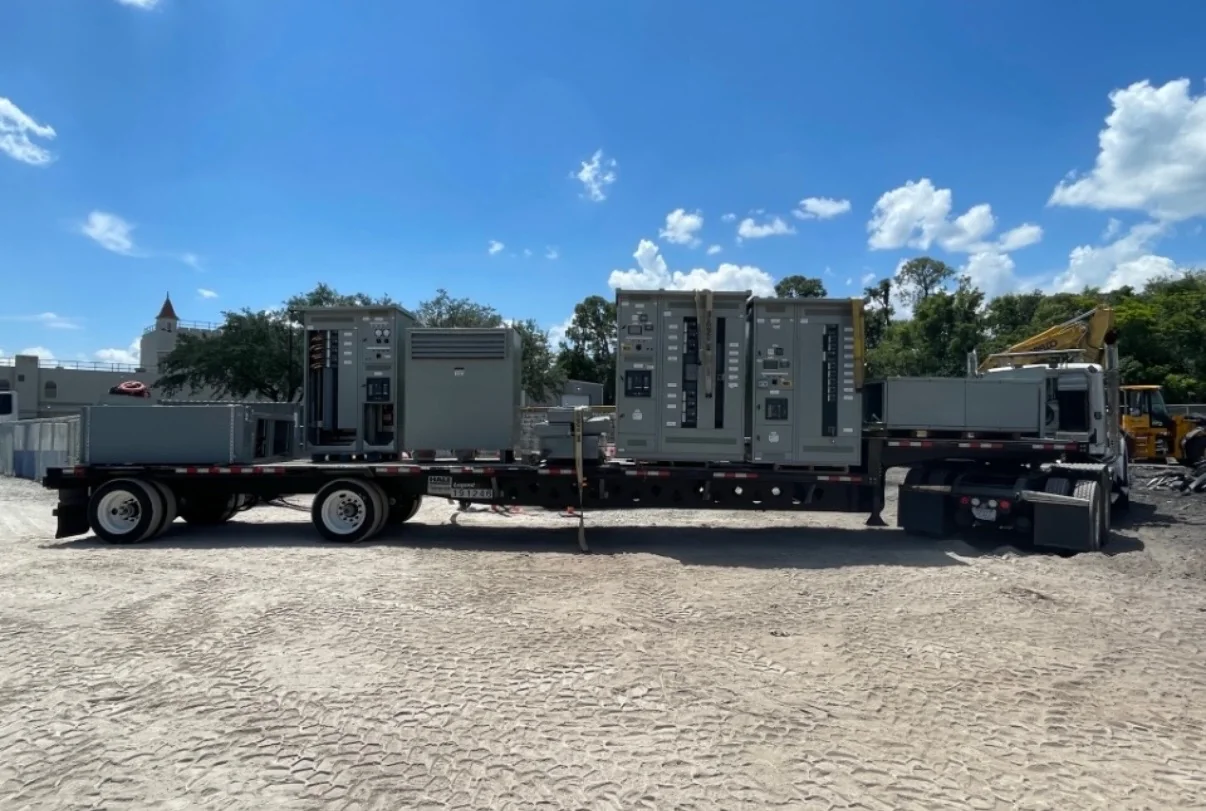
Establish a Clear Project Basis
Effective switchgear project management starts with a shared understanding of the installation and the decisions that remain open. Early coordination should capture the application, one-line diagram, system voltage, available fault current, continuous-load requirements, distribution arrangement, and the interfaces with upstream and downstream equipment. Identify the governing project documents, applicable codes and standards, environmental conditions, and any owner or utility requirements that affect design. Qualified professionals must determine protection, ratings and applicable codes for the specific project; those items should be treated as reviewed design inputs, not assumed from an equipment label or a preliminary drawing. Confirm who has authority to approve technical changes, who reviews submittals, and how questions are routed. A concise responsibility matrix and decision log reduce crossed communications. When the basis is clear, the project team can distinguish confirmed requirements from assumptions, assign owners to unresolved items, and avoid late-stage redesign caused by missing interface information.
Coordinate Submittals and Review Cycles
Submittals are a working part of design coordination, not simply a document package sent once and filed away. A project plan should identify the required drawings and technical information, the reviewers, the review sequence, and the expected response process. Depending on the project, documents may address equipment arrangement, access and clearances, cable entry, connection points, control interfaces, protective-device information, and shipping or installation constraints. The team should compare submitted information against the current specification and drawings, then consolidate comments so that conflicting directions are identified before revision. Markups need enough context to show the requested change and its reason; vague notes can create avoidable interpretation. Track each revision by date and status, and make clear which documents are for review, approval, or construction. Where a standard is specified, verify its applicability to the equipment and project. UL 891 applies to applicable low-voltage switchboards; it should not be assumed to govern medium- or high-voltage equipment.
| System | Voltage, phase, current and available fault current |
|---|---|
| Configuration | Lineup, protection, controls and enclosure as specified |
| Compliance | Applicable standards and listing confirmed for the assembly |
| Delivery | California and nationwide; schedule confirmed by quote |
Control Design Changes Deliberately
Changes can arise as the electrical design develops, site conditions become clearer, or connected equipment is finalized. Managing them well means recording the request, its source, the affected documents, and the decision status before work proceeds on an unverified assumption. A change review should consider electrical coordination, physical dimensions, cable terminations, controls, protection settings, interfaces, installation access, and any effect on schedule or required approvals. Not every requested revision has the same consequence: a clarification may leave the design intact, while a change to system data or equipment arrangement can require broader review. Ask the responsible engineer and project stakeholders to confirm technical implications, and circulate updated drawings to everyone relying on prior revisions. Keep a dated change log and identify superseded files to limit the risk of building, ordering, or installing from outdated information. For requirements involving medium- or high-voltage equipment, identify and verify the standards applicable to that specific equipment.
Make Milestones Useful for Decisions
A useful milestone plan connects project events to the information and decisions needed to reach them. Instead of tracking dates alone, define dependencies such as receiving complete system data, resolving drawing comments, confirming interfaces, and obtaining required approvals. Assign an accountable contact to each open item and record the date by which a response is needed to protect the next activity. Schedule discussions around decision points, especially where a pending input could affect the design or downstream coordination. If a project is schedule-sensitive, discuss priorities and possible expedited options early; feasibility and timing depend on project review, scope, and the status of required information, so no date should be treated as guaranteed without confirmation. Review milestone status consistently, distinguish forecast dates from commitments, and note the basis for any change. This approach gives contractors, engineers and buyers a more useful view of what is progressing, what is blocked, and which action can move the work forward.
Keep Communications Actionable Through Delivery
Clear communications depend on a reliable record and a defined route for questions. Establish primary contacts for technical coordination, document control, schedule updates and site interfaces, while making sure decisions are shared with the full team that needs them. Meeting notes should capture the issue, the decision or open question, its owner, and a due date—not just a general summary. Use consistent file names and revision identifiers, and avoid parallel email attachments that leave participants unsure which drawing is current. As delivery approaches, coordinate practical information such as access, receiving arrangements, handling responsibilities, installation sequencing and the documents the site team needs. Confirm these details with the parties responsible for the work; project management does not replace qualified engineering, installation planning or site safety procedures. For customers in California and elsewhere nationwide, early communication about project location and logistics helps identify questions for review. A disciplined closeout of open items supports a smoother handoff from design coordination to installation.