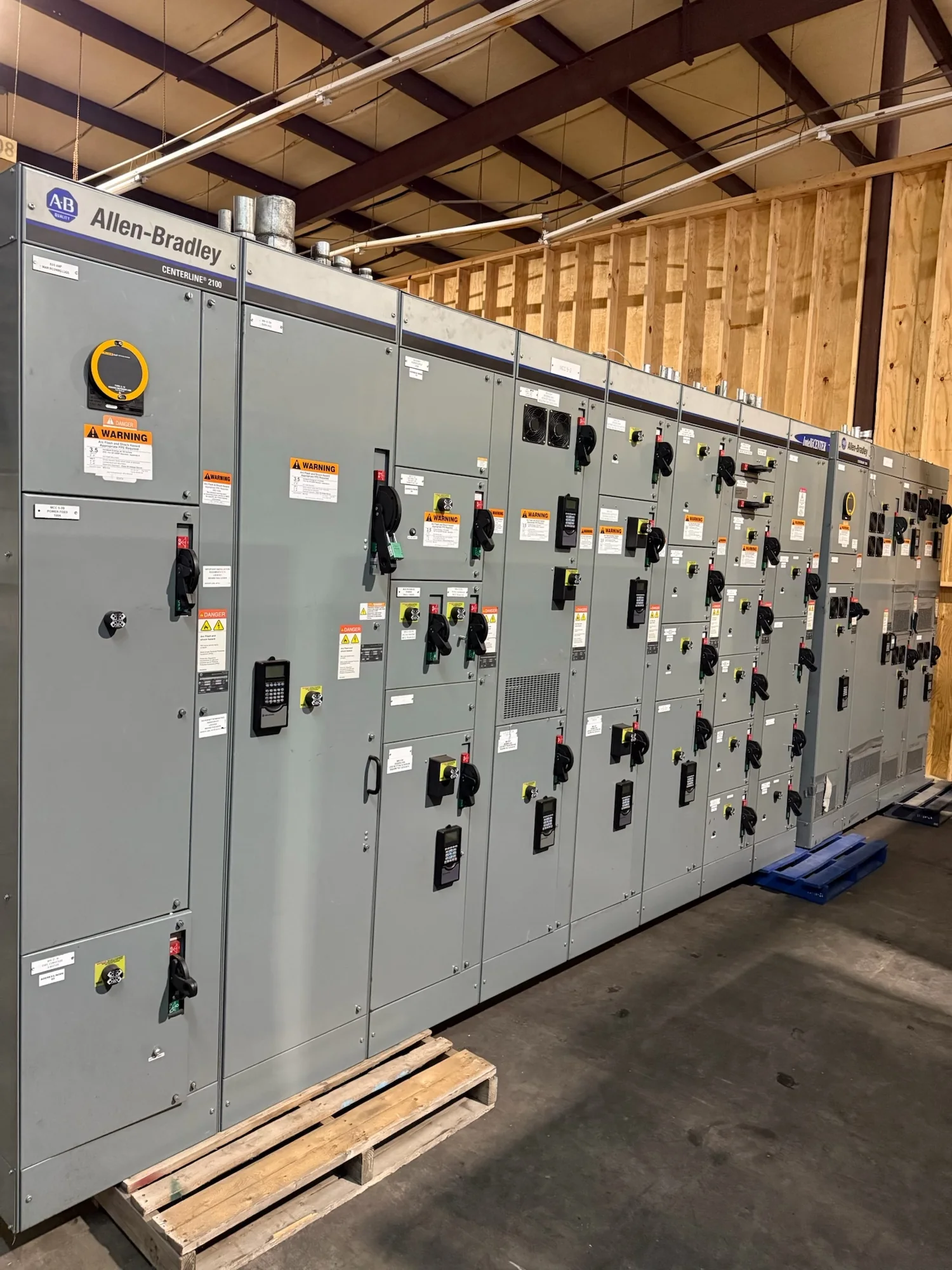
Start with Equipment and Project Data
A safe, workable lift begins with accurate information about the specific switchgear lineup and the route it must travel. Identify the equipment configuration, shipping sections, dimensions, estimated weights and any accessories that affect handling. Weight and center of gravity can change with the arrangement of sections, installed components or packaging, so avoid relying on a generic value for a different lineup. Share the latest approved equipment drawings and shipping information with the project team as they become available, and ask which details are preliminary versus confirmed. The rigging plan also needs context from the site: delivery access, unloading area, floor capacity, overhead clearance, turning space, openings and the final equipment location. Bring the equipment builder, contractor, site representative and qualified rigging professionals into the conversation early. Their review can identify missing inputs while there is still time to resolve them, rather than leaving critical decisions until a truck arrives.
Confirm Lift Points and Center of Gravity
Lift points must be appropriate to the exact equipment and handling condition. Confirm their location, intended use and any restrictions against current manufacturer information; do not assume that enclosure features, shipping bases or lifting provisions are interchangeable. The rigging professional needs to understand how sling angles, spreader beams, attachment hardware and the selected lifting method affect forces at the equipment. Center of gravity is equally important. An offset load can tilt or rotate as it leaves the ground, creating risks to personnel and equipment even when the total weight appears manageable. Use configuration-specific weight and balance information when available, and have the qualified rigger determine how to control the load through each lift phase. If a lineup ships in multiple sections, plan for each section as its own load, including its orientation and required support. Any uncertainty about lift points, weight or balance should be resolved with the equipment supplier before the lift proceeds.
| System | Voltage, phase, current and available fault current |
|---|---|
| Configuration | Lineup, protection, controls and enclosure as specified |
| Compliance | Applicable standards and listing confirmed for the assembly |
| Delivery | California and nationwide; schedule confirmed by quote |
Plan the Route, Clearances and Setdown
The lift is only one part of moving switchgear into position. Map the full route from unloading to the final installation location, including transitions between outdoor and indoor areas, corridors, doorways, ramps, thresholds and changes in elevation. Compare equipment dimensions and handling orientation with the narrowest clearances, and account for the space required by rigging gear and maneuvering equipment. Check that the route and setdown area can support the anticipated loads; qualified site and structural professionals should evaluate floor capacity and any temporary support requirements. Consider overhead obstructions, nearby energized systems, weather exposure and pedestrian or vehicle movement, then define controls for keeping people clear of the operation. The plan should identify where the load may pause, how it will be stabilized and how it will be transferred to rollers, skates or other equipment if those methods are selected. Resolve access conflicts and staging needs with the general contractor before scheduling delivery.
Write Handling Instructions That Travel with the Load
Clear handling instructions help connect the engineered equipment details to the people performing the work. Document the approved lift orientation, verified attachment points, applicable weight information, center-of-gravity considerations and any restrictions on tilting, stacking or supporting the equipment. Include instructions for protecting doors, buswork, insulators, controls and other components from impact, moisture or contamination during movement. Shipping braces or protective materials should be removed only at the appropriate stage and in accordance with the applicable equipment instructions. Keep identification for each section visible so crews can match loads to the planned setdown sequence and installation location. The responsible project team should establish who has authority to approve changes if site conditions require a different approach. A revised route, alternate crane position or changed rigging arrangement can alter load behavior and clearances; it should receive qualified review before work continues. Treat documentation as a coordination tool, not a substitute for an on-site lift plan.
Coordinate Review Before Delivery and Installation
Use a pre-lift review to close information gaps and confirm that the plan fits both the equipment and the actual site. The contractor can provide current access and installation details; the equipment supplier can clarify applicable handling information; and qualified riggers determine the lifting method, equipment selection, load control and execution procedures. Confirm who will inspect rigging gear, direct the lift, communicate signals and maintain exclusion zones, in accordance with project requirements and applicable rules. Revisit the plan if shipping sections, equipment configuration, site access or weather conditions change. For schedule-sensitive work, early coordination may help surface constraints, but any expedited handling or delivery option depends on project review and cannot be assumed. California projects and projects elsewhere can benefit from the same disciplined process: verify information, document responsibilities and resolve exceptions before lifting. Qualified professionals must determine safe procedures, protection requirements and applicable codes for each project. Contact the builder with project drawings, delivery constraints and target installation sequence to begin coordination.