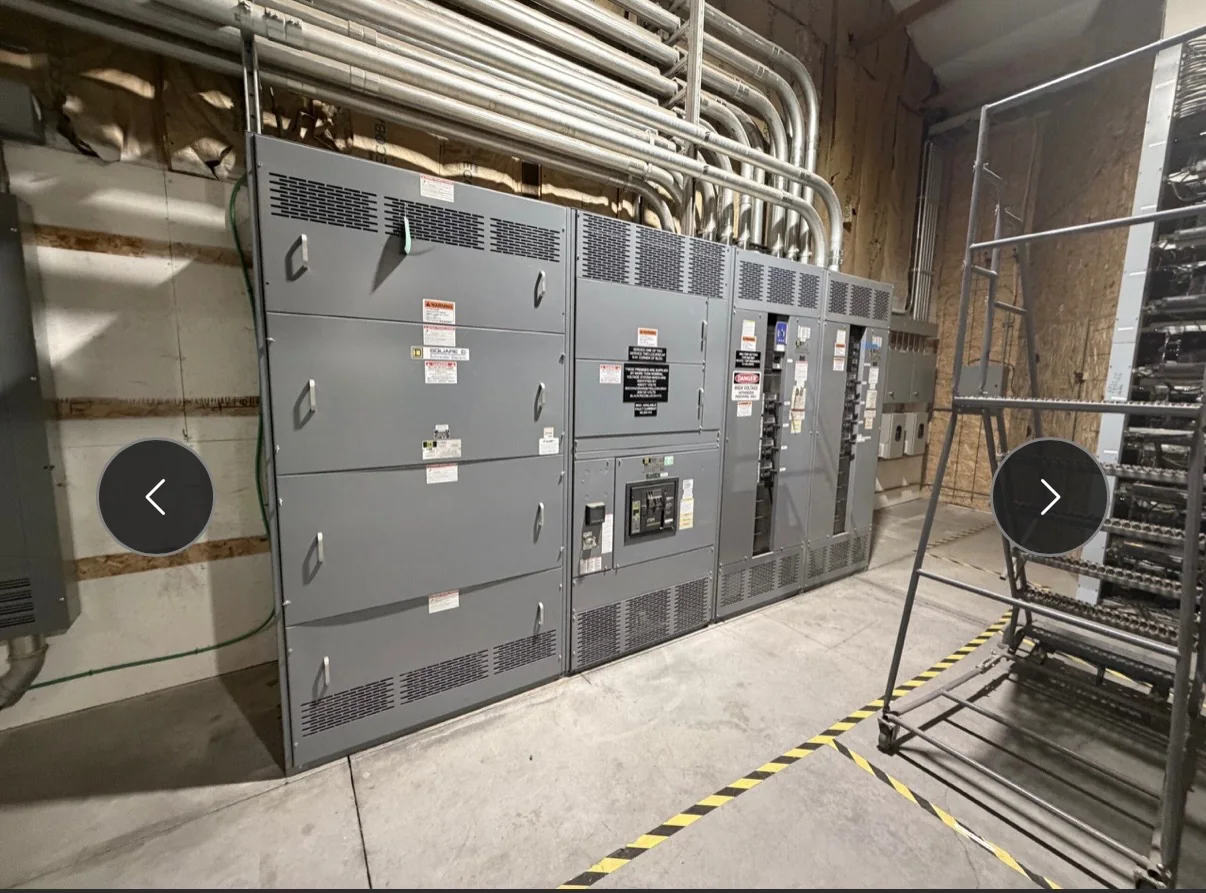
Set responsibility before the delivery date
Offloading starts with a written division of responsibility, not with a truck at the gate. Identify who coordinates the carrier, who controls site access, who supplies lifting equipment, and who directs the lift. The equipment supplier, general contractor, electrical contractor, rigging contractor and facility representative may each have a role; name the responsible organization and an on-site contact for each task. Confirm who can authorize changes if access, weather or site conditions differ from the plan. The receiving team should know the expected delivery window, shipment identification and where to report on arrival. Establish in advance who checks shipping documents, records visible damage and communicates discrepancies to the appropriate parties. A clear handoff prevents assumptions such as believing that a driver will unload equipment or that a crane is included. Document the agreed scope and confirm it with all participants before dispatch.
Match lifting equipment to the load and route
Select lifting equipment only after reviewing the shipment and the complete path from vehicle to designated set-down area. Gather the shipping weight and dimensions for each section, the center-of-gravity or lifting-point information provided for the equipment, and any handling instructions. Compare those details with the proposed crane, forklift, rigging and accessories, including capacity at the actual operating radius or reach. The route matters as much as rated capacity: overhead obstructions, ground conditions, slopes, thresholds, door clearances and turning space can rule out an otherwise suitable method. Confirm whether sections will be lifted individually or moved as a coordinated assembly, and protect against twisting, impact or unsupported movement. Do not assume that enclosure features are lifting points. The qualified lift planner and equipment operator should verify the method, inspect the rigging, and follow applicable site procedures and equipment instructions.
| System | Voltage, phase, current and available fault current |
|---|---|
| Configuration | Lineup, protection, controls and enclosure as specified |
| Compliance | Applicable standards and listing confirmed for the assembly |
| Delivery | California and nationwide; schedule confirmed by quote |
Assign qualified personnel and control the work area
Name the people who will plan, direct and perform each part of the move. Depending on the method and site, this may include a qualified lift director, crane or forklift operator, riggers, signal person and receiving representative. Confirm qualifications and communication arrangements before work begins; establish who gives signals and how the crew will stop the operation if visibility or coordination is lost. Define an exclusion zone that accounts for the suspended load, equipment travel and potential swing, and keep unrelated workers and pedestrians clear. Review site-specific hazards, including energized equipment, nearby utilities, traffic routes and changing weather, with the responsible safety personnel. Use an agreed pre-lift briefing to cover load sequence, landing position, emergency response and stop-work authority. Safe planning is a project responsibility: qualified professionals determine the appropriate protections and applicable rules for the lift and worksite.
Prepare a stable, protected staging location
Choose the receiving and staging area before delivery, and verify that it can accommodate the shipment without blocking required access or creating an unsafe work zone. Consider floor or pavement capacity, levelness, drainage, environmental exposure, security and the distance to the final installation location. Confirm the unloading route and landing footprint against actual section dimensions, leaving room for lifting equipment to maneuver and for personnel to work without entering pinch points. If switchgear cannot be moved directly to its final position, agree how it will be supported, restrained and protected while staged. Follow the equipment handling and storage instructions, and plan suitable protection from moisture, dust, impact and unauthorized access as conditions require. Keep shipping supports or packaging in place until the designated team is ready to remove them. The site lead should verify readiness before dispatch so a late discovery does not force an improvised landing or additional handling.
Inspect at receipt and close the handoff
Assign a receiver who can compare the shipment with its delivery records and promptly document its condition. Before signing, where site procedures permit, examine packaging and accessible surfaces for impact, water exposure, shifted supports or other visible concerns. Record section identifiers, shipping-document exceptions and photographs of any apparent damage; note the issue clearly on the delivery paperwork and notify the responsible supplier contact and project team without delay. A receiving inspection is not a substitute for a qualified technical examination, and it should not involve opening or altering equipment unless authorized personnel and project procedures allow it. After unloading, verify that each section is in its planned location, supported and secured, with protective measures maintained. Share inspection records and unresolved concerns with the installation lead before equipment is moved again or prepared for installation. Provide the supplier with delivery constraints, unloading method, receiving contact and any site-specific instructions early enough for coordination; confirm responsibilities and the final plan with every party.