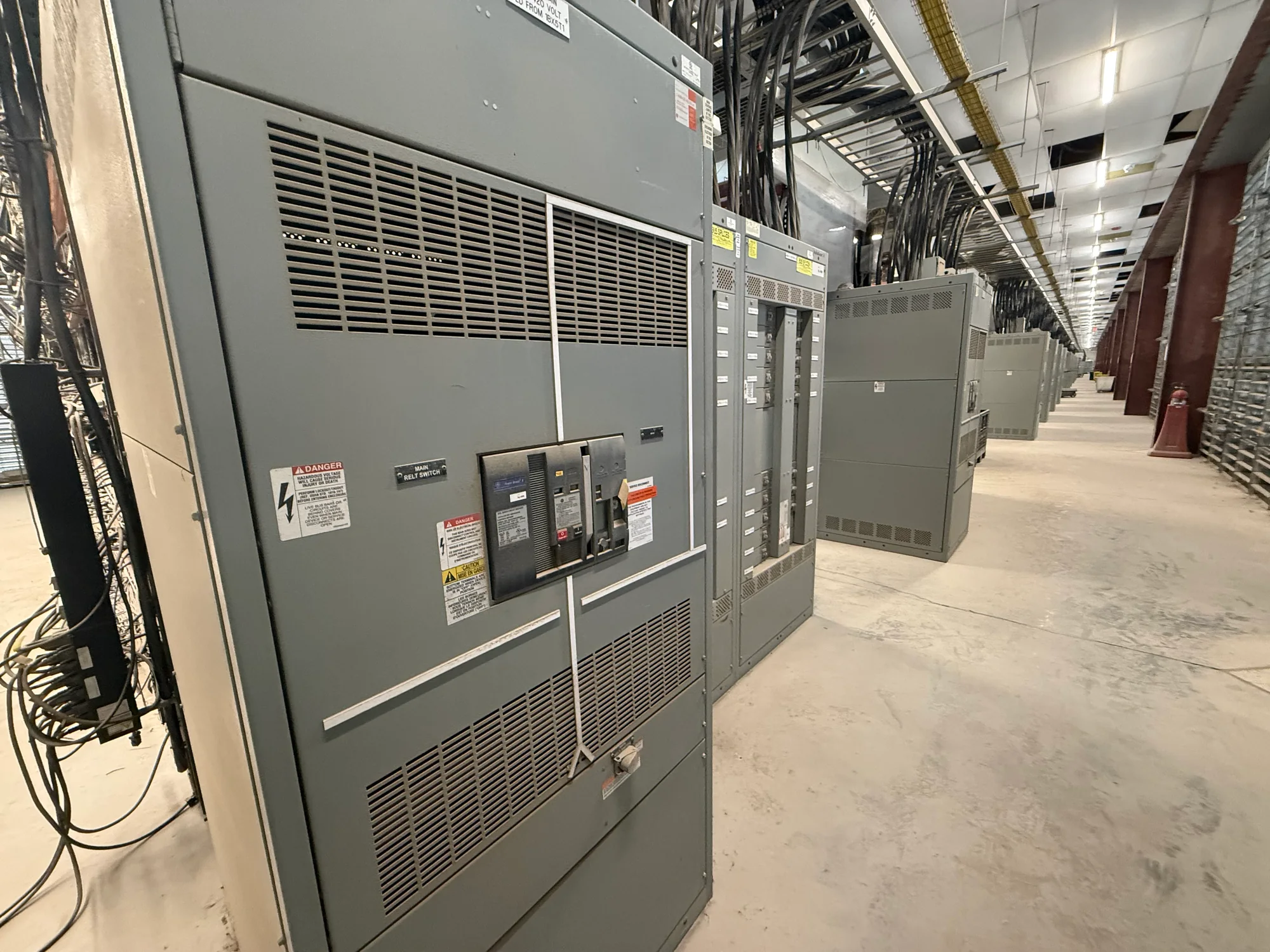
Start with the Actual Electrical Duty
Inventory matching begins with the one-line diagram and the conditions the equipment must serve, not with a product name or a photograph. Identify system voltage, phase, frequency, available fault current, continuous load, and the source and load arrangement. For a switchboard, clarify the main and feeder configuration, bus requirements, protective devices, metering and control needs. For medium- or high-voltage equipment, provide the specific equipment class and project standards that apply; requirements differ from those for low-voltage assemblies. These details let qualified professionals determine whether a candidate’s design inputs align with the application and what remains to be verified. A similar voltage label alone is not enough: interrupting or withstand ratings, insulation requirements, grounding, and the protective-device scheme all affect suitability. Share the latest drawings and schedules, including revisions, so the comparison reflects the design now being built rather than an earlier equipment concept.
Compare Ratings and Configuration, Not Just Labels
A useful comparison separates nameplate or documented ratings from the functions the project requires. Confirm the applicable voltage and current ratings, fault-duty basis, bus details, and device characteristics against the engineer’s criteria. Check whether the proposed arrangement has the required number and type of sections, breakers or switches, control power, sensing, metering, and auxiliary contacts. If protective devices are involved, coordination depends on the system study, settings, trip characteristics, and upstream and downstream equipment; a nominally similar device is not automatically interchangeable. Likewise, a familiar manufacturer designation does not establish that an assembly matches a project’s revision or intended use. Record each requirement as confirmed, discrepant, or unresolved, with its source drawing or specification. That simple traceability makes review more efficient and highlights decisions for the engineer of record, rather than hiding gaps behind a broad claim that equipment is a match.
| System | Voltage, phase, current and available fault current |
|---|---|
| Configuration | Lineup, protection, controls and enclosure as specified |
| Compliance | Applicable standards and listing confirmed for the assembly |
| Delivery | California and nationwide; schedule confirmed by quote |
Check Dimensions and Installation Interfaces
Electrical alignment is only part of the decision. Compare overall height, width and depth; section dimensions; door swing and working access; cable entry and exit; conduit locations; and required front, rear or side clearances. Verify floor loading, anchorage, seismic or environmental criteria where the project requires them, as well as ventilation and room conditions. Bus connections, splice plates, transition sections and adjacent equipment interfaces deserve particular attention: small differences in bus elevation, phase arrangement or connection orientation can affect installation scope. For replacement work, obtain field-verified measurements and photographs, but treat them as supporting information rather than substitutes for controlled drawings. Determine whether rigging routes, doorways, elevators and the final setting location can accommodate the equipment envelope. If dimensions or access conditions are uncertain, resolve them before purchase and delivery planning. A mismatch may require a design change, revised installation method or a different candidate, each with cost and schedule implications.
Verify Documentation, Standards and Open Questions
Request the documents needed to substantiate the comparison: nameplate data, outline and arrangement drawings, wiring diagrams, bills of material where appropriate, and available component documentation. Confirm revision status and identify what is preliminary versus approved for construction. Applicable codes and standards must be determined for the specific equipment and installation; UL 891 applies to applicable low-voltage switchboards, not universally to medium- or high-voltage equipment. Do not treat a standards reference as proof of a third-party listing or approval. Ask which details remain subject to engineering review, including protection, grounding, short-circuit duty, interlocking, arc-flash considerations and interface points. Qualified professionals must establish the protection, ratings and applicable codes for the project. A clear exception log is valuable: note the requirement, evidence reviewed, discrepancy or missing evidence, responsible reviewer and decision needed. This lets the project team distinguish an acceptable design variance from a hard constraint before committing to installation or commissioning plans.
Turn the Match into a Procurement Decision
Once the technical and physical checks are complete, compare the candidate against the project’s acceptance criteria and document the outcome. A match may be direct, conditional on engineering approval, or unsuitable; explain the basis instead of relying on a simple yes-or-no label. Identify any modifications, adapters, transition work, field wiring, setting changes or drawing updates that would be required, and have the responsible designers evaluate their effects on safety, compliance, coordination and warranty. Provide the manufacturer with the one-line, equipment schedule, current specifications, interface drawings, site measurements and a prioritized list of must-haves versus preferences. For a time-sensitive project, state the required decision and delivery milestones so options can be reviewed realistically; any schedule-sensitive or expedited path depends on project review and cannot be assumed. Switchgear Builder California builds new equipment in the United States with American components and supplies customers in California and nationwide. Confirm project-specific configuration, documentation and logistics before placing an order.