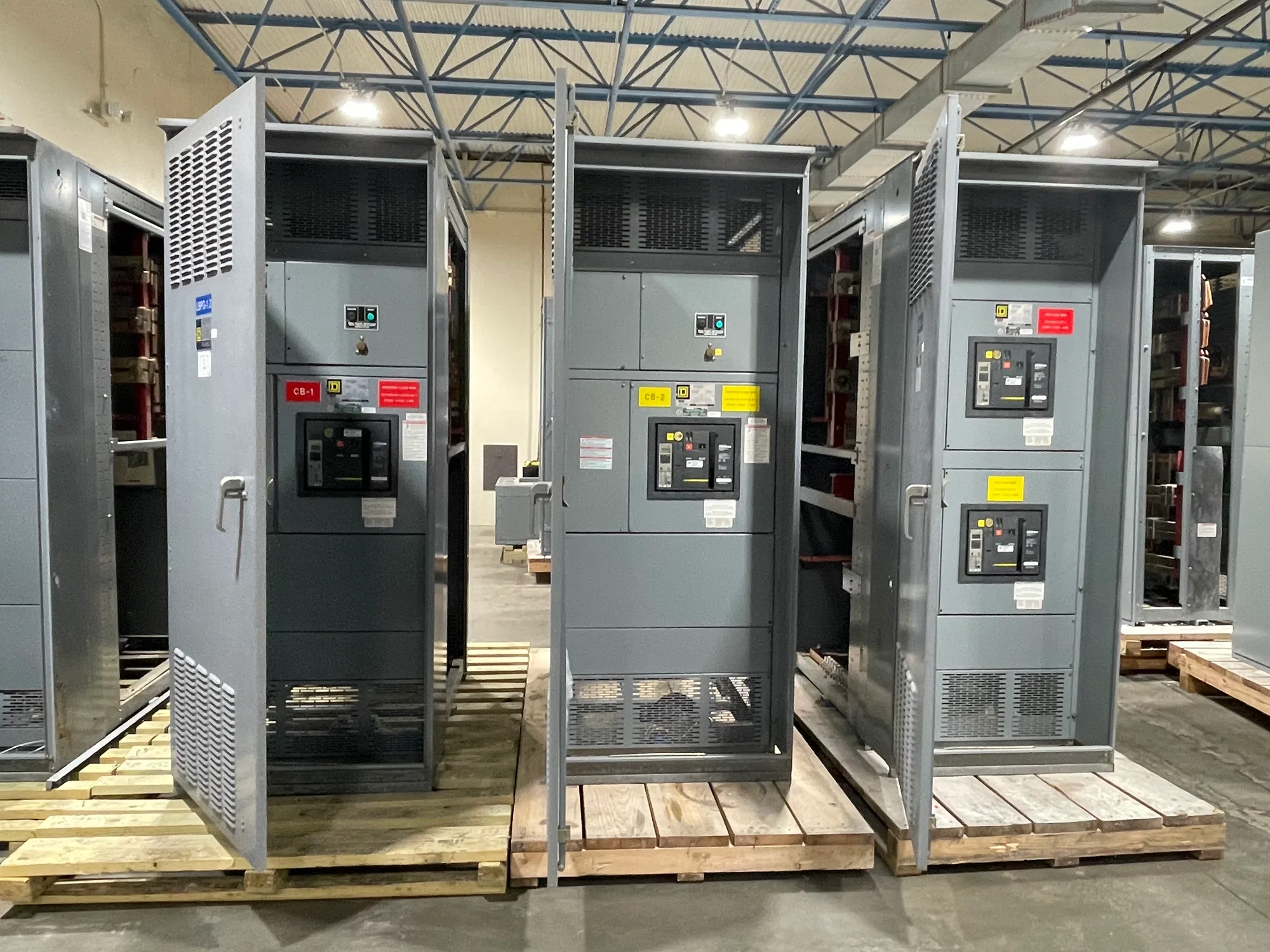
Confirm Current Inventory Before Planning Around It
An in-stock listing is a starting point for a conversation, not a promise that a particular assembly is ready for your project. Inventory can change, and an apparently similar unit may differ in voltage, arrangement, protection, dimensions or intended application. Contact Switchgear Builder California with the equipment type you need, the quantity, project location and required decision date. We can review current new-equipment inventory and clarify what, if anything, may suit the application. If an item is under consideration, ask which details have been verified, whether it remains available and what review is still required. Do not base a construction schedule, outage window or purchase commitment on an assumption that a unit is stocked. Availability and suitability are separate questions: an item may be present but not match the project, or may require technical review before it can be considered. Confirm both directly before using inventory information to guide procurement.
Match Configuration to the Electrical Design
The equipment description alone rarely establishes whether a candidate can be used. Provide the one-line diagram and identify the intended service, system voltage, phases, frequency, bus arrangement, incoming and feeder requirements, and connection orientation. Note whether the installation is indoors or outdoors, the available footprint and access constraints, and any cable-entry, termination or interface details that affect fit. Existing equipment interfaces, including upstream and downstream connections, may limit acceptable arrangements even when basic electrical characteristics appear compatible. If specifications call for a particular form, section layout, control scheme or accessory, include that information rather than relying on a general product name. Our review can then distinguish a meaningful match from a superficial similarity and identify missing inputs for follow-up. Qualified project professionals remain responsible for establishing the design basis and approving equipment for the intended installation. Treat any proposed configuration as subject to confirmation against project documents and applicable requirements.
| System | Voltage, phase, current and available fault current |
|---|---|
| Configuration | Lineup, protection, controls and enclosure as specified |
| Compliance | Applicable standards and listing confirmed for the assembly |
| Delivery | California and nationwide; schedule confirmed by quote |
Review Ratings and Protection Requirements
A candidate must be evaluated against the system and its protective-device requirements, not just its nominal voltage. Provide the available fault-current information, required short-circuit ratings, continuous current, interrupting duties where relevant, and the protection or coordination criteria established for the project. Include the protective-device types and settings when known, along with any selectivity, arc-flash or grounding considerations that influence the design. These values should come from the responsible electrical engineer or other qualified professional; do not estimate them from a neighboring installation or a catalog description. Ratings and configuration must be verified for the actual application, including the effects of connected equipment and the upstream source. Applicable codes and standards also depend on equipment type and installation context. For medium- or high-voltage equipment, identify the standards applicable to that specific equipment and verify them for the project. A stated design standard does not by itself establish a third-party listing or approval.
Check Condition, Scope and Remaining Work
When discussing a possible inventory match, ask what is included in the equipment scope and what remains outside it. Clarify the assembly configuration, installed devices, controls, documentation and any project-specific options that have been confirmed. Ask whether dimensions, nameplate data and interface details can be reviewed before selection, and identify any information that is unavailable or still pending. If the project requires modifications, do not assume that a stocked assembly can be altered to meet every specification. First establish whether the requested changes are technically appropriate, feasible and compatible with the intended use; then confirm how they affect scope and schedule. For low-voltage switchboards, UL 891 may be relevant where applicable, but do not assume a product’s status based on a general description; confirm the requirement and supporting details for the specific assembly. Qualified professionals should review the final equipment documentation and determine code, protection and installation requirements before acceptance.
Request Availability and Plan the Next Step
A focused inquiry makes an inventory review more useful. Send the project specification or one-line diagram, key ratings, required configuration, quantity, destination, delivery constraints and the date by which you need a decision. Identify any substitutions that may be considered and any requirements that are non-negotiable. Ask the team to confirm the status of a candidate, the information used to assess its fit, and any open questions that could affect selection. If no suitable new equipment is currently available, the next step may be to discuss a build-to-order path or another configuration, subject to design review. Schedule-sensitive or expedited options can be explored when appropriate, but timing depends on project scope, engineering review and current conditions and is not guaranteed. Switchgear Builder California builds new equipment in the USA with American components and supplies customers in California and nationwide. Contact us to review your requirements; availability, configuration and delivery details must be confirmed for your project.