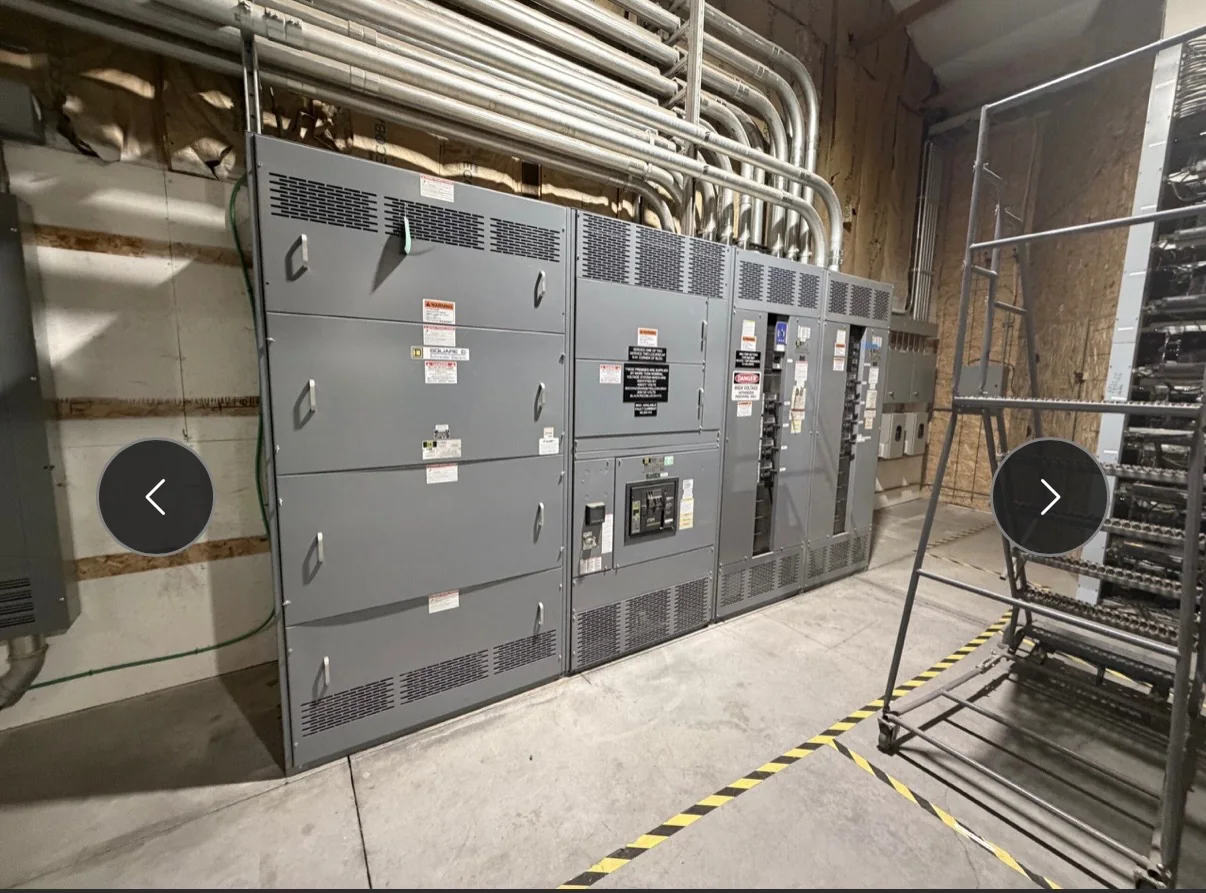
Start with the schedule drivers
Accelerated fabrication planning begins by understanding what makes the project time-sensitive, rather than assuming that every order can follow the same sequence. Share the required in-service date, key construction milestones, site access constraints, and any dependencies on utility work or other equipment. Identify which dates are firm and which are planning targets. That distinction helps the project team assess where schedule flexibility exists and which decisions need early attention. Also clarify the equipment scope: system voltage, lineup arrangement, feeder requirements, anticipated ratings, and the intended application are important design inputs, not details to defer until fabrication planning is underway. Qualified professionals should establish protection, ratings, and applicable code requirements for the specific project. Once the critical constraints are visible, the team can discuss practical sequencing options and whether schedule-sensitive handling merits further review. No date should be treated as committed until scope, design information, materials, and project conditions have been evaluated.
Define scope before optimizing sequence
A concise, stable scope is one of the most useful inputs for planning fabrication. Provide one-line diagrams, equipment schedules, specifications, and a clear description of the operating arrangement, including main and tie devices, metering, control power, and required interconnections. Call out interfaces with transformers, protective relays, building systems, and customer-furnished components. Identify requested options separately from essential requirements so the team can understand which choices affect design, coordination, or assembly. Scope changes made after engineering review can trigger drawing revisions, renewed coordination, or changes to material planning; that can weaken an aggressive schedule even when the change appears small. Where information is still developing, mark assumptions and open decisions explicitly instead of presenting them as final. The manufacturer can then review the defined work, identify missing inputs, and discuss whether alternatives may simplify the build. Any alternative must remain consistent with project requirements and receive appropriate technical approval.
| System | Voltage, phase, current and available fault current |
|---|---|
| Configuration | Lineup, protection, controls and enclosure as specified |
| Compliance | Applicable standards and listing confirmed for the assembly |
| Delivery | California and nationwide; schedule confirmed by quote |
Coordinate drawings and interfaces early
Fabrication planning depends on more than the equipment outline. Confirm enclosure and room constraints, cable entry and exit directions, conduit locations, access for installation, and any restrictions on handling or delivery. Share available room plans and interface drawings, and flag dimensions that are still subject to field verification. Electrical coordination matters just as much: protection schemes, control wiring, communications, instrument-transformer requirements, and connection points can affect design documentation and assembly sequence. Establish who will review drawings, consolidate comments, and approve revisions, along with expected review intervals. A single coordinated response is generally more useful than disconnected comments arriving at different times. Identify the standards and project specifications that apply to the particular equipment; UL 891 applies to applicable low-voltage switchboards, while standards for medium- or high-voltage equipment must be identified and verified for that specific equipment. Applicable standards do not by themselves establish third-party listing. Early interface review can expose conflicts while there is still an opportunity to evaluate options.
Evaluate sequencing and scope choices
When timing is important, discuss which portions of the scope must be coordinated together and which decisions can be resolved independently. A complete, consistent lineup may simplify interface management, while a narrowly defined initial scope may reduce unresolved design dependencies; neither approach is automatically faster. Splitting scope can introduce additional coordination, connection, and responsibility questions that need deliberate resolution. Likewise, requested accessories, special controls, or unique construction details may require more engineering and material review than a standard project assumption suggests. Ask the project team to identify schedule-critical components, approval gates, and decisions that could affect downstream work. Then compare the practical tradeoffs: configuration suitability, installation constraints, functional requirements, and the effort required to coordinate separate work packages. Any proposed scope adjustment should be reviewed by qualified professionals and accepted by the project stakeholders. Schedule-sensitive or expedited options may be considered only after project review; sequencing discussion is a planning tool, not a guarantee of a particular turnaround.
Prepare a useful planning package
A focused planning package helps move the conversation from a desired date to an informed project review. Include the current specification and drawings, equipment quantities, system data, site and installation constraints, milestone dates, approval contacts, and a list of unresolved decisions. Note whether the project is new construction or an upgrade to the customer's own equipment, and describe any interfaces that must be maintained during installation or cutover. If procurement documents identify required ratings, standards, or documentation, provide those requirements for confirmation rather than assuming they apply uniformly to every configuration. Ask which inputs are still needed, what review steps could affect sequencing, and when a planning status can be revisited as scope develops. Switchgear Builder California builds new equipment in the USA with American components and supplies switchgear to customers in California and nationwide, subject to project review. With a well-defined package, buyers, contractors, and engineers can evaluate feasible scope and next steps without relying on an unsupported fixed turnaround.