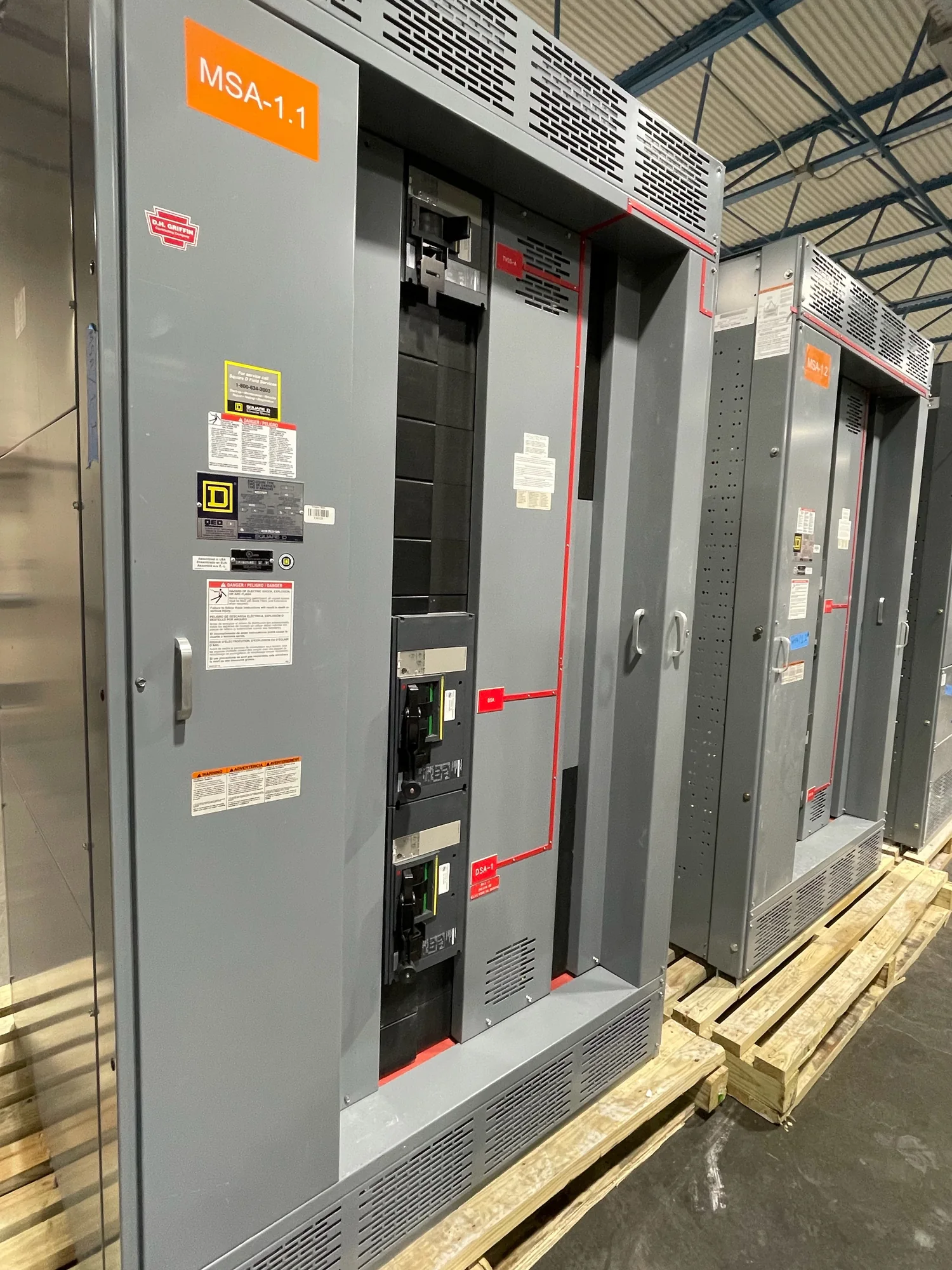
What “Near Me” Means for a Switchgear Project
Searching for a switchgear supplier near your project can help identify options, but geographic distance alone does not establish whether a source can meet the electrical and commercial requirements. Switchgear Builder California manufactures and builds new equipment in the United States using American components, and supplies customers in California and across the country. Service to California customers does not mean that a local office, showroom, or field location is available in every area. For many projects, the useful comparison is between the supplier’s ability to understand the application, coordinate technical details, and support delivery planning—not simply the mileage from a search result. Start by confirming where the equipment must be delivered, who will coordinate technical questions, and what support the project expects before and after shipment. Nationwide shipping may be considered, subject to project details and logistics review. A clear discussion early on helps determine whether the supplier relationship fits the job.
Evaluate Technical Fit Before Distance
Before requesting pricing, assemble the information that defines the intended application. Useful inputs include system voltage, frequency, available fault current, continuous current requirements, bus arrangement, feeder count, enclosure and installation conditions, and the loads or upstream and downstream equipment involved. Provide one-line diagrams, specifications, equipment schedules, and applicable project notes when available. Identify the required functions, metering, protection interfaces, control wiring, and any space or access constraints. These details let the manufacturer assess the scope and flag questions that could affect design, coordination, or delivery planning. Treat ratings and requested features as project requirements to verify, not assumptions about a product’s capabilities. Qualified professionals must determine protection, equipment ratings, and applicable codes for the specific installation. For medium- or high-voltage equipment, identify the standards that apply to that equipment and confirm them during technical review. If the scope includes low-voltage switchboards, determine whether UL 891 applies to those switchboards; its applicability does not extend automatically to other equipment.
| System | Voltage, phase, current and available fault current |
|---|---|
| Configuration | Lineup, protection, controls and enclosure as specified |
| Compliance | Applicable standards and listing confirmed for the assembly |
| Delivery | California and nationwide; schedule confirmed by quote |
Compare Supplier Communication and Scope
A useful supplier conversation should establish what is included, what remains to be resolved, and who owns each open item. Ask how technical questions will be handled, what documents are needed to develop a proposal, and how revisions to drawings or specifications will be reviewed. Confirm the intended equipment scope, interfaces, and any customer-furnished requirements so that a quotation can be compared on a consistent basis. If the project has a consultant, electrical contractor, owner, or utility with approval responsibilities, identify those stakeholders and their review sequence. Do not treat a general statement about standards as proof of a third-party listing or approval; identify the requirements that apply to the particular assembly and confirm the relevant evidence through the project process. Also discuss assumptions that affect fit, such as cable entry, access, environmental conditions, and installation responsibilities. Clear answers help prevent a low initial price or short travel distance from obscuring exclusions, coordination gaps, or changes that could complicate procurement.
Plan Delivery Around the Site
Distance matters most when it affects delivery, receiving, installation, or coordination with other trades. Share the project address, requested delivery window, site access restrictions, receiving hours, unloading arrangements, and any limits on truck size or staging. Explain whether equipment must arrive in a particular sequence or align with a planned outage, construction milestone, or inspection. These constraints allow the supplier and project team to discuss practical shipping considerations before the order is finalized. Nationwide shipping can be evaluated, but routing, timing, and feasibility depend on the equipment and destination; do not assume that every shipment or date can be accommodated. If schedule-sensitive or expedited options may be important, raise that need early and ask for a project-specific review. No schedule should be treated as confirmed until the scope, design information, and delivery plan have been reviewed. Keep the electrical contractor, site representative, and other parties responsible for receiving and installation involved so that transport planning connects to actual site readiness.
Prepare a Focused Request for Pricing
To begin a practical buying discussion, send the current specification, one-line diagram, equipment schedule, delivery destination, and target project dates, along with known technical questions. Note whether the request is budgetary or tied to a defined procurement milestone, and identify the person authorized to resolve design clarifications. Ask for the proposal to make its equipment scope, assumptions, exclusions, and information still required easy to understand. Compare responses on equivalent requirements and review how proposed equipment will coordinate with the rest of the electrical system. If requirements change, document the revision and ask how it affects the proposal and schedule rather than relying on an informal assumption. Customers in California can discuss project needs with the manufacturer, while buyers elsewhere can ask whether shipment to their destination is workable. A complete request helps establish technical fit and next steps; it does not guarantee a particular configuration, price, or delivery date. Once the proposal is aligned, the project team can proceed through the applicable design and procurement reviews.