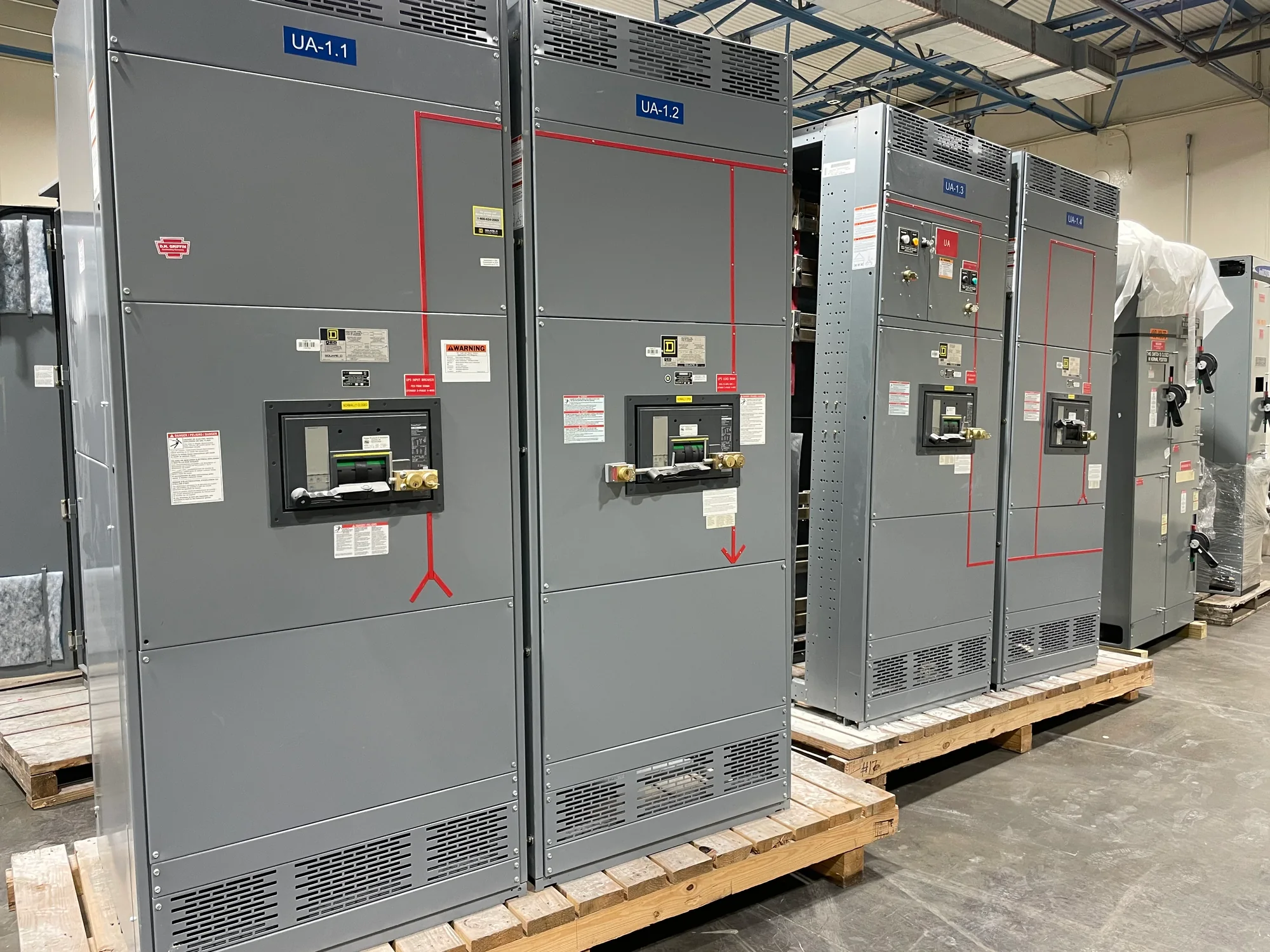
Begin with the Application and Project Scope
A useful purchase inquiry starts with what the switchgear must do in the electrical system. Describe the facility or project, the equipment’s role, the source and destination of power, and whether the need is for a new installation, expansion or replacement of existing equipment. Identify the project stage and the intended decision date, even if some details remain preliminary. This context helps distinguish requirements that are fixed from those still under engineering review. Include the responsible engineer, electrical contractor or other technical contact, along with the owner or purchasing contact when appropriate. If the inquiry covers multiple lineups, voltage levels or delivery phases, explain how the scope is divided. Switchgear Builder California supplies new equipment built in the USA with American components. An initial discussion can establish whether the application and available project information are sufficient to proceed to a more detailed technical and commercial review.
Share Electrical Requirements for Review
Provide the information available for the system, such as nominal voltage, frequency, phase, bus requirements, number and type of incoming and outgoing circuits, and the proposed arrangement. Identify relevant short-circuit or withstand requirements, continuous-current needs, protective-device preferences, metering, control functions and interfaces to other equipment. These are design inputs, not assumptions about a standard configuration: ratings and functions must be evaluated against the specific project. Attach one-line diagrams, specifications, equipment schedules, site standards and approved drawings if they are available, and note which documents are current. Flag open decisions or known constraints, including space, access, environmental conditions, utility requirements and coordination with transformers or downstream distribution. Qualified professionals must determine protection, ratings and applicable codes for each project. For medium- or high-voltage equipment, identify the standards applicable to that particular equipment and have them verified during review; requirements differ by equipment type and application.
| System | Voltage, phase, current and available fault current |
|---|---|
| Configuration | Lineup, protection, controls and enclosure as specified |
| Compliance | Applicable standards and listing confirmed for the assembly |
| Delivery | California and nationwide; schedule confirmed by quote |
Discuss Schedule Without Assuming a Lead Time
Schedule planning is most effective when the inquiry separates the date equipment is needed from the dates when decisions and information will be ready. Share the required-on-site date, installation or energization milestones, bid deadline, drawing review windows and any dependencies on construction, utility work or other packages. Explain whether the project can accommodate phased deliveries or whether all equipment must arrive together. If specifications, quantities or site conditions may change, call that out rather than presenting estimates as final commitments. Timing depends on the confirmed scope, engineering requirements, component considerations and project review, so an inquiry should not be treated as confirmation of availability or a promised delivery date. Schedule-sensitive or expedited options may be considered where appropriate, subject to review of the specific project and its constraints. Early communication about decision dates and unresolved items helps identify schedule risks while there is still time to discuss practical alternatives.
Specify Delivery Destination and Receiving Conditions
Include the project delivery address, city and state, requested delivery window and the person responsible for coordinating receipt. Explain site conditions that could affect transport or unloading, such as restricted access, delivery-hour rules, security procedures, limited staging space, crane or forklift arrangements, dock availability, or restrictions on vehicle size. Note whether the destination is a construction site, operating facility or storage location, and whether deliveries need to be coordinated with other trades. For multi-building or phased projects, identify each destination and the equipment intended for it. Customers in California and elsewhere across the country can inquire about new switchgear, with delivery arrangements considered for the project; shipping scope and feasibility should be confirmed rather than presumed. Clear receiving information can help align packaging, shipment coordination and site readiness discussions. If the address or access plan is still being finalized, provide the best available information and explain what remains to be confirmed.
What Happens After You Send an Inquiry
Send the scope summary, technical documents and schedule and delivery information through the available inquiry channel, and identify the best contact for follow-up. A complete package is helpful, but it is not necessary to wait for every drawing to be final: state which documents are preliminary, list unanswered questions and explain when revisions are expected. The manufacturer can use the information to clarify the application, identify missing design inputs and discuss the appropriate next steps for a new-equipment purchase. Depending on the project, that may include further technical coordination, confirmation of requirements, and development of a proposal for the reviewed scope. Avoid treating an early budget discussion or preliminary document as a final equipment selection or order commitment. Before proceeding, the project team should reconcile the reviewed configuration, ratings, interfaces, applicable requirements, commercial terms and delivery assumptions. Keeping engineering and purchasing contacts aligned helps prevent changes from being lost as the inquiry advances.