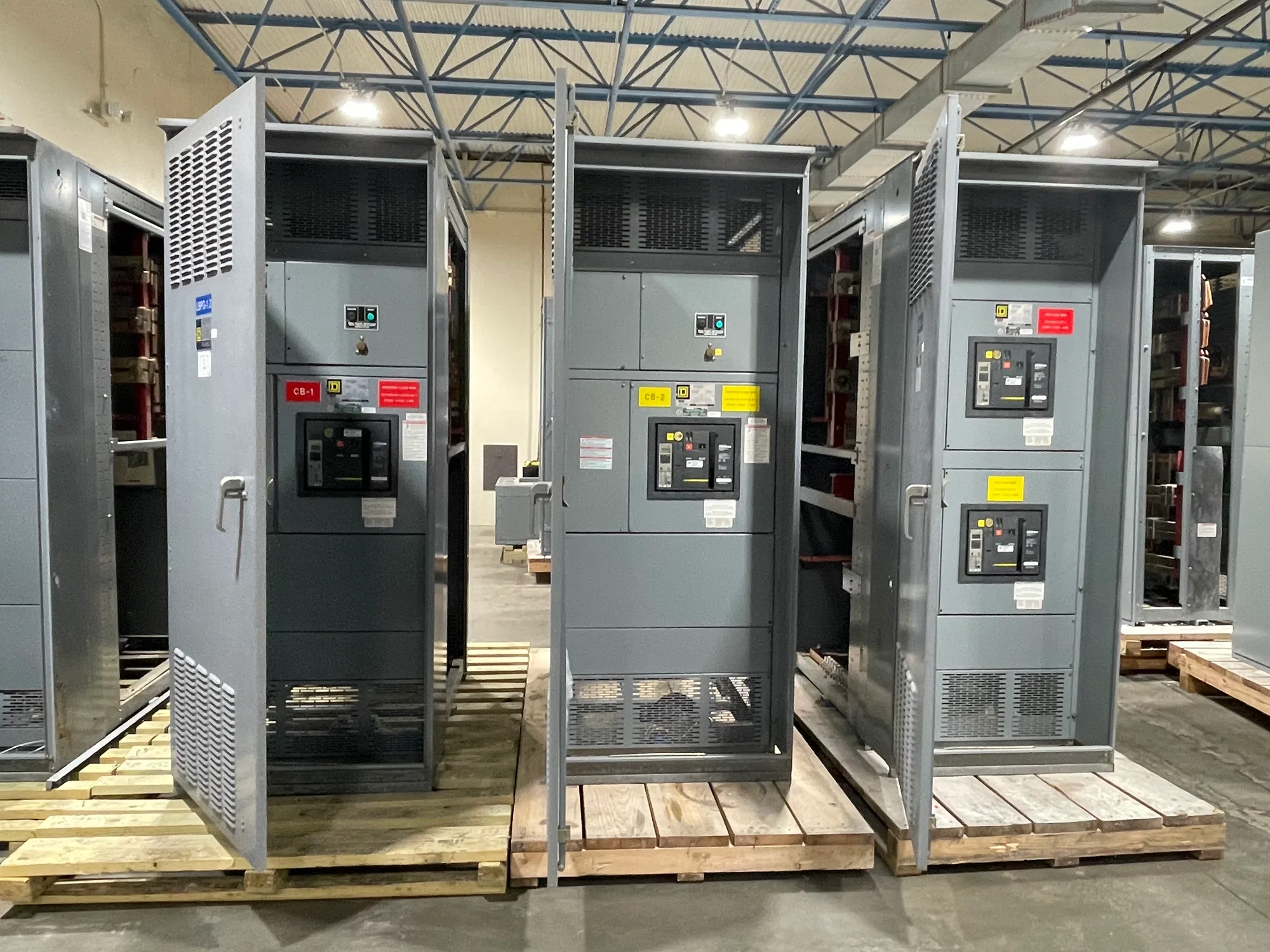
Understand what each purchasing route includes
When you buy new switchgear directly from a manufacturer, your project team communicates with the organization responsible for building the equipment. That can make it easier to discuss design inputs, clarify the division of scope and resolve questions that depend on the assembly. A distributor is a separate sales channel that may offer product selection, quotations and coordination across multiple suppliers. Its value depends on its technical resources, manufacturer relationships and the specific scope it handles. Neither route automatically determines equipment quality, suitability or total project cost. Compare the actual responsibilities behind each proposal: who interprets the one-line diagram, confirms the requested arrangement, responds to technical questions and tracks changes? Ask whether engineering coordination, field support or other services are included, excluded or provided by another party. The right comparison is between complete, clearly defined offers—not simply the name on the quotation.
Match the channel to project complexity
A distributor can be a practical point of contact when a project involves multiple equipment categories, established purchasing processes or a need to coordinate orders from several manufacturers. A direct manufacturer relationship can be useful when the switchgear has a project-specific arrangement, interfaces closely with other electrical systems or requires detailed discussion of design inputs. These are tendencies, not guarantees: a distributor’s technical depth varies, and a manufacturer may still rely on project partners for particular services. Consider how many decision-makers need to participate and how quickly technical questions must reach the people who can answer them. For a straightforward replacement or a defined specification, streamlined quoting may matter most. For a new facility or complex distribution design, clarity about engineering responsibilities and interface coordination may carry greater weight. Evaluate each prospective route against the same project requirements, communication expectations and decision schedule.
| System | Voltage, phase, current and available fault current |
|---|---|
| Configuration | Lineup, protection, controls and enclosure as specified |
| Compliance | Applicable standards and listing confirmed for the assembly |
| Delivery | California and nationwide; schedule confirmed by quote |
Compare scope, quotation and commercial terms
Before comparing prices, make sure the proposals describe equivalent equipment and responsibilities. Review system voltage, ratings, bus arrangement, protective-device requirements, enclosure and environmental conditions, metering, control provisions, accessories, shipping assumptions and exclusions as applicable to the project. These are design inputs to verify, not capabilities to presume. Identify who supplies drawings, answers deviations, coordinates interfaces and manages revisions after approval. Clarify whether freight, unloading, storage, taxes, commissioning assistance or startup support are included or separately arranged. A lower initial quotation may omit work another proposal includes, while a distributor’s combined offer may simplify procurement but make individual scope boundaries less visible. Request an itemized scope and a written list of exceptions from either channel. Have the electrical designer and qualified project professionals review ratings, protection and code requirements; commercial convenience cannot substitute for that technical review.
Trace technical questions and documentation
Ask how information will move from your team to the people responsible for equipment design and production. With a direct purchase, establish the appropriate contacts for application questions, submittals, drawing review and change control. Through a distributor, confirm whether technical questions are answered in-house or relayed to the manufacturer, who owns the response timeline and how approved decisions are recorded. For either route, agree on the documents needed for design coordination, construction, operation and maintenance, and confirm when each is expected. Review drawing approval carefully: identify who checks dimensions, cable and conduit entry, access, clearances and connections against the project layout. Make sure the final approved documents reflect the agreed scope and any accepted exceptions. For applicable low-voltage switchboards, identify whether UL 891 is a project requirement and verify the relevant status directly; medium- and high-voltage equipment requires identifying and verifying standards applicable to that specific equipment.
Plan delivery and make a confident selection
Delivery planning depends on the completed scope, design approvals, component requirements, production planning, transportation and site readiness. Ask both a manufacturer and a distributor to explain the assumptions behind any schedule estimate, what milestones affect it and how changes may alter the plan. Schedule-sensitive or expedited options may be considered after project review, but timing should not be treated as guaranteed. Confirm where the equipment will be delivered, who coordinates freight, what site access and unloading arrangements are required, and how receiving inspections or storage will be handled. Switchgear Builder California builds new equipment in the USA with American components and supplies it to customers in California and nationwide; project requirements, scope and logistics should be reviewed for each order. To proceed, provide the one-line diagram, specifications, load and fault information, site conditions, desired delivery window and purchasing requirements. Compare responses for technical fit, accountability, documentation and clear commercial terms.