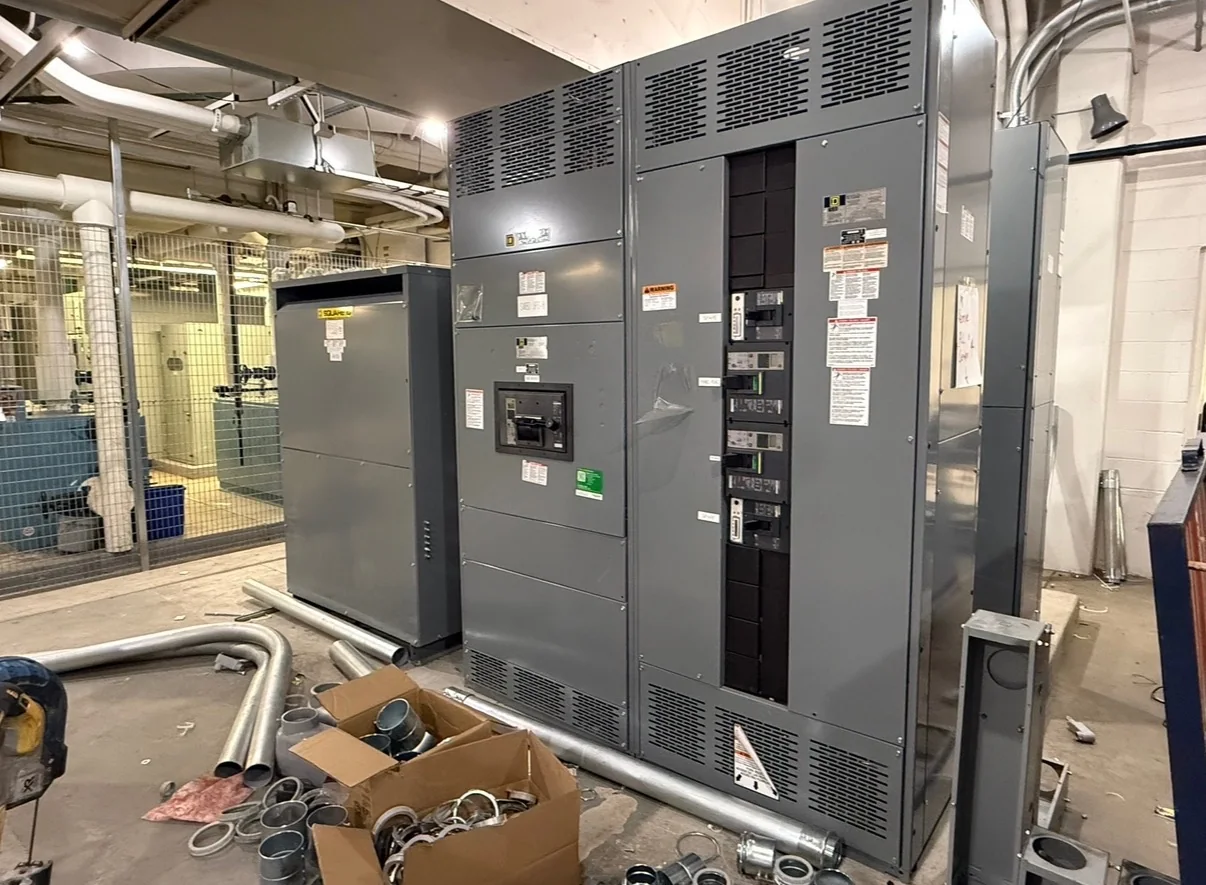
A manufacturer focused on new switchgear
Switchgear Builder California is an American manufacturer and builder of new switchgear. Our business is to supply equipment for electrical projects, not to acquire customers’ existing gear. That distinction matters when planning a replacement, expansion or new installation: the conversation centers on the new assembly, its intended role and the conditions it must address. We work with engineers, contractors and buyers to understand the application and define the information needed to develop an appropriate equipment scope. A project may involve distribution, protection, switching or coordination with other electrical systems; the required arrangement depends on the design and the site. We do not treat a product category or a brief description as enough to establish ratings or suitability. Clear requirements at the outset help the project team evaluate the right path, identify open technical questions and align equipment decisions with the larger installation.
Built in the USA with American components
Our new equipment is built in the USA with American components. For project teams, this is relevant context when reviewing sourcing expectations, procurement documentation and the details needed for internal approval. It should not be taken as a statement of a specific domestic-content percentage or formal origin certification. Those determinations, when needed, depend on the exact equipment, component sourcing and the rules governing the project. Buyers can help by identifying applicable contract language or documentation requirements early, rather than assuming that a general description settles them. Engineers and contractors should also distinguish sourcing considerations from electrical performance: origin does not establish voltage class, interrupting capability, construction, protection or code compliance. These are separate design and procurement questions that must be addressed for the individual application. Our role is to provide new switchgear and work through the equipment scope with the customer, while the project team confirms the criteria that govern its procurement and installation.
| System | Voltage, phase, current and available fault current |
|---|---|
| Configuration | Lineup, protection, controls and enclosure as specified |
| Compliance | Applicable standards and listing confirmed for the assembly |
| Delivery | California and nationwide; schedule confirmed by quote |
Define the application before equipment details
A useful first discussion starts with the electrical system and the function the new equipment must perform. Share the one-line diagram, system voltage and frequency, available fault-current information, service conditions, load characteristics and the intended point of connection when available. Identify whether the project concerns low-, medium- or high-voltage equipment, and describe the existing distribution arrangement if the work is a replacement or expansion. Protection, ratings and applicable codes must be determined by qualified professionals for each project. The design team should identify the governing standards for the specific equipment; requirements differ by equipment type and voltage class. For applicable low-voltage switchboards, UL 891 may be a relevant standard, but that reference does not establish that an assembly is listed or certified. Medium- and high-voltage equipment requires separate identification and verification of applicable standards. Raising these questions early helps expose missing inputs and avoid treating assumptions as confirmed requirements.
Coordinate technical scope and procurement
Equipment selection is one part of a coordinated project. The switchgear scope may need to align with protective devices, upstream and downstream equipment, metering, control requirements, cable entry, bus arrangement, enclosure conditions and the space available for installation. The engineer of record and other qualified professionals establish the design basis, protection approach and code requirements; contractors contribute installation constraints and field information, while buyers clarify commercial and documentation needs. When requirements are still developing, separate confirmed criteria from items awaiting review. That makes tradeoffs easier to evaluate—for example, whether a requested configuration affects footprint, interfaces, access or coordination with adjacent equipment. Send available drawings, specifications, schedules and decision deadlines, and flag any conflicts between them. A structured review can identify questions for resolution before procurement progresses. Final equipment details remain subject to project-specific review; a general product description cannot substitute for approved design documents or verified ratings.
Plan the next step with project-specific review
Customers in California and across the country can contact us to discuss new switchgear for a defined application. Nationwide shipping may be considered, subject to project details and logistics; shipment or availability is not guaranteed in every case. If the schedule is tight, explain the required dates and decision milestones. Schedule-sensitive or expedited options may be considered after project review, but timing depends on the equipment scope, design information, component requirements and other project conditions. A practical inquiry includes the project location, equipment type, required electrical data, drawings or specifications, expected quantity, installation context and procurement timeline. Note which details are fixed and which remain open, and include the best contact for technical clarification. We can then review the request and identify what information is needed to evaluate the new-equipment scope. If you are planning modernization of equipment you own, describe that work separately so its service needs can be assessed on their own terms.