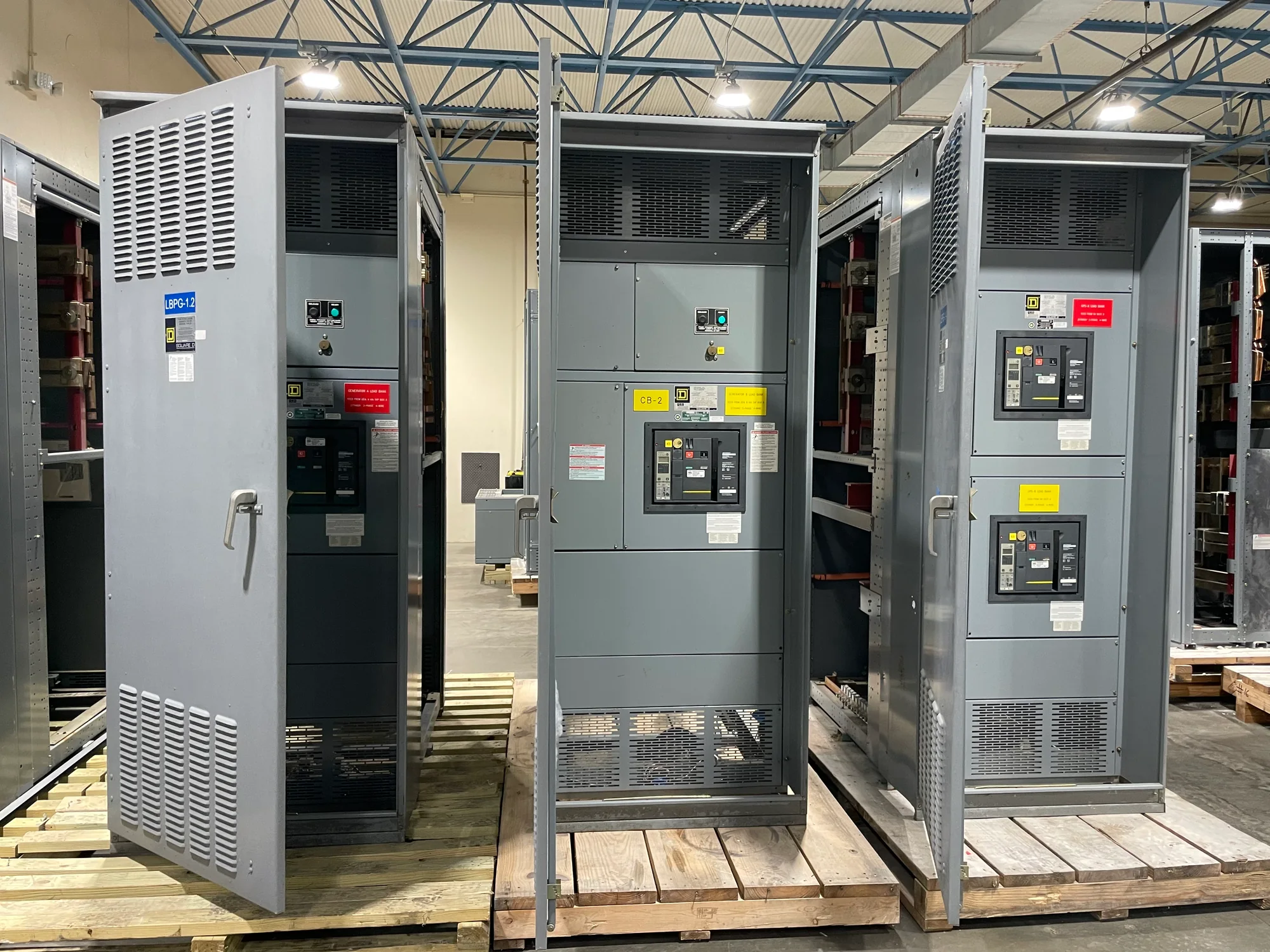
What the conductor count describes
Three-wire and four-wire distribution describe the conductors used for a particular circuit or system, but the count does not by itself identify the voltage, grounding arrangement or equipment required. A three-wire system may carry three phase conductors, as in many three-phase applications. A four-wire system commonly adds a neutral to three phase conductors, allowing phase-to-neutral loads as well as phase-to-phase loads. Other arrangements exist, so confirm the actual source and circuit topology rather than relying on a shorthand label. The neutral is a current-carrying circuit conductor when loads require it; it is not interchangeable with an equipment grounding conductor. For switchgear planning, document the source configuration, nominal voltages, frequency, grounding method and intended load connections. This information gives the design team a sound basis for evaluating bus, neutral and protective-device requirements.
When a neutral conductor is necessary
A neutral is generally needed when the distribution system supplies loads that connect from a phase conductor to a grounded circuit conductor, or when the system design otherwise requires a neutral reference. In a three-phase, four-wire arrangement, line-to-neutral circuits can serve suitable single-phase loads alongside three-phase loads. A three-wire arrangement may be appropriate where connected loads use only the phase conductors and the source and system design do not call for a neutral. Do not assume that adding a neutral automatically makes every voltage available or that all loads can share it. Confirm load nameplate data, connection diagrams and required voltages. Also account for nonlinear loads, which can affect neutral current and conductor sizing, particularly where harmonics are present. A qualified electrical professional should evaluate the expected loading and applicable code requirements before the distribution arrangement is selected.
| System | Voltage, phase, current and available fault current |
|---|---|
| Configuration | Lineup, protection, controls and enclosure as specified |
| Compliance | Applicable standards and listing confirmed for the assembly |
| Delivery | California and nationwide; schedule confirmed by quote |
Balance, loading and neutral sizing
The expected load mix matters as much as the nominal arrangement. In a four-wire system serving single-phase loads, phase loading may be uneven, and the neutral can carry the resulting imbalance. Electronic power supplies, variable-frequency drives and other nonlinear loads may introduce harmonic currents; depending on system conditions, these can increase neutral heating rather than cancel as a simple balanced-load calculation might suggest. Provide a load schedule that identifies phase connections, estimated demand, major nonlinear loads, future additions and operating patterns. The engineer can then assess conductor ampacity, neutral sizing, bus requirements and temperature-rise considerations in the context of the complete assembly. A balanced load assumption should be supported by credible operating data, not used simply to reduce material. Conversely, specifying a full-size neutral without reviewing the application may not address other design constraints. Base the decision on calculated conditions and the governing project requirements.
Grounding and protection are separate decisions
The neutral and equipment grounding conductor have different functions, even when both are associated with ground potential under specified conditions. The neutral carries normal load current where the circuit uses one; the equipment grounding path supports fault-current return and bonding of non-current-carrying metal parts. Their connection points and routing depend on the system configuration and applicable code. Improperly bonding them downstream can place normal current on metalwork and create hazardous conditions. Protection also depends on more than conductor count: available fault current, protective-device ratings and settings, coordination objectives, grounding method and the characteristics of connected equipment all require review. Qualified professionals must determine the protection scheme, ratings and applicable codes for each project. For medium- or high-voltage equipment, identify and verify the standards applicable to that specific equipment. For applicable low-voltage switchboards, UL 891 may be a relevant standard; its relevance does not by itself establish third-party listing or approval.
Information to provide for switchgear planning
When requesting a switchgear design or quotation, state whether the source is three-wire or four-wire and provide a one-line diagram showing the transformer or service source, grounding points, feeders and loads. Include system voltage, phase and frequency; neutral grounding details; main and feeder device requirements; estimated and maximum load; and available fault-current information when established. Identify whether the neutral is required through the equipment, how it is to be treated at each section, and whether loads include phase-to-neutral circuits or significant nonlinear content. Note project specifications, applicable codes and standards, coordination or arc-flash study inputs, physical constraints and anticipated expansion. If any information is preliminary, label it as such so assumptions can be tracked and resolved before release. Switchgear Builder California builds new equipment in the USA with American components and serves California customers and projects nationwide. Discuss project-specific ratings, construction and schedule-sensitive options with the team; requirements and timing remain subject to review.