Start with the Continuous-Load Calculation
A continuous load is one expected to continue for three hours or more. For many common applications, applicable electrical codes require overcurrent protection to be sized at no less than 125 percent of the continuous load, with noncontinuous load added at 100 percent. The familiar 80-percent limit follows from that calculation: a breaker carrying a continuous load generally should not be loaded above 80 percent of its marked rating unless the applicable rules and equipment conditions permit otherwise. For example, a 100-ampere breaker used under the ordinary 80-percent approach supports up to 80 amperes of continuous load, subject to the circuit’s other requirements. This is not a universal sizing shortcut. Confirm load classification, conductor ampacity, ambient and enclosure conditions, equipment instructions, and the adopted code with the project’s qualified electrical professional. The calculation is a design input, not a substitute for reviewing the complete circuit.
What an 80-Percent Rating Means in Practice
An 80-percent-rated breaker is not necessarily defective or undersized; it is applied according to the standard loading assumptions reflected in its rating and installation. When continuous demand is present, the designer accounts for the 125-percent factor rather than planning to operate the breaker indefinitely at its full nameplate current. This can affect breaker selection, feeder sizing, bus capacity, and the space or cost needed for an assembly. It can also influence how loads are distributed across equipment, especially where several large, steady loads operate at the same time. Avoid treating intermittent operation as continuous merely because a load has a high starting current, or treating a long-running load as intermittent based on a short duty-cycle description. Establish expected operating duration and simultaneous demand from the actual application. The responsible designer should then coordinate the breaker rating with conductors, terminals, upstream protection, and the equipment’s specified operating environment.
| System | Voltage, phase, current and available fault current |
|---|---|
| Configuration | Lineup, protection, controls and enclosure as specified |
| Compliance | Applicable standards and listing confirmed for the assembly |
| Delivery | California and nationwide; schedule confirmed by quote |
When a 100-Percent-Rated Assembly May Apply
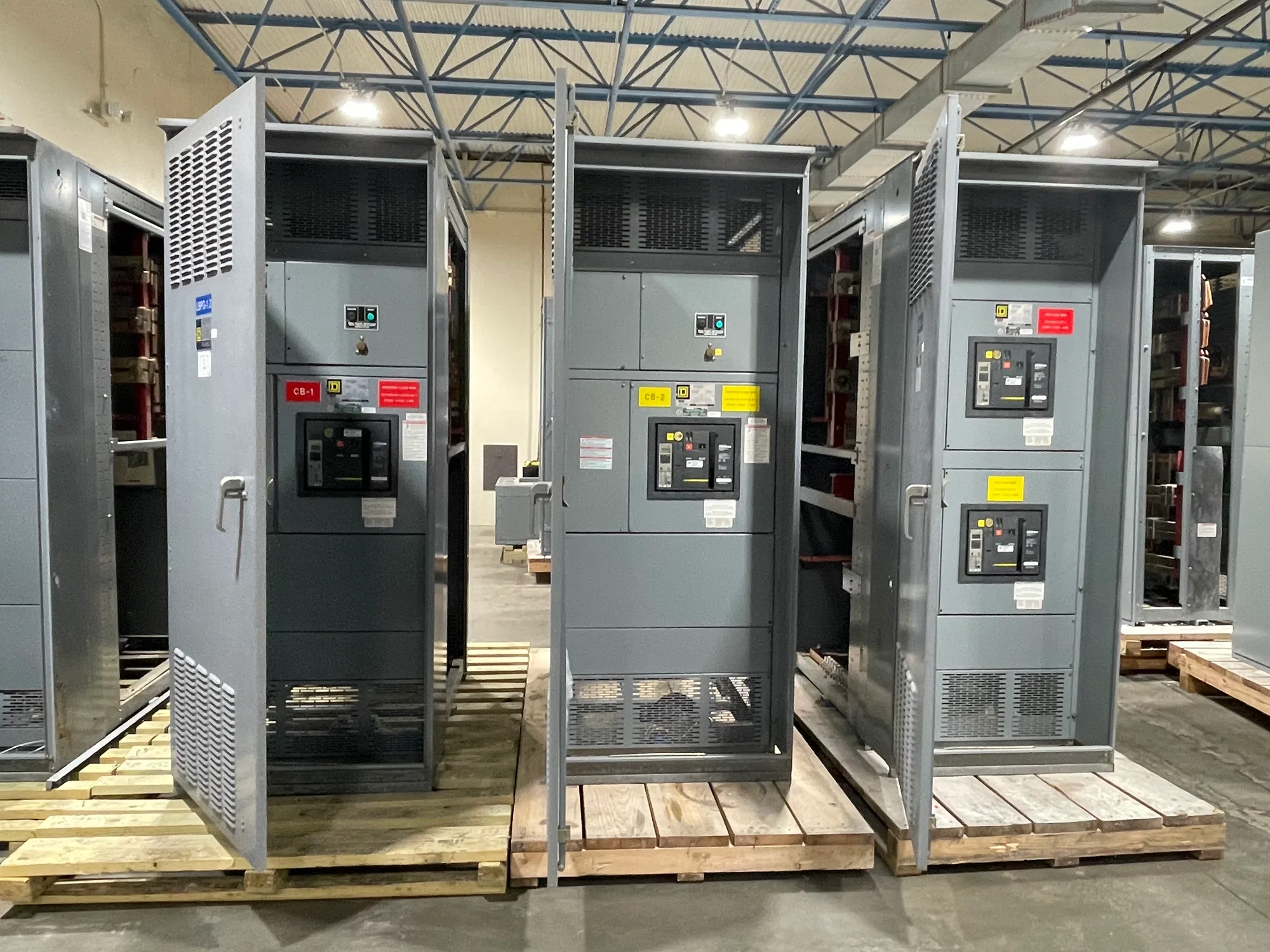
A 100-percent-rated breaker can allow continuous current up to the breaker’s full marked rating only when the applicable listing and installation conditions support that use. The rating is associated with an evaluated breaker-and-assembly combination, not simply a breaker label considered in isolation. Requirements may address the enclosure, bus, conductor terminations, ventilation, conductor size and temperature rating, mounting, and other construction details. A design should therefore identify the exact equipment and conditions covered by the applicable listing and manufacturer documentation before using the full rating in calculations. If those conditions are not satisfied, the ordinary continuous-load treatment applies. Do not assume that a particular breaker can be substituted into any switchboard or that a nominally matching enclosure preserves the rating. Qualified professionals must determine whether the specific assembly, installation, and governing code permit 100-percent operation. Confirm the basis early, since changing the assembly design late can affect coordination and procurement.
Coordinate Protection, Conductors, and Equipment
Breaker loading is only one part of a sound power-system design. The protective device must be coordinated with conductor ampacity, available fault current, interrupting requirements, upstream and downstream devices, and the equipment’s short-circuit and thermal limits. A 100-percent-rated application does not by itself establish adequate fault protection, selective coordination, or capacity elsewhere in the distribution path. Likewise, applying an 80-percent approach does not automatically resolve conductor or bus requirements. Engineers should compare the expected load profile with the proposed one-line diagram and identify whether continuous operation, future load growth, or concurrent operating modes change the result. For switchboard projects, provide the manufacturer with system voltage, phase, frequency, service or feeder arrangement, calculated continuous and noncontinuous loads, fault-current information, and the intended protective-device requirements. Confirm applicable codes and standards for the specific equipment; qualified professionals determine protection, ratings, and code compliance for each project.
Information to Confirm Before Equipment Is Specified
Before finalizing a breaker schedule, document which loads are continuous, how they are calculated, and whether the design relies on an applicable 100-percent-rated assembly. If it does, identify the requested breaker and assembly details and ask for confirmation that the proposed configuration is covered by the relevant listing conditions. If the design uses the 80-percent approach, state the continuous-load allowance and include any noncontinuous demand in the calculation. Share the one-line diagram, load schedule, conductor assumptions, installation environment, and project-specific code or specification requirements with the equipment builder. These inputs help reveal conflicts between calculated demand and proposed ratings before drawings are released. For new switchgear, final configuration depends on project review and the equipment’s applicable requirements; no rating should be assumed from a general description alone. California projects and projects elsewhere can begin with the same disciplined review: define the duty, verify the assembly basis, and resolve open questions with the responsible engineer and manufacturer.