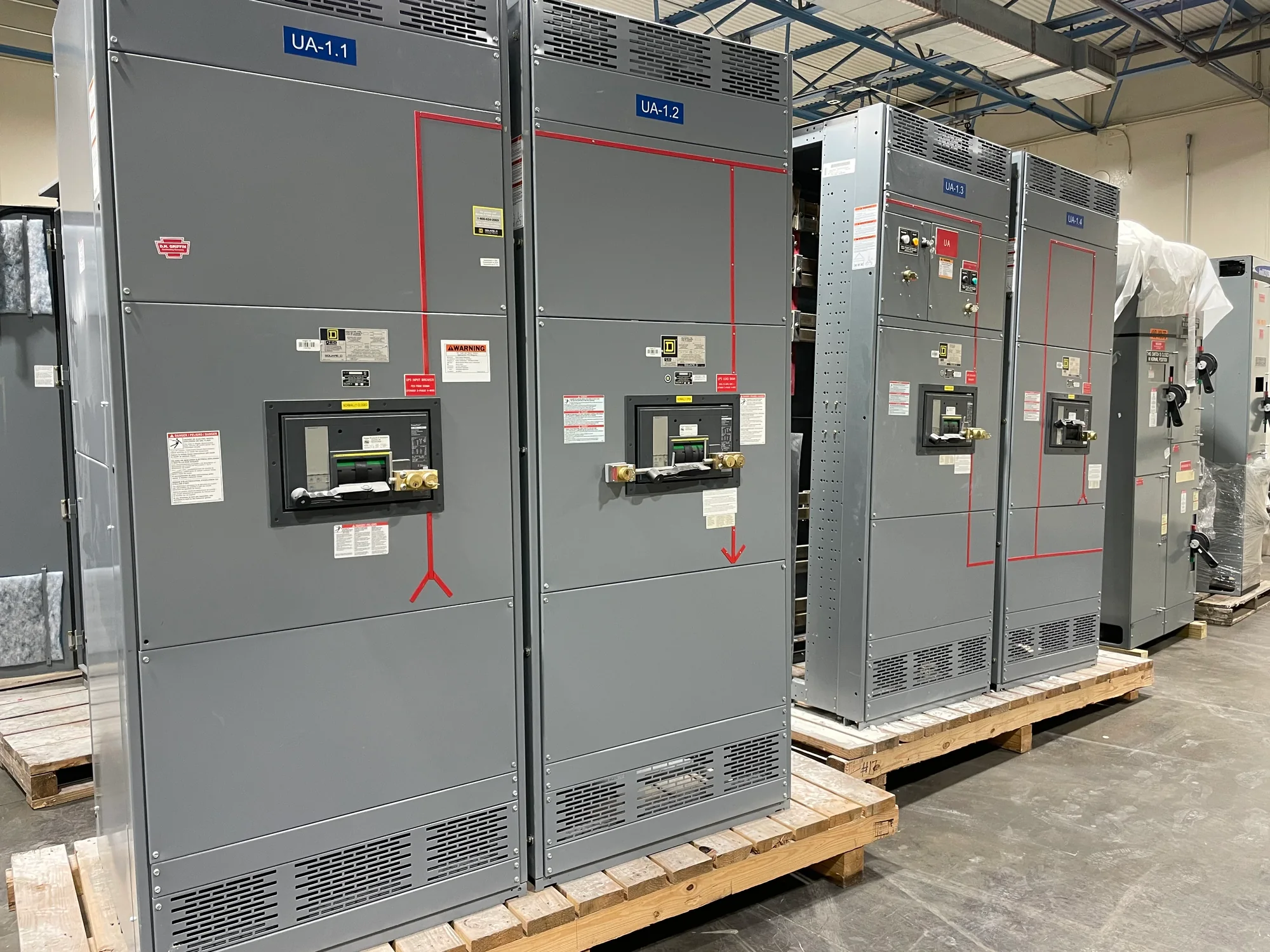
What a Dielectric Withstand Rating Describes
A dielectric withstand rating expresses the voltage stress an insulation system is designed to withstand for a defined duration and under stated conditions. It is a characteristic specified for equipment or an assembly, not a statement that the equipment can operate continuously at that voltage. The applicable value depends on equipment class, system voltage, insulation design, and the standards or project requirements governing the application. Terms such as power-frequency withstand, impulse withstand, and basic insulation level are related but are not interchangeable; each refers to a particular type of electrical stress and method of definition. When reviewing a switchgear specification, identify the exact rating terminology, voltage, waveform, duration, and applicable standard rather than relying on a generic phrase such as “high-potential rating.” Qualified professionals should establish the required insulation coordination and confirm that the specified equipment is appropriate for system conditions, including expected overvoltages.
A Rating Is Not a Test Result
The equipment rating is a design or performance requirement; a dielectric withstand test is a specific procedure used to assess insulation under controlled conditions. A test record may state the applied voltage, frequency or waveform, duration, test connections, environmental conditions, and outcome. Those details make the result interpretable. Without them, a reported voltage alone does not show what was tested or establish the equipment’s rating. Nor does passing one test prove suitability for every voltage stress, operating condition, or installation. Test voltage may be selected according to a governing standard or an agreed project procedure and can differ from a service voltage or rating value. The distinction matters when comparing submittals, factory documentation, and field commissioning records: each answers a different question. Confirm whether a document identifies a design requirement, a routine or other factory test, or a field verification, and avoid treating these records as equivalent evidence.
| System | Voltage, phase, current and available fault current |
|---|---|
| Configuration | Lineup, protection, controls and enclosure as specified |
| Compliance | Applicable standards and listing confirmed for the assembly |
| Delivery | California and nationwide; schedule confirmed by quote |
Factory Testing and Its Scope
Factory dielectric testing is conducted on equipment at a defined point in its manufacturing and inspection process. Its scope may cover particular insulation paths or assembled sections, while other portions may be excluded, isolated, or tested separately to protect components. The applicable procedure should identify the assembly configuration, test points, test medium and waveform, voltage level, duration, acceptance criteria, and any limitations. Project teams should also clarify whether the documentation is a test report, inspection record, or statement of design rating; a report for one unit or configuration should not automatically be applied to a different arrangement. If the project calls for specified documentation, state that requirement in the procurement documents and resolve it during submittal review. Ask how shipping splits, field-joined sections, accessories, and later modifications affect the evidence. The manufacturer and project team can then align a practical test scope with the equipment design and governing requirements.
Field Testing Requires Careful Coordination
A field dielectric test is performed after delivery or installation and must account for the actual equipment condition and connected circuits. Cables, instrument transformers, surge-protective devices, electronic controls, and other components may need isolation or special treatment, depending on the approved procedure. Applying a test voltage without confirming the configuration can damage equipment or create an unsafe condition. Before testing, qualified personnel should review manufacturer guidance, applicable standards, project specifications, grounding and isolation requirements, and the consequences of disconnecting devices. The plan should define test boundaries, voltage and duration, discharge and re-grounding steps, access controls, and responsibility for restoring connections. A field test is not automatically required merely because equipment has a dielectric withstand rating, and a factory test does not by itself confirm installation condition. Choose the verification method to answer a clear commissioning or maintenance question, with safety and equipment integrity guiding the decision.
Specify the Requirement and Verify the Evidence
For a useful equipment quotation and submittal review, provide system nominal and maximum voltage, grounding arrangement, insulation coordination basis, installation environment, and the standards applicable to the specific equipment. State whether the requirement concerns a rating, a factory test, a field test, or documentation of a prior test; identify the requested waveform, value, duration, test boundaries, acceptance criteria, and witness or record expectations where relevant. Do not assume one voltage value covers both power-frequency and impulse withstand requirements. For medium- or high-voltage equipment, identify and verify the standards applicable to that particular equipment rather than transferring criteria from another class. Review proposed test procedures before work begins, especially where sensitive components or joined sections affect the scope. Keep rating data and test records traceable to the equipment configuration and serial identification when available. These steps help engineers, contractors, and buyers compare requirements accurately and resolve gaps before manufacture, installation, or commissioning.