Start With the Project’s Current Study
Arc-flash incident energy is a study result tied to a defined electrical system and operating condition, not a fixed property of a switchgear lineup. The analysis estimates thermal energy at a specified working distance for a particular fault location, protective-device response, and configuration. Begin by confirming that the study reflects the one-line diagram, equipment, settings, available fault current, and utility information applicable to the project. Changes in transformer data, feeder length, protective-device settings, or tie-breaker status can alter the result. Ask the engineer of record which study revision governs procurement and whether equipment changes require an update. Share the relevant study documents and assumptions during specification review, while protecting sensitive system details appropriately. A manufacturer can use project-defined information to coordinate equipment design and documentation, but qualified electrical professionals must determine the analysis, interpret results, and establish safe operating requirements.
Connect Results to Labels and Equipment Data
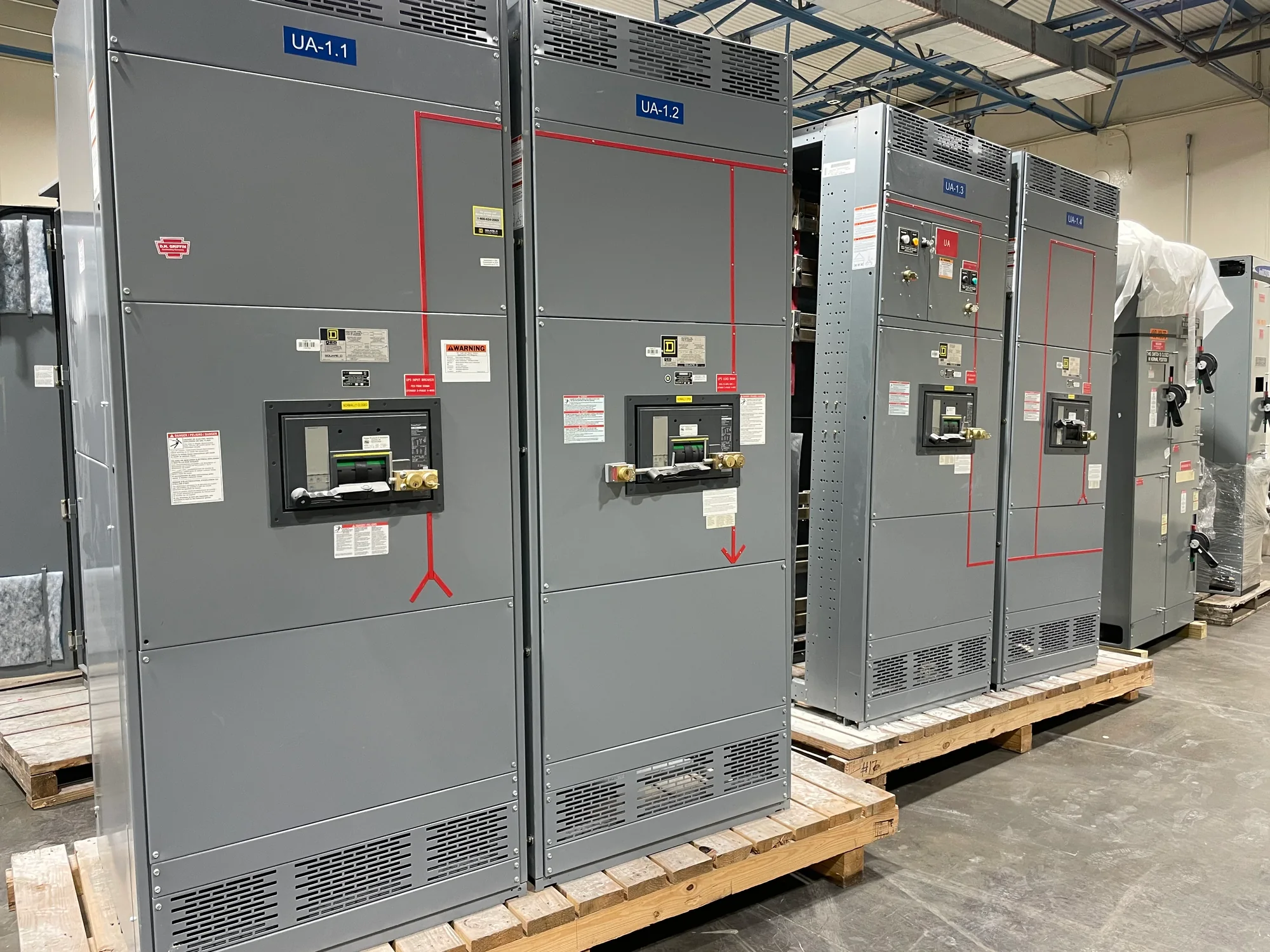
Arc-flash labels communicate study-derived information at equipment where workers may interact with energized parts. Their content and placement should align with the governing study and the project’s applicable electrical-safety requirements. Depending on the analysis and adopted practices, information may include incident energy at the stated working distance, an arc-flash boundary, nominal voltage, and a reference to the study or its date. Confirm who is responsible for producing, approving, installing, and updating labels; do not assume those tasks are included with equipment supply. Clear identification of sections, sources, protective devices, and operating configurations helps prevent a label from being applied to the wrong location or condition. Procurement documents should identify the study revision and the equipment tags covered, then establish a process for resolving mismatches between drawings, labels, and the final installed lineup. Labels support hazard communication; they are not a substitute for training, risk assessment, or established safe work practices.
| System | Voltage, phase, current and available fault current |
|---|---|
| Configuration | Lineup, protection, controls and enclosure as specified |
| Compliance | Applicable standards and listing confirmed for the assembly |
| Delivery | California and nationwide; schedule confirmed by quote |
Use the Study to Inform Work Practices
Study findings can inform how qualified personnel plan tasks, select protective measures, and determine whether energized work is justified under applicable rules. Workers and site safety leads should use the current study, equipment labels, operating procedures, and task-specific assessment together. A label value alone does not establish what personal protective equipment is appropriate for every task or eliminate other electrical hazards. Access restrictions, approach boundaries, shock risk, the equipment’s condition, and the nature of the work also matter. If actual settings, equipment identity, or system configuration differ from the study assumptions, stop and refer the discrepancy to the responsible electrical professional before relying on the displayed result. Project teams should define how workers can access the governing study and how changes are communicated. Qualified professionals determine required protection and work practices under applicable codes and safety standards; manufacturers can support accurate equipment identification and information handoff without replacing those responsibilities.
Evaluate Mitigation With Coordination in View
When incident energy is higher than the project’s target, the study engineer can assess possible risk-reduction measures in the context of the entire system. Options may include changes to protective-device settings, faster clearing strategies, maintenance-mode functions, zone-selective interlocking, differential protection, or revised system configuration, where appropriate to the design. Each choice has tradeoffs. Faster operation may reduce energy but affect selectivity, coordination, continuity of service, or equipment duty; operating modes may require clear controls, training, and procedures to ensure they are enabled when needed. Changes to equipment or protection can also affect fault-current withstand requirements and other study outcomes. Avoid choosing a mitigation solely from a label number or treating one technique as universally suitable. Have the responsible engineer evaluate feasibility, coordination, failure modes, and code implications, and document the selected approach. Include relevant functional requirements in procurement documents early enough to coordinate design and review.
Provide Inputs and Confirm the Handoff
For a useful specification review, provide the current one-line diagram, equipment schedule, available fault-current information, protective-device settings or requirements, study revision, and the operating configurations the analysis considers. Identify each lineup and section by project tag, and call out planned ties, alternate sources, maintenance modes, or other conditions that could change fault exposure. State whether the project expects labels, study coordination, or mitigation-related features as part of the equipment scope, and clarify who approves each deliverable. Before release and again before energization, the project team should reconcile final equipment data and settings with the study, revise analysis or labels when required, and communicate changes to affected personnel. Switchgear Builder California builds new switchgear in the United States using American components and serves California and nationwide projects. Applicable standards depend on equipment type and project requirements; qualified professionals should identify and verify them. Share requirements early so the design team can review scope and coordination needs.