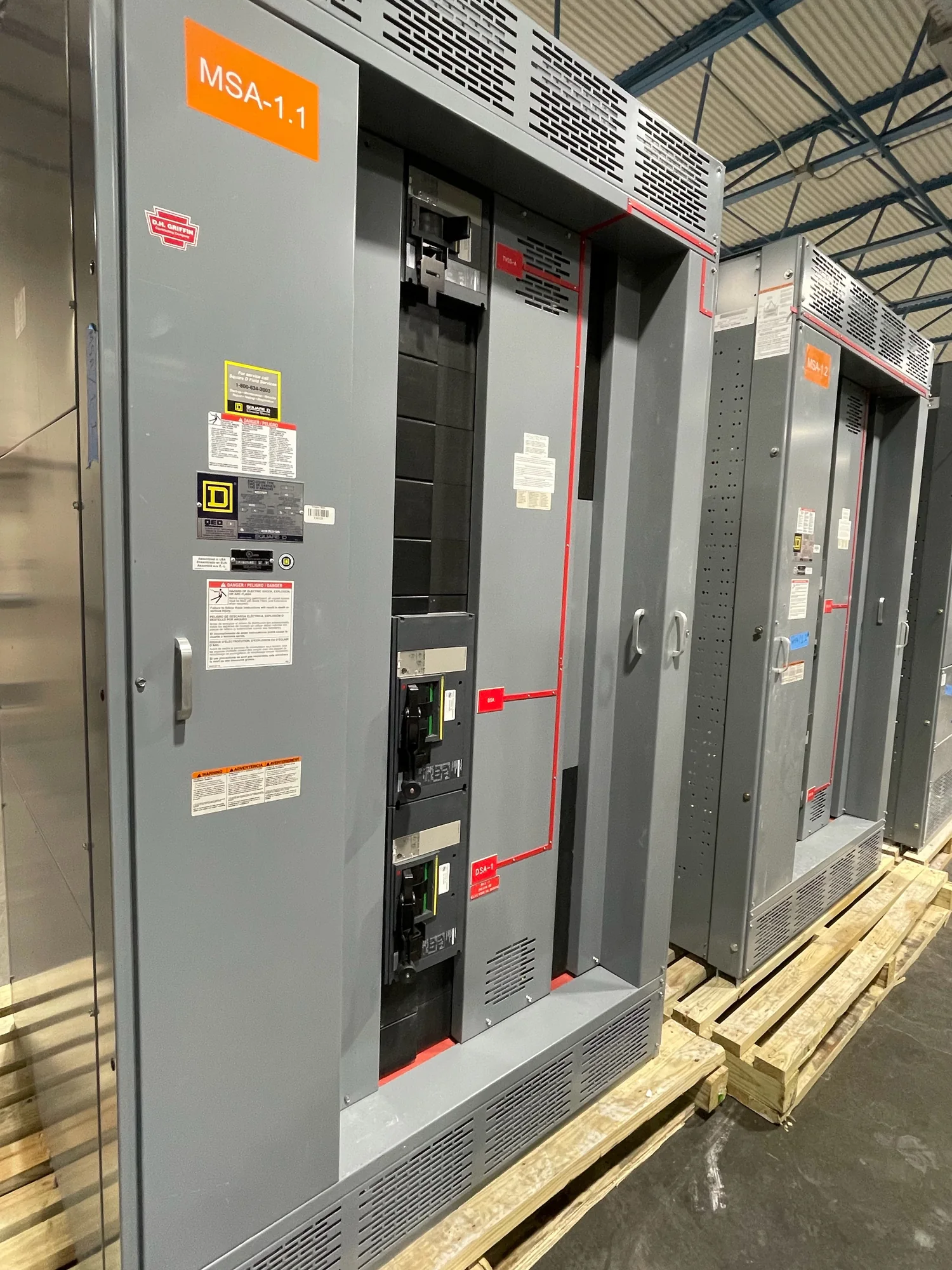
What an 800 A Rating Means
An 800 A designation identifies a current rating to evaluate; it does not by itself establish that an assembly can carry 800 A continuously in every installation. The design must account for the equipment’s intended use, ambient conditions, enclosure, conductor arrangement, and any applicable continuous-load requirements. Establish whether 800 A is the required continuous current, a nominal frame or bus rating, or a value selected to cover calculated demand. Those distinctions affect the main protective device, bus system, feeder connections, and heat management. Also identify system voltage, phase, frequency, available fault current, and grounding arrangement. Qualified electrical professionals should determine the applicable code requirements, protection, and ratings for the project. A clear basis of design helps prevent a nominal ampere value from being mistaken for confirmation that a particular configuration is suitable.
Match Commercial Distribution to the Load
For commercial distribution, start with a load schedule that separates existing demand from anticipated additions. Identify major equipment, operating patterns, and loads that may run simultaneously; a building’s connected load is not automatically the same as its calculated demand. Document the number and type of outgoing circuits, feeder sizes, and where distribution must reach in the facility. The 800 A selection should be checked against the resulting load calculation and the system’s operating conditions, rather than chosen solely because it is a familiar size. Consider whether the installation is service equipment or downstream distribution, since that distinction affects the required arrangement and coordination. Provide one-line diagrams and relevant site constraints early. This information gives the manufacturer a practical basis to review the requested equipment and helps the design team identify omissions before drawings and procurement decisions become difficult to change.
| System | Voltage, phase, current and available fault current |
|---|---|
| Configuration | Lineup, protection, controls and enclosure as specified |
| Compliance | Applicable standards and listing confirmed for the assembly |
| Delivery | California and nationwide; schedule confirmed by quote |
Coordinate Main Protection and Fault Duty
Main protection must suit the system, not simply match an 800 A label. The design team should establish the protective-device type and settings, interrupting or withstand requirements, and available fault current at the equipment location. Coordinate the main device with upstream protection and downstream feeders so a fault can be cleared appropriately while avoiding unnecessary loss of service where the design allows. Selective coordination, arc-flash considerations, and the project’s protective-device study may influence the requested arrangement and settings. Confirm whether the main is required, how it is controlled, and what metering, ground-fault protection, or accessory provisions are specified. These are project decisions for qualified professionals, based on the system study and applicable codes. A manufacturer can review stated design inputs, but a current rating alone cannot establish fault-duty suitability or guarantee a particular coordination result.
Allow for Growth Without Overbuilding
Future load allowance should reflect a credible plan: tenant changes, added HVAC, electrification, process equipment, or other known expansion. Record which future loads are expected, when they may be introduced, and whether spare feeder positions, physical space, or additional bus capacity are needed. These are different forms of flexibility. An unused breaker position does not necessarily mean the bus, service conductors, upstream source, or protective scheme can support additional current. Conversely, sizing every element for an undefined future scenario can increase cost and affect space, losses, and coordination. Ask the engineer to distinguish current calculated demand from the planned growth case and to identify which components must accommodate each. That documented basis helps the project evaluate an 800 A design sensibly, preserve useful expansion options, and avoid treating spare spaces as permission to add load without review.
Confirm Configuration and Equipment Availability
Equipment availability depends on the complete project specification, not the ampere rating alone. Before requesting a proposal, provide voltage, system frequency, bus and main requirements, fault-duty information, circuit schedule, enclosure and installation conditions, metering needs, and applicable project standards. Identify whether the equipment is an applicable low-voltage switchboard and whether UL 891 requirements apply; for medium- or high-voltage equipment, identify and verify the standards relevant to that specific equipment. Requirements and ratings must be confirmed for the actual design, and a standard reference does not itself establish a third-party listing. Switchgear Builder California builds new equipment in the USA with American components and supplies customers in California and nationwide. Ask the team to review the requested configuration and confirm availability for the project. If schedule is critical, discuss possible schedule-sensitive options during that review; timing depends on scope and confirmation, not the 800 A designation alone.