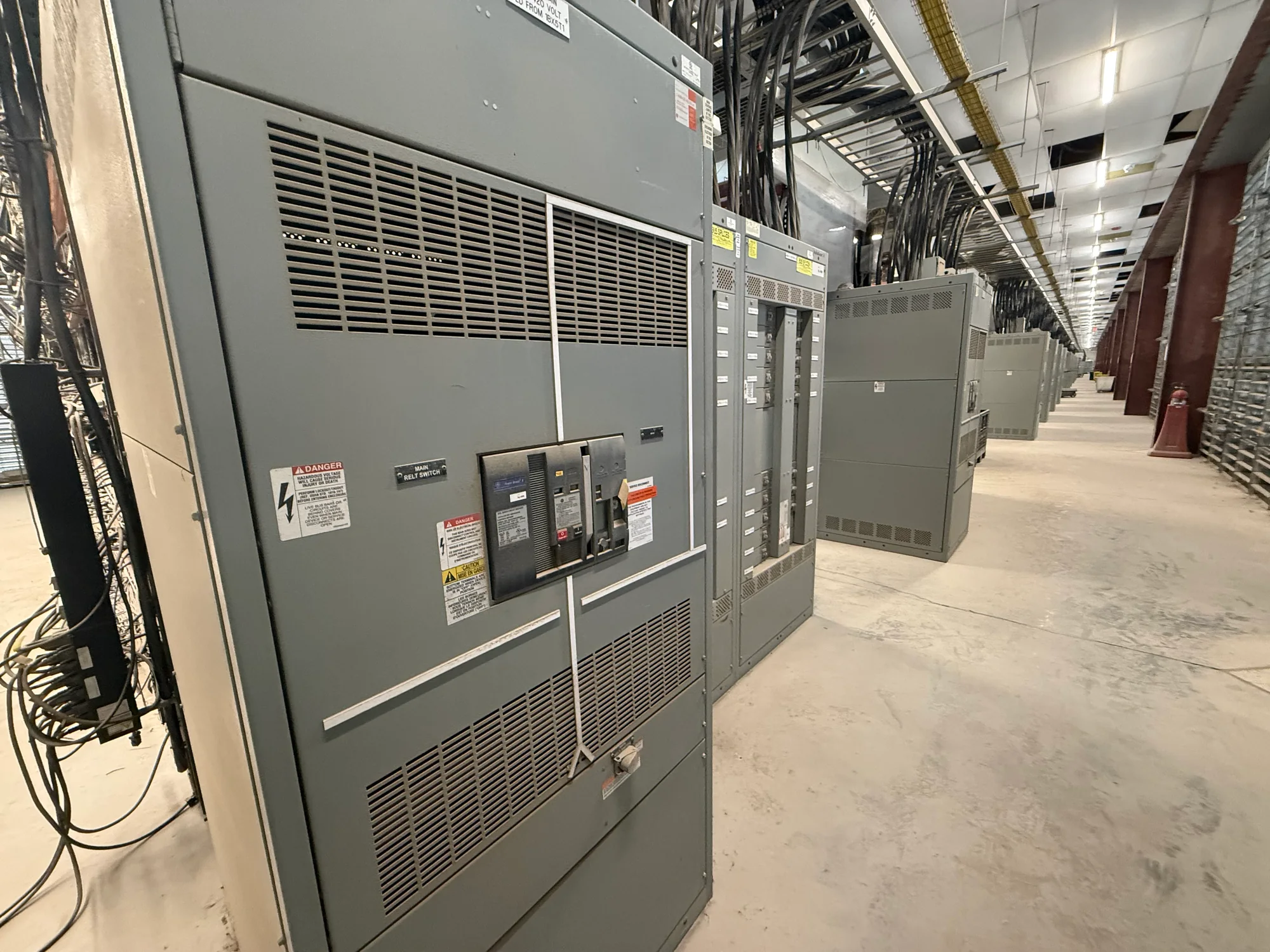
What a 600 A Rating Means
A 600 A designation identifies a current rating to evaluate, not a complete equipment specification. First determine whether the project requires 600 A of continuous current or whether 600 A is the nominal rating being considered for an application with a lower calculated demand. Continuous loads, operating profiles, ambient conditions, and equipment construction can affect how a rating applies. The engineer of record and other qualified professionals should establish the required ratings and verify them against the project’s codes and operating conditions. Also distinguish the equipment’s rated current from the service’s available capacity and from the rating of each individual feeder or protective device. These values are related, but they are not interchangeable. Document the intended duty, load characteristics, and any expected future expansion before requesting equipment. That shared basis helps the manufacturer assess whether a proposed 600 A arrangement fits the actual electrical requirement rather than relying on amperage alone.
Size the Service for the Installation
Service sizing starts with the calculated load and the utility and site conditions, not with a nominal ampere label by itself. Confirm the system voltage, phase, frequency, grounding arrangement, incoming conductor details, and available fault current where applicable. The design team should assess demand, continuous loads, diversity, starting or inrush behavior, and planned additions using the methods and code requirements applicable to the project. A 600 A service may be a suitable design target in one installation and insufficient or unnecessarily large in another. Check the service entrance arrangement, metering needs, main overcurrent protection, and coordination with upstream equipment. These decisions can influence the assembly layout and the connections that must be accommodated. Provide the one-line diagram, load information, and utility requirements when seeking a configuration review. Qualified professionals must determine protection, ratings, and code compliance; manufacturer discussions support that process but do not replace project engineering.
| System | Voltage, phase, current and available fault current |
|---|---|
| Configuration | Lineup, protection, controls and enclosure as specified |
| Compliance | Applicable standards and listing confirmed for the assembly |
| Delivery | California and nationwide; schedule confirmed by quote |
Match Feeder Capacity to Loads
An assembly rated 600 A does not mean every outgoing feeder can carry 600 A. Each feeder’s conductors, overcurrent device, connected load, and duty must be evaluated independently, with attention to applicable ampacity rules and installation conditions. List the number of feeders, their requested ratings, load types, and any special control or metering needs. Identify motors, nonlinear loads, sensitive electronics, or equipment with substantial starting current where these affect protection and operation. The distribution arrangement should also be reviewed for selectivity and coordination: a fault on a branch circuit should be evaluated in relation to feeder and service protection, while available fault current and equipment interrupting or withstand requirements must be addressed. Do not assume that a particular breaker mix, protective function, or short-circuit rating is available simply because the main rating is 600 A. Share the current one-line and feeder schedule early so the proposed design can be checked against the full load and protection strategy.
Check Enclosure Space and Access
Physical fit can be as consequential as electrical rating. Record the available floor area, maximum permitted height and depth, access clearances, door or aisle constraints, and the route from delivery point to final position. Confirm whether the assembly must pass through existing doors, corridors, elevators, or other restrictions, and note any steps, turns, or overhead obstructions. The equipment room’s ventilation, environmental conditions, housekeeping pad, cable entry direction, and conductor bending space may affect the layout. Review front, rear, and side access requirements against the proposed arrangement and the applicable installation instructions and codes. If future feeder additions are expected, discuss spare compartments or other expansion provisions during planning; reserved space should be stated explicitly rather than assumed. Provide dimensioned room plans, equipment elevations if available, and cable-entry preferences with the inquiry. Early dimensional review can reveal conflicts before release for construction, when changes to room layouts, conduit routes, or equipment arrangements are more disruptive.
Confirm Availability and Project Details
A 600 A requirement does not establish that a particular assembly, component mix, or delivery window is currently available. Actual equipment availability depends on the project’s electrical requirements, layout, component selection, and review of the requested configuration. Send a complete inquiry with the one-line diagram, voltage and system details, continuous-load basis, feeder schedule, fault-current information, enclosure dimensions, and applicable project standards. Include the installation location, desired milestone dates, and any constraints affecting access or connection. The manufacturer can use this information to discuss a suitable new-equipment design and determine what options merit further review. Schedule-sensitive or expedited possibilities, if relevant, are subject to project review and should not be treated as a commitment until confirmed. California projects and customers elsewhere in the United States may be served, with shipping arrangements considered for the specific order. Before procurement, reconcile the reviewed submittal with the engineer’s requirements, site conditions, and approved project documents.