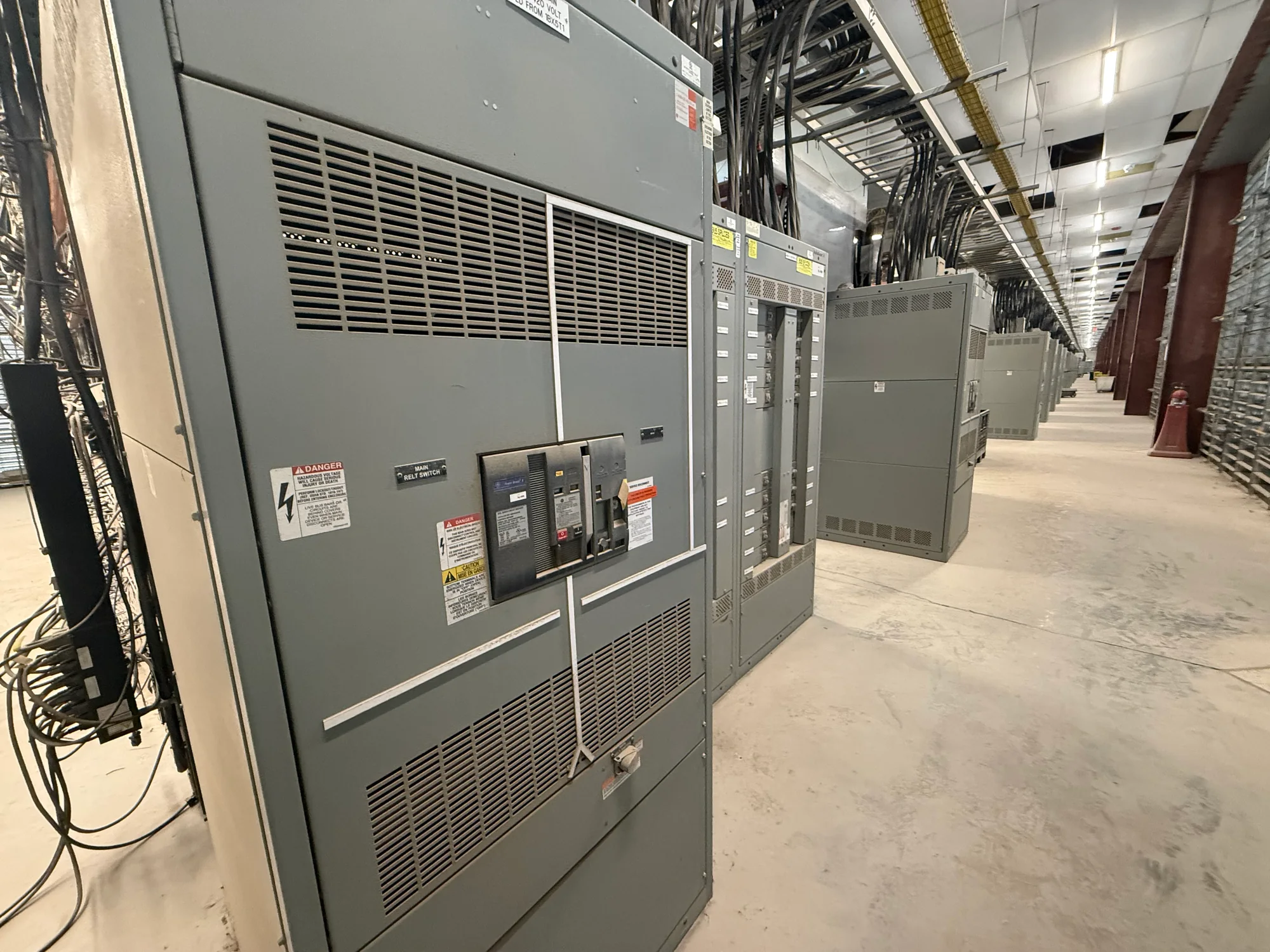
Separate System Voltage from Equipment Class
A project described as 5 kV needs more than a nominal-voltage label to establish the correct switchgear. Begin with the system’s nominal voltage, grounding method, frequency, and operating conditions, then identify the equipment voltage class required by the design. Nominal system voltage and equipment voltage class are related but not interchangeable: the assembly must be suitable for the maximum voltage it may experience, including expected operating and transient conditions. Ask the engineer of record to state the applicable voltage ratings and insulation requirements in the one-line diagram and specification, rather than relying on a shorthand project name. Confirm whether the application is utility, generation, industrial distribution, or another duty, because each can influence operating conditions and protection decisions. Also identify altitude, ambient temperature, contamination, and other environmental factors that may affect insulation performance. The precise equipment rating must be verified for the project; a 5 kV designation alone does not establish suitability.
Match Breaker Class to the Duty
Breaker selection should reflect the circuit’s operating duty, not simply the nominal voltage or a preferred frame. Define continuous current, available fault current, required interrupting capability, and the expected frequency of switching. Consider whether the circuit serves a transformer, motor, feeder, generator, or tie; load characteristics and switching practices can change the demands placed on the breaker. The study assumptions, including source contribution and system configuration, should be consistent with the equipment ratings being specified. Review close-and-latch duty, short-time withstand, and coordination with upstream and downstream devices where applicable. If future expansion or alternate operating arrangements are planned, include those cases in the evaluation rather than treating them as informal contingencies. Breaker class, operating mechanism, control power, and accessory requirements should be clearly stated and checked against the intended equipment class. Qualified professionals must determine protection and ratings for the actual installation; the manufacturer can review defined inputs but cannot substitute for the project’s engineering studies.
| System | Voltage, phase, current and available fault current |
|---|---|
| Configuration | Lineup, protection, controls and enclosure as specified |
| Compliance | Applicable standards and listing confirmed for the assembly |
| Delivery | California and nationwide; schedule confirmed by quote |
Specify Compartmentation and Access
Metal-clad construction is intended to organize primary components into separated compartments, but a useful specification describes the required arrangement and operating features rather than relying on the term alone. Identify the lineup configuration, number and purpose of sections, breaker positions, bus arrangement, cable entry direction, and the location of metering and control components. State the access and maintenance expectations, including how breakers are withdrawn or inserted and what interlocks are needed to support the intended operating sequence. Clarify whether the installation requires front access only or access from additional sides, and coordinate room clearances, cable bend space, lifting paths, and maintenance space with the building layout. Compartment doors, shutters, grounding provisions, and test access should be reviewed in relation to the design and applicable safety requirements. These details affect both the physical arrangement and the way operators interact with the lineup. Share drawings, room constraints, one-line diagrams, and interface requirements early so the proposed configuration can be evaluated before fabrication details are finalized.
Coordinate Insulation and Protection
Insulation requirements should be specified in terms of the project’s equipment voltage class and the withstand levels required by the applicable design basis. Review power-frequency and impulse withstand requirements where applicable, along with clearances, insulation materials, and environmental conditions that can influence dielectric performance. Do not assume that the nominal 5 kV system value determines every insulation criterion; the engineer should establish the requirements using the governing standards and system conditions. Protection settings and device functions also need to align with the system study. Provide available fault-current results, protective-device coordination information, grounding details, instrument transformer requirements, and any arc-flash study inputs relevant to the design. Specify monitoring, alarms, trip circuits, and control interfaces in a way that matches operating and maintenance practices. Standards and acceptance criteria must be identified for the specific equipment and application, then verified during engineering review. A standards reference is not, by itself, evidence of third-party listing or approval. Qualified professionals determine applicable codes, protection schemes, and final ratings.
Build a Verifiable Specification Package
A complete inquiry lets the builder assess the project against documented requirements and identify open decisions before they affect layout or schedule. Include the latest one-line diagram, equipment schedule, load and fault-current studies, grounding method, protection and control requirements, and applicable standards. Add site conditions, room plans, cable information, bus connections, auxiliary power, communications interfaces, and any utility or owner criteria. Distinguish mandatory requirements from preferences, and flag deviations or unresolved assumptions for review. Request a clear rating summary covering nominal system voltage, equipment voltage class, continuous current, short-circuit duty, insulation requirements, and breaker characteristics. For California projects and projects elsewhere in the United States, coordination among the owner, engineer, contractor, and manufacturer helps align the specification with installation and operating needs. Switchgear Builder California builds new switchgear in the USA with American components and supplies equipment to customers nationwide. If a schedule-sensitive option is important, raise it with the complete project package; feasibility and timing depend on project review and cannot be assumed.