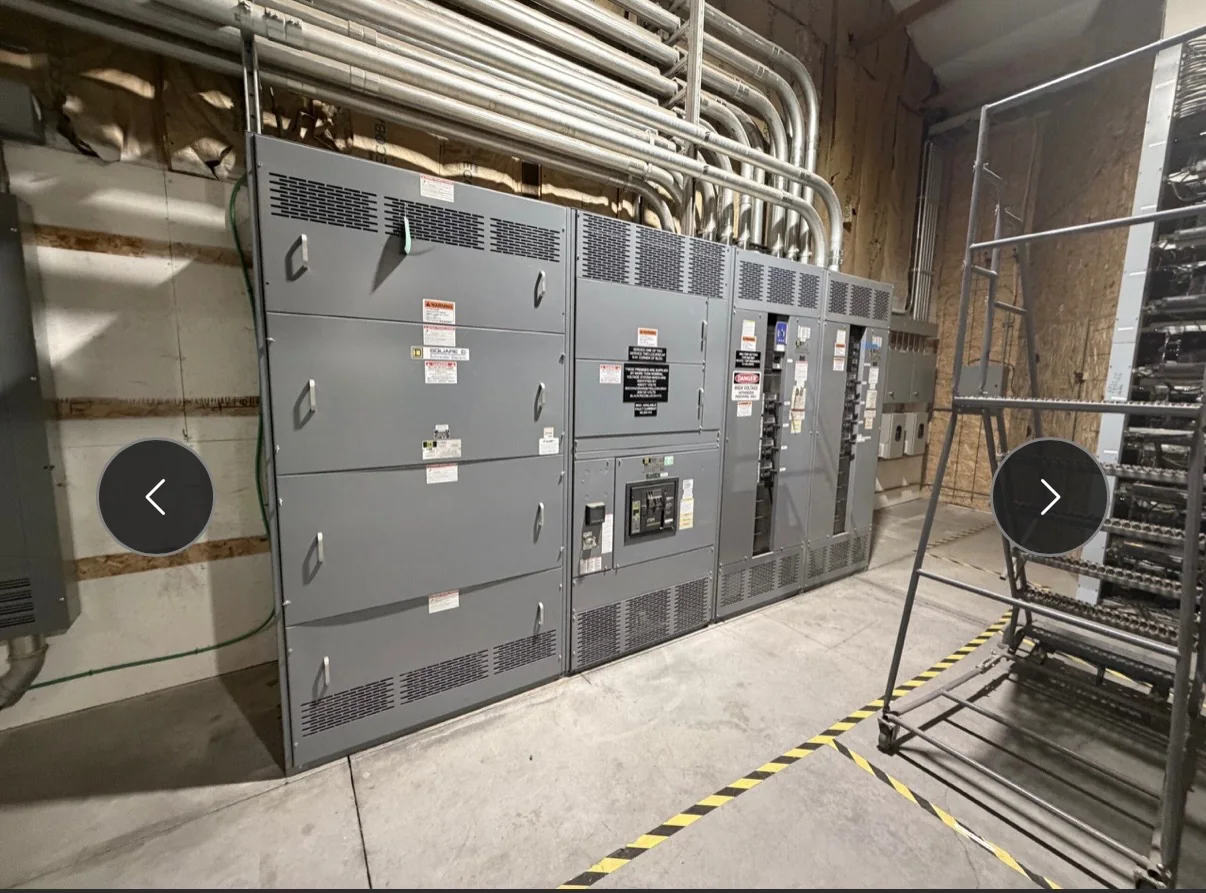
Confirm the System Voltage and Grounding
A 277/480 V switchboard is commonly considered for a grounded-wye system supplying both 277 V line-to-neutral loads and 480 V line-to-line loads. Confirm the actual source configuration before specifying equipment: nominal voltage, phase and wire arrangement, grounding method, available fault current, and whether a neutral is required throughout the assembly. These details affect device selection, bus construction, insulation coordination and the protection scheme. Do not assume that a 480 V marking by itself establishes suitability for every 277/480 V installation. The equipment rating and design must be appropriate to the system and its conditions of use. Coordinate the one-line diagram with the utility or upstream source information and project documents, resolving differences before procurement. Qualified electrical professionals should determine applicable codes, grounding and protection requirements. A clear source description gives the manufacturer a sound basis for reviewing the requested switchboard configuration.
Match Main and Feeder Device Ratings
Review the main device and each feeder device against the circuit it serves, rather than treating the switchboard as one undifferentiated voltage selection. Verify system voltage and frequency, continuous current needs, poles, interrupting or withstand requirements as applicable, and the type of protection required. On a grounded-wye system, a 277 V lighting feeder and a 480 V three-phase motor feeder may have different conductor and load characteristics even though they originate from the same assembly. Confirm how each device is connected, whether neutral switching is needed, and how ground-fault protection or other protective functions are addressed where required. Short-circuit information at the switchboard and coordination with upstream and downstream devices are essential design inputs. Device frame size or a familiar catalog description is not enough to establish a suitable selection. Have the responsible engineer verify ratings and settings against the study, drawings and governing requirements before release.
| System | Voltage, phase, current and available fault current |
|---|---|
| Configuration | Lineup, protection, controls and enclosure as specified |
| Compliance | Applicable standards and listing confirmed for the assembly |
| Delivery | California and nationwide; schedule confirmed by quote |
Design Bus and Neutral Around Load Use
Bus arrangement should reflect how power is distributed, not simply the nominal voltage printed on the specification. Establish the required phases, neutral provisions, bus ampacity, and connection points from the load schedule and one-line diagram. The 277 V lighting portion may make neutral capacity and distribution important; the 480 V three-phase portion may include motors, HVAC, process loads or other equipment with distinct operating and starting characteristics. Identify expected load growth, demand assumptions, diversity, and any known nonlinear loads so the design team can consider their effect on neutral loading and thermal performance. State whether a full-size neutral or another arrangement is required rather than leaving that decision implicit. Bus segmentation, feeder grouping and space allocation can also affect layout, service access and future changes. The right arrangement depends on project conditions and applicable design rules; a qualified professional should validate calculations and document the requested configuration.
Verify the Complete Equipment Rating
Ask for the rating basis of the complete switchboard assembly and confirm that it matches the installation—not only the ratings of individual breakers or other devices. Relevant inputs can include nominal system voltage, ampacity, short-circuit duty, temperature and enclosure conditions, service conditions, and the configuration of mains, feeders and bus. Check that the specified rating is suitable for the available fault current and the protective devices used, and that any series combination or other coordination approach is permitted and documented for the actual application. Requirements vary with equipment type and jurisdiction, so identify the standards and code provisions applicable to this specific switchboard and have the project’s qualified professionals verify them. A component rating does not, by itself, establish an assembly rating or third-party approval. Provide drawings and study data early enough for technical review; resolve assumptions before the order is finalized to reduce avoidable revisions.
Prepare a Useful Specification Package
A practical inquiry package includes the latest one-line diagram, source and grounding details, load schedule, feeder list, available fault-current information, protective-device requirements, and the requested bus and neutral arrangement. Note which circuits serve 277 V lighting, which supply 480 V three-phase loads, and any loads with special starting, operating or control requirements. Include enclosure and installation conditions, cable entry preferences, physical constraints, metering needs, and relevant project standards when known. Identify open engineering questions instead of silently assuming an answer; this lets the manufacturer and project team focus review on the decisions that affect configuration and rating. Switchgear Builder California manufactures new equipment in the USA using American components and supplies switchgear to customers in California and nationwide, subject to project review and requirements. If schedule-sensitive options matter, raise them with the project details; any feasibility and timing must be reviewed rather than assumed. Have the responsible engineer approve final ratings and documents before construction.