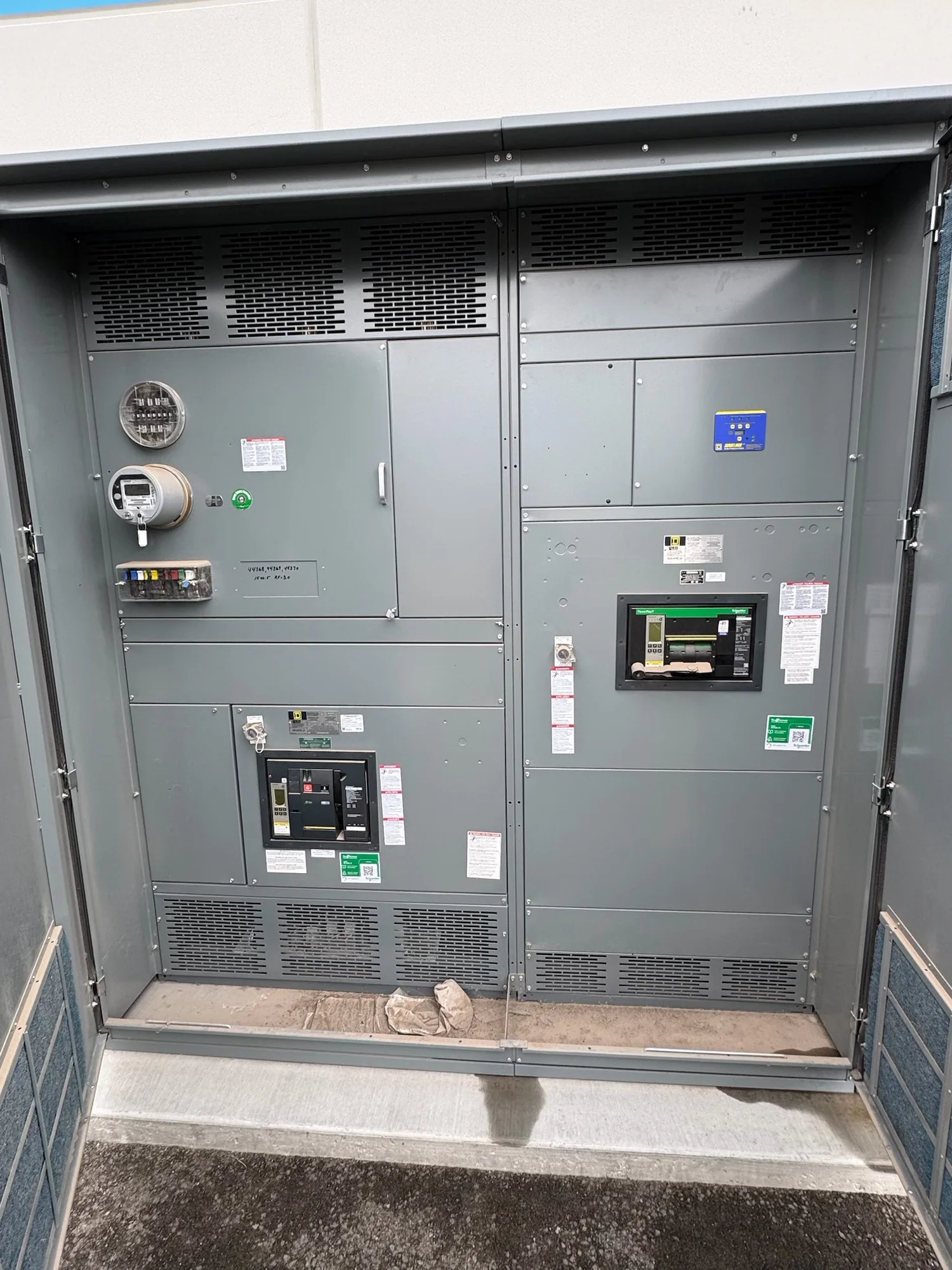
Confirm the 2000 A Continuous Rating
A 2000 A busway rating is a continuous-current design input, not a complete statement of what the installation can carry under every condition. Confirm the expected load profile, system voltage, phase and frequency, ambient conditions, enclosure environment, and whether the route is indoors or exposed to outdoor conditions. These factors can affect equipment selection and the applicable rating basis. Compare anticipated demand with the continuous rating while accounting for load growth and operating patterns; avoid treating spare capacity as a substitute for a documented load assessment. Higher-current services may require a different busway rating or a revised distribution arrangement, so define the maximum service requirement early rather than assuming a 2000 A section can serve it. Have qualified electrical professionals establish protection, conductor and equipment requirements in accordance with project conditions and applicable codes. The busway rating and the ratings of protective devices and connected equipment must each be checked independently.
Map the Route Before Selecting Sections
Develop a route drawing that shows the source, destination, direction changes, elevation transitions, obstacles, access clearances and connection points. A nominally direct run can become difficult to install where structural steel, piping, ceilings or operating equipment limit the available space. Record dimensions from reliable field information and identify where measurements need verification before release for fabrication. The route affects section lengths, elbows, offsets, end connections and the locations where supports can be installed; it also determines how crews can handle and join the assembly. Review thermal movement, exposure, environmental conditions and access for inspection or maintenance as relevant to the project. Coordinate the proposed path with building, mechanical and electrical plans to identify conflicts before they affect installation. When the route is not final, mark assumptions and unresolved dimensions clearly. A coordinated route package gives the manufacturer a sound basis to review section breaks and connection details, while leaving project-specific code and installation decisions with qualified professionals.
| System | Voltage, phase, current and available fault current |
|---|---|
| Configuration | Lineup, protection, controls and enclosure as specified |
| Compliance | Applicable standards and listing confirmed for the assembly |
| Delivery | California and nationwide; schedule confirmed by quote |
Coordinate Tap-Offs and Device Ratings
Tap-off locations should follow the actual distribution plan, not simply the spacing that appears convenient on a preliminary drawing. Provide each load location, expected demand, connection direction, required access and any operating constraints, then confirm the tap-off arrangement against the selected busway design. Verify busway continuous-current rating separately from each tap-off, breaker, fuse and downstream device rating. A 2000 A bus rating does not establish the allowable rating of an individual connection or the suitability of its protective device. Confirm voltage, phase, fault-current conditions, interrupting and withstand requirements, and coordination with upstream and downstream protection as applicable. The engineer responsible for the system should determine protection and code requirements for the installation. Check that tap-off units can be installed and operated safely within available clearances, and that their positions do not conflict with supports, joints or other equipment. A schedule listing loads, locations and device requirements helps expose missing information before the configuration is finalized.
Assess Bracing and Higher-Current Service
Bus bracing is a separate consideration from continuous ampacity. The available fault-current information, protective-device clearing characteristics, system configuration and applicable equipment requirements inform the needed short-circuit withstand capability. Provide the available fault-current study or the best project data available, along with upstream protective-device information, and have qualified professionals establish the required protection and bracing basis. Do not assume that a 2000 A continuous rating indicates an adequate short-circuit rating; confirm bus and device ratings independently. If the service may exceed 2000 A now or later, compare an appropriately rated busway arrangement with alternatives such as parallel runs or a changed distribution layout. Each option has consequences for space, connections, protection, installation sequence and future expansion. Request review of the actual electrical conditions rather than extrapolating from the nominal ampere value. For medium- or high-voltage equipment in the surrounding system, identify and verify the standards applicable to that specific equipment; requirements differ from those for low-voltage busway.
Plan Delivery Splits and Submittal Information
Delivery splits divide a busway route into manageable sections for transport, handling and installation, but they must be coordinated with the electrical layout. Discuss proposed split points alongside section lengths, joint locations, access to the installation area, lifting and handling limits, and the sequence in which crews can assemble the run. A split that works for transport may complicate field access or place a joint where installation is impractical, so review both logistics and electrical continuity before approving the arrangement. A useful inquiry package includes system voltage and phase, continuous-current requirement, route drawings with dimensions, source and end connections, tap-off schedule, load information, available fault-current data, protective-device details, environmental conditions and requested delivery divisions. Identify which values are confirmed and which remain subject to engineering review. Switchgear Builder California builds new equipment in the USA with American components and supplies customers in California and nationwide. Schedule-sensitive or expedited options may be reviewed for a project, subject to scope and current production considerations; no timing should be assumed until the project is evaluated.