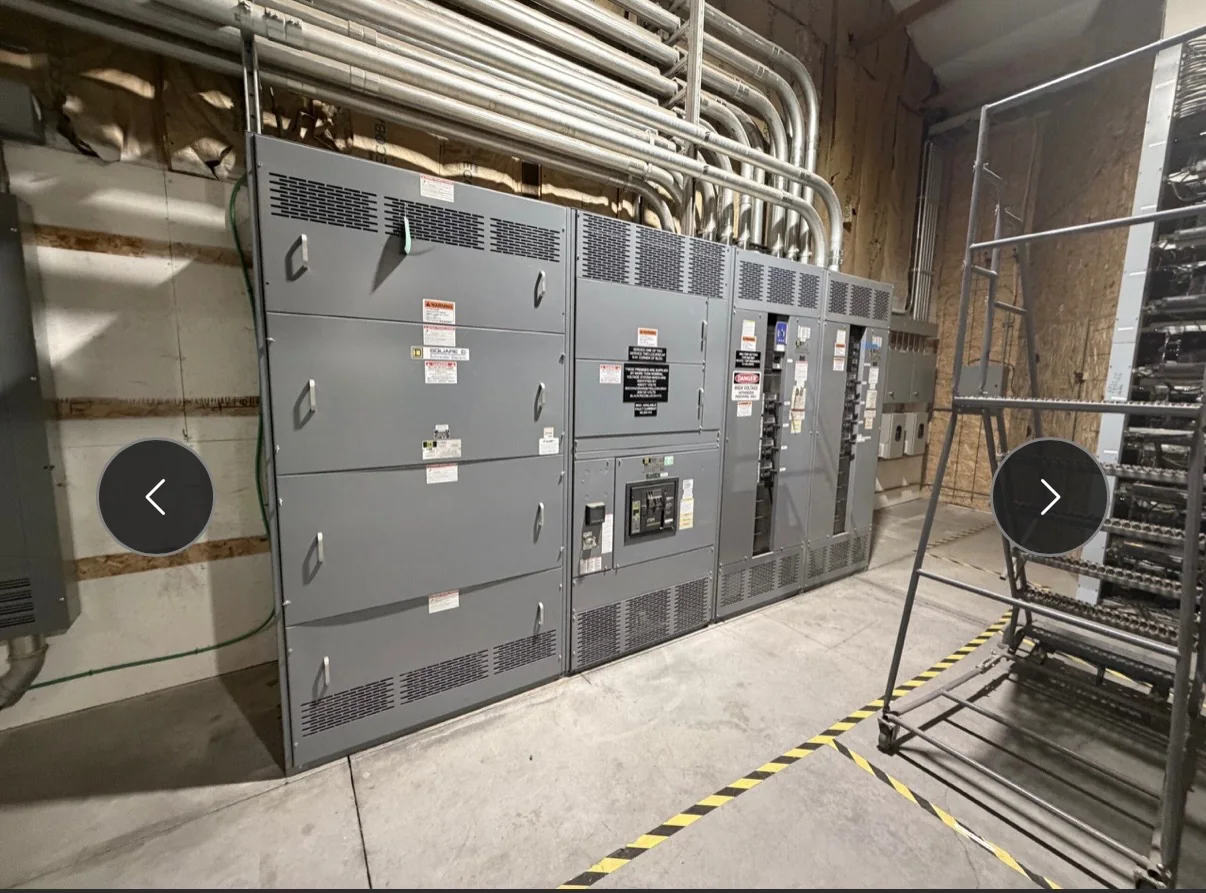
Start with the Grounded-Wye Service
A 120/208-volt system commonly distributes power from a grounded-wye source, with 120 volts available phase to neutral and 208 volts phase to phase. Confirm the actual service configuration, conductor arrangement and grounding method from project documents before selecting busway. A stated voltage alone does not establish how the source is grounded, which conductors are present, or how neutral current will be managed. Identify whether the busway must carry three phase conductors and a neutral, and clarify any grounding or bonding path required by the design. These details affect busway construction and tap-off choices as well as coordination with upstream protection. Provide the one-line diagram, service data, available fault-current information when established, and applicable project specifications for review. Qualified electrical professionals should determine grounding, protection and code requirements for the installation. If the source or load arrangement is changing, resolve that early; otherwise, equipment selected for an assumed configuration may not match field conditions.
Separate Phase-to-Neutral and Phase-to-Phase Loads
Prepare a load schedule that distinguishes 120-volt, phase-to-neutral loads from 208-volt, phase-to-phase loads. For each load, identify its voltage, phase requirement, expected demand, connection method and intended location along the busway route. A 120-volt load depends on a neutral connection, so confirm that the relevant tap-off unit and busway arrangement provide the required neutral path. A 208-volt load connects between phases and does not use the neutral for its ordinary line-to-line supply, though other connected components may have separate requirements. Review how single-phase loads are distributed across the three phases; uneven allocation can contribute to current imbalance and neutral loading. Include anticipated future loads only where they are part of the design basis, and distinguish them from confirmed equipment. This schedule helps the designer assess conductor and tap-off requirements without treating nominal system voltage as a complete specification. Confirm load data and protection needs with the responsible electrical engineer and equipment suppliers.
| System | Voltage, phase, current and available fault current |
|---|---|
| Configuration | Lineup, protection, controls and enclosure as specified |
| Compliance | Applicable standards and listing confirmed for the assembly |
| Delivery | California and nationwide; schedule confirmed by quote |
Match Insulation to the Application
Busway insulation must be considered in the context of the assembly, operating environment and project electrical requirements, rather than selected by voltage label alone. Review the specified insulation system and its applicable temperature, environmental and installation conditions with the equipment manufacturer. Conditions such as ambient temperature, moisture, contaminants, enclosure exposure, ventilation and proximity to heat sources can influence whether the proposed arrangement is appropriate. Also establish whether the route passes through areas with distinct environmental or fire-protection requirements, since those constraints may affect enclosure and installation decisions. Ask for documentation identifying the proposed busway construction and the ratings or limitations relevant to the project, then compare that information with the project specification and governing requirements. Avoid assuming that two products described as 120/208-volt busway have equivalent insulation or environmental suitability. The design team should verify required clearances, installation methods and any restrictions before release. Qualified professionals must evaluate applicable codes and safety requirements for the actual site and use.
Select Tap-Off Units for Loads and Protection
Tap-off units should be specified around the connected load, circuit arrangement and required protective device, not simply the physical ability to attach at a busway location. Identify whether each tap serves a 120-volt phase-to-neutral load or a 208-volt phase-to-phase load, and state the phases and neutral connection required. Confirm the tap-off unit’s current rating, compatible busway system, connection method and protection provisions against the project documents. Where a protective device is specified, its rating and coordination with upstream equipment should be determined by qualified professionals using the system data and applicable codes. Consider access for operation and maintenance, working clearances, equipment location and the possibility of simultaneous demand from multiple taps. These factors can shape tap spacing and placement along the run. Provide a tap schedule or marked route drawing showing each location, load, voltage and circuit requirement. Final compatibility and ratings must be verified for the selected equipment; a nominal 120/208-volt designation by itself does not confirm suitability.
Coordinate the Route and Verify Ratings
The distribution route should be developed with the building layout, structural supports, equipment clearances and maintenance access in view. Mark the busway path on coordinated drawings, including changes in direction, elevation transitions, connection points and tap-off locations. Confirm dimensions and support conditions with the responsible design and construction teams before equipment is released, and identify interfaces with upstream switchgear and downstream panels. Route length and geometry may affect the assembly configuration and installation sequence, so field conditions should be checked against the drawings. Most importantly, verify the applicable equipment rating for the complete application: voltage, current, frequency, phase and conductor arrangement, along with fault withstand or short-circuit requirements established for the project. Confirm applicable standards for the specific equipment and do not treat a voltage label as evidence of a particular listing or approval. Send the one-line diagram, load schedule, route drawing, environmental conditions and governing specifications for review. Schedule-sensitive options may be discussed subject to project scope and review.