What a Vacuum Interrupter Does
A vacuum interrupter is a sealed device in which electrical contacts open and close to control a circuit. When the contacts separate while current is flowing, an arc forms between them. The enclosure’s vacuum environment helps extinguish that arc when the current passes through zero, allowing the gap to recover its insulating strength and withstand voltage. The interrupter therefore performs the current-switching function; it is not, by itself, a complete circuit breaker or a complete switchgear assembly. In a breaker, an operating mechanism moves the contacts, while sensors, relays and control circuits may determine when an opening command is issued. The surrounding equipment provides insulation, electrical connections, barriers and mechanical support. Understanding these distinct roles helps engineers read equipment descriptions accurately: an interrupter describes the sealed arc-interruption element, while the breaker and switchgear describe larger coordinated systems.
How Contact Operation Interrupts an Arc
During normal operation, the interrupter’s contacts touch and provide a path for current. A trip command causes the breaker mechanism to separate them at a controlled speed and distance. As the contacts part, a metal-vapor arc carries current across the small gap. At the next natural current zero in an alternating-current circuit, the arc can cease; the vacuum gap then needs to regain dielectric strength quickly enough to withstand the voltage that appears across the open contacts. Contact material, shape, travel, opening speed and the interrupter’s condition all contribute to performance. The vacuum does not simply make an arc impossible: the arc exists during interruption, and the device is designed to manage it. These details explain why the interrupter cannot be evaluated in isolation from its actuator, electrical duty and application. The required operating sequence and interruption duty must be established for the specific system.
| System | Voltage, phase, current and available fault current |
|---|---|
| Configuration | Lineup, protection, controls and enclosure as specified |
| Compliance | Applicable standards and listing confirmed for the assembly |
| Delivery | California and nationwide; schedule confirmed by quote |
Where It Fits in Medium-Voltage Equipment
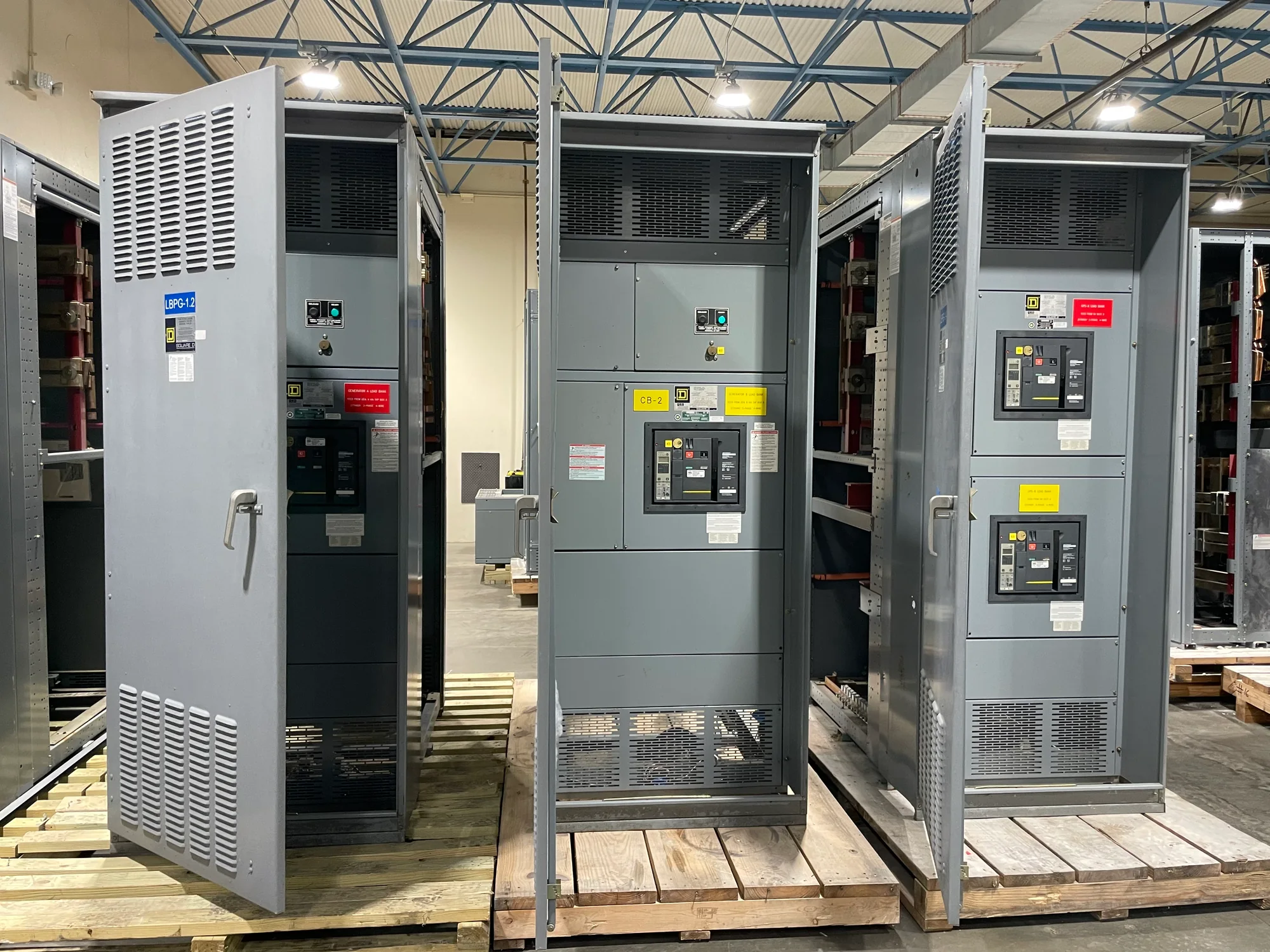
Vacuum interrupters are commonly associated with medium-voltage circuit breakers, where each pole typically has an interrupter connected to the phase’s current path. The breaker’s operating mechanism links the poles so they open or close as required, while protection and control components support system operation. The complete equipment arrangement may also include bus, cable terminations, instrument transformers, grounding provisions and compartment barriers. A vacuum interrupter should not be confused with a vacuum switch, a load-break device or an entire switchgear lineup; those terms describe different equipment or functions, and the application determines what is appropriate. Nor does the term alone establish voltage rating, current rating, interrupting capability, endurance, enclosure design or applicable standard. Buyers and project teams should confirm the complete assembly’s intended use and ratings, rather than treating a component description as proof that an assembled breaker or lineup meets a project requirement.
Ratings, Duty and Application Questions
Selection begins with the system’s electrical conditions and the switching duty. Relevant inputs can include nominal and maximum system voltage, continuous load current, available fault current, system grounding, operating frequency and the type and frequency of switching. Engineers also consider transient recovery voltage, which describes the voltage across the contacts after interruption, as well as required operating sequences and mechanical or electrical endurance. The installation environment, altitude, ambient conditions, control voltage, auxiliary contacts and physical interface may affect equipment selection or integration. These values are not interchangeable: a suitable continuous-current rating does not establish an adequate interrupting rating, and a component rating does not automatically describe the finished assembly. Qualified professionals should determine protection settings, coordination, ratings and applicable codes for the project. For medium-voltage equipment, identify and verify the standards that apply to the specific equipment and application; do not assume that a component name establishes compliance or a third-party listing.
Condition, Maintenance and Project Information
Because the interrupter is sealed, routine inspection generally focuses on the breaker and its interfaces rather than opening the vacuum envelope. Maintenance planning may address contact wear indicators where provided, mechanism operation, lubrication requirements, timing, insulation condition, electrical connections and control circuits, following the equipment manufacturer’s instructions. A vacuum-integrity check, if appropriate, should use an approved procedure and qualified personnel; inspection or testing should never substitute for required safe isolation and site procedures. When specifying new equipment or evaluating compatibility, provide one-line diagrams, system voltage and fault information, load and switching duties, control requirements, available space and connection details. Include project standards, environmental conditions and any required interfaces or accessories. If replacing or coordinating with existing equipment, provide accurate nameplate and dimensional information so the complete design can be reviewed. These details help a manufacturer assess the intended application, identify open questions and develop equipment that fits the system rather than relying on the interrupter term alone.