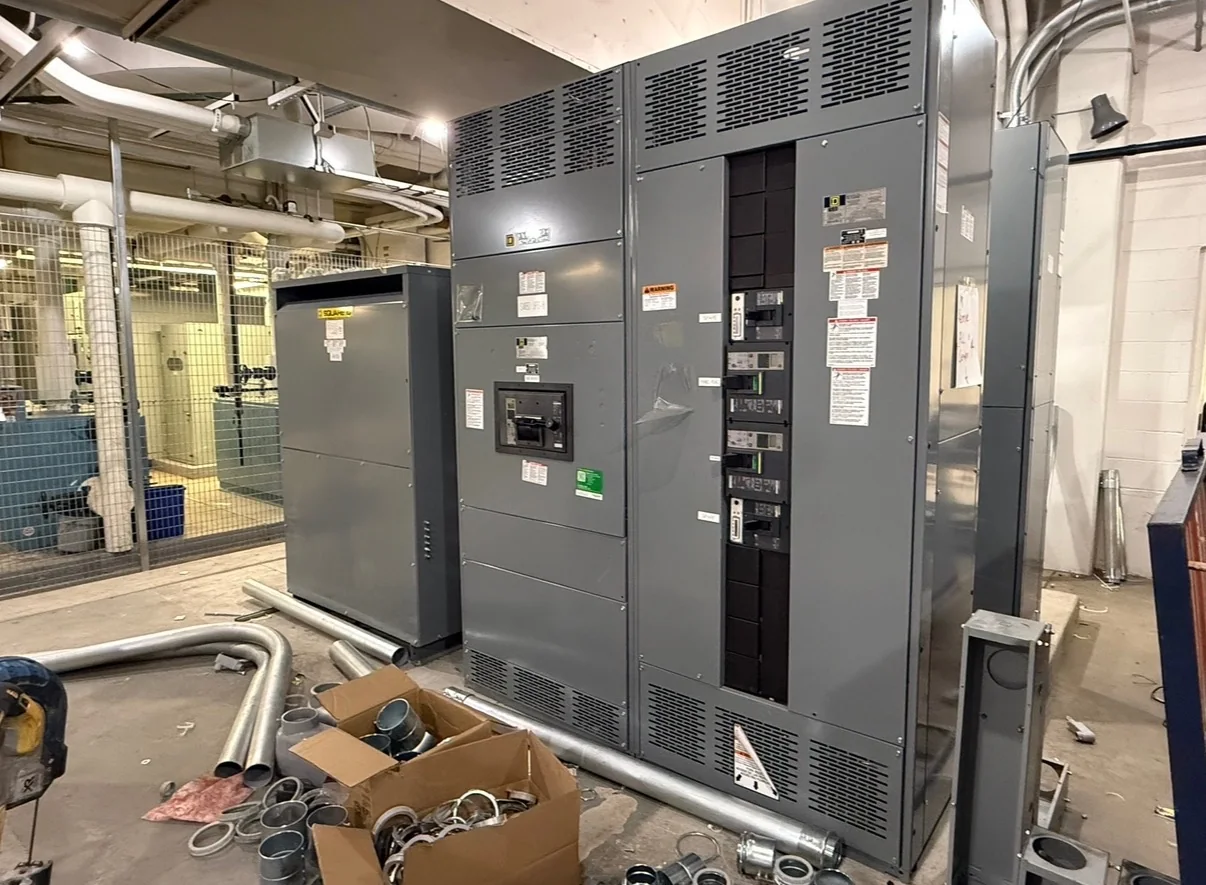
Start with the transfer arrangement
A generator does not simply connect to a switchboard as a second supply without a means to control which source serves the load. The project design must define how the system transfers between utility and generator power. Common arrangements use a transfer switch or other engineered transfer equipment located in, beside or upstream of the switchboard; the suitable configuration depends on the one-line diagram, load priorities and installation constraints. Decide whether transfer is open transition, which disconnects one source before connecting the other, or whether a different transition method is required and permitted. Consider whether the generator supplies the entire switchboard or only selected emergency, legally required, critical or standby loads. That choice affects feeder arrangement, bus loading, equipment space and operating procedures. Share the one-line diagram, source locations and intended operating sequence with the switchgear designer early. Qualified professionals should determine the arrangement and confirm applicable codes and project requirements.
Prevent unintended source paralleling
A central purpose of transfer equipment and interlocking is to prevent an unsafe or unauthorized connection between generator and utility sources. If both sources can energize the same bus at once, the system may require a specifically engineered paralleling scheme, protective functions, synchronization controls and utility approval; it should never happen accidentally through breaker operation or control failure. For a non-paralleling design, identify every possible path between sources and specify the required mechanical, electrical or key interlocks for the selected equipment. Clarify how the system behaves during loss of control power, a failed breaker operation or return of utility power. Also define who may operate the transfer equipment and whether automatic transfer, manual transfer or both are intended. Interlock details must match the actual devices and control logic rather than rely on labels or operating instructions alone. Have the electrical engineer and responsible authorities review the sequence, safeguards and operating procedures before procurement and installation.
| System | Voltage, phase, current and available fault current |
|---|---|
| Configuration | Lineup, protection, controls and enclosure as specified |
| Compliance | Applicable standards and listing confirmed for the assembly |
| Delivery | California and nationwide; schedule confirmed by quote |
Coordinate source and equipment ratings
Generator and utility sources may differ in available fault current, voltage regulation, grounding arrangement and response to load changes. Provide generator voltage, phase, frequency, rated output, overcurrent protection, grounding details and manufacturer data when available. For the utility source, provide the service characteristics and available fault-current information established for the project. The designer uses these inputs to evaluate switchboard bus and short-circuit ratings, breaker interrupting and withstand capabilities, transfer equipment ratings, and protective-device coordination. A generator’s lower fault contribution or changing output does not remove the need for a complete protection study; protection must also respond appropriately to faults under each operating condition. Confirm that conductors, neutral switching, grounding and bonding provisions suit the selected system and transfer method. Ratings and protection settings are project-specific design decisions, not assumptions based only on generator kilowatts. Qualified professionals should verify equipment suitability against the final system study and applicable requirements.
Address utility and local requirements
Before selecting equipment, establish what the serving utility and local authority having jurisdiction require for a generator connection. Requirements can depend on whether the generator is isolated from the utility, capable of parallel operation, used for standby service, or connected through a particular service configuration. Ask the utility about interconnection review, service equipment, visible isolation, metering, protective functions and approval steps that apply to the project. Confirm local electrical and building code provisions, permitting, inspection, emergency-system requirements and any site-specific rules with the responsible professionals and authorities. Do not assume that a transfer device alone satisfies every utility or code condition. If parallel operation is contemplated, resolve the utility’s technical and procedural requirements before equipment design advances. Identify the standards applicable to each piece of equipment, especially when the system includes different voltage classes; requirements for one type of assembly do not automatically establish those for another. Record decisions and approval responsibilities in the project documents.
Prepare a complete design package
A focused information package helps the switchgear builder evaluate the connection and identify unresolved choices. Include a current one-line diagram, utility and generator source data, load schedule, desired transfer sequence, operating modes, grounding and neutral requirements, protective-device information, site conditions, and any utility or authority comments already received. Note whether the generator is intended for the full board or designated load sections, and identify future expansion or maintenance-bypass needs if they affect the design. Ask the project engineer to confirm equipment ratings, protection coordination, interlocks, control power, indication and any required testing or documentation. Changes to generator size, fault-current data, transfer method or utility conditions can affect the design, so communicate revisions promptly. Once the technical basis is aligned, the manufacturer can review the requested new switchgear configuration and clarify information needed for quotation and production planning. California projects and customers elsewhere can discuss shipping needs; schedule-sensitive options, if considered, remain subject to project review.