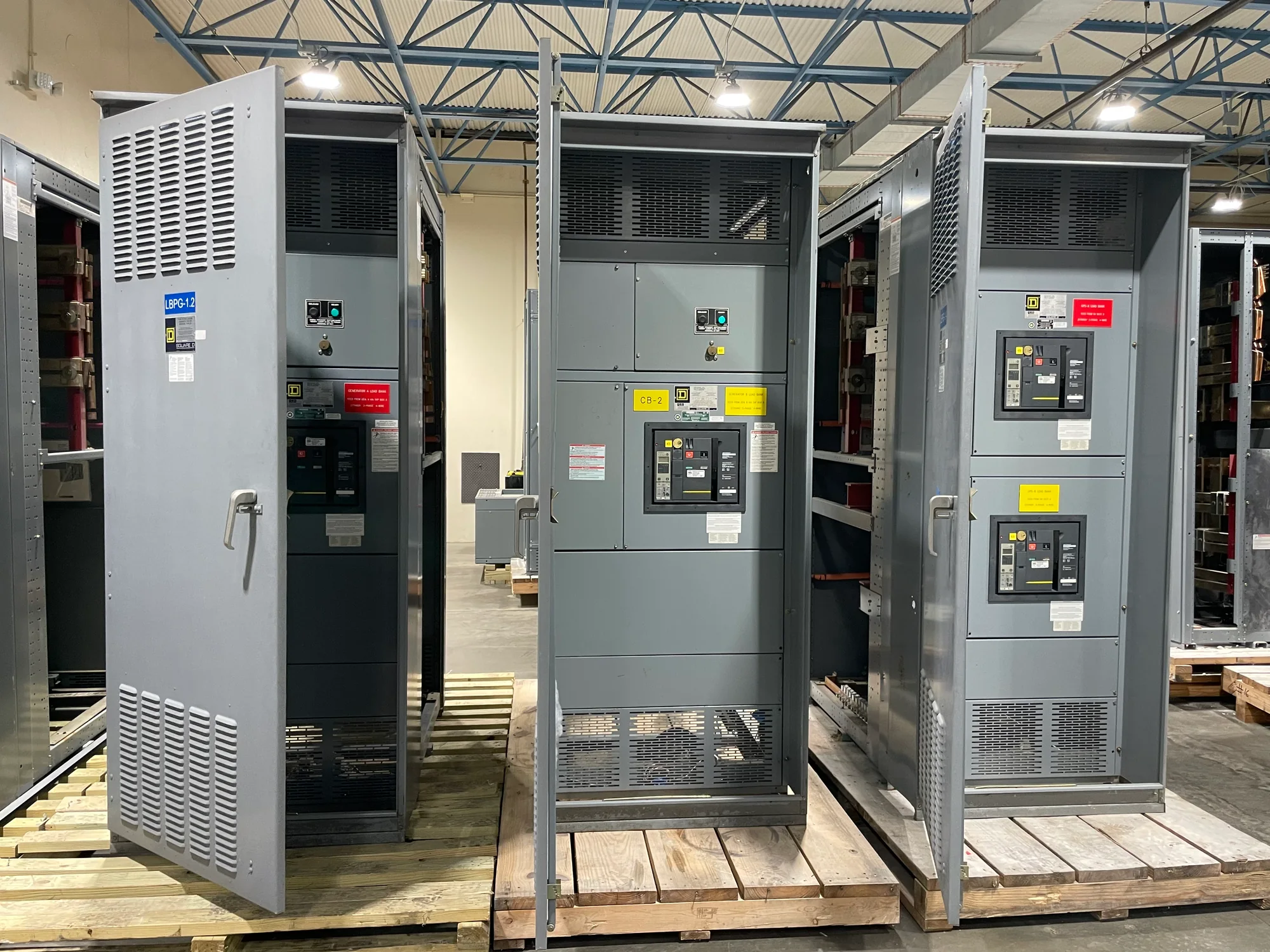
How fixed-mount units differ from drawout buckets
A fixed-mount motor control center holds each starter or other control unit in a stationary position within its section. A drawout design places a unit in a removable bucket that can be withdrawn from the structure under defined operating and safety conditions. That distinction affects how a team accesses equipment, plans service, and manages downtime; it does not by itself determine the quality or suitability of an installation. Fixed construction may appeal where unit removal is not a routine maintenance requirement, while drawout buckets can support removal or exchange when the equipment and procedures are designed for that work. Compare the two approaches against actual operating practices rather than assuming one is universally safer, faster, or less expensive. The intended loads, control functions, environment, maintenance resources, and project specifications all influence the right arrangement. A manufacturer can use those inputs to clarify design choices before the lineup is finalized.
Access and service workflow
With fixed-mount units, servicing generally takes place at the installed position. Depending on the work, technicians may need to isolate the applicable circuits, verify absence of voltage, and follow site procedures before opening or working on a unit. The time and effort involved depend on the task, access clearances, equipment layout, and the facility’s isolation plan. Drawout buckets can provide a different service workflow by allowing a unit to be disconnected and removed, but withdrawal is not a substitute for safe isolation or qualified work practices. The specific design determines what positions or interlocks are provided and what operations are permitted. When comparing options, identify common maintenance tasks, who performs them, what tools and training are available, and whether work can be scheduled during planned outages. Ask how access to neighboring units and wiring is affected in each arrangement, since convenient unit removal does not necessarily eliminate the need to coordinate work across the lineup.
| System | Voltage, phase, current and available fault current |
|---|---|
| Configuration | Lineup, protection, controls and enclosure as specified |
| Compliance | Applicable standards and listing confirmed for the assembly |
| Delivery | California and nationwide; schedule confirmed by quote |
Maintenance, spares, and downtime tradeoffs
Fixed-mount and drawout designs can shift maintenance effort in different ways. A fixed unit may keep the installation straightforward where components are serviced in place and the facility can schedule appropriate outages. A drawout approach may make a planned unit exchange more practical when compatible spare buckets, replacement components, procedures, and trained staff are available. That potential benefit depends on the design and the organization’s readiness; it should not be treated as a guaranteed reduction in downtime. Consider the consequences of a failed starter, the criticality of the driven equipment, repair capabilities, and whether a spare unit can be stored and maintained. Also compare the procurement and lifecycle implications of maintaining interchangeable spares against servicing installed units. Discuss the expected duty, switching frequency, ambient conditions, and maintenance intervals with the design team. These details help establish a realistic service strategy and avoid choosing an arrangement based only on a general preference for removability.
Space, wiring, and lineup coordination
The physical arrangement must suit the electrical room and the connected equipment. Evaluate aisle and working clearances, cable entry and termination, routing for control conductors, ventilation, and access to doors or removable components. A drawout bucket needs space and a practical handling method for withdrawal and staging; a fixed-mount unit still requires adequate access for inspection and service at its installed location. Compare the complete lineup footprint and service envelope, not just the dimensions of an individual unit. Coordinate motor control functions with feeder protection, upstream and downstream equipment, control power, communications, and the facility’s operating sequence. Confirm system voltage, available fault current, load information, environmental conditions, and other project ratings as design inputs. Qualified professionals must determine protection, equipment ratings, working clearances, and applicable codes for the specific installation. For medium- or high-voltage equipment, identify and verify the standards applicable to that equipment rather than relying on low-voltage switchboard requirements.
Information to provide when specifying equipment
A useful inquiry describes the application and the maintenance decision the project needs to resolve. Provide a one-line diagram or preliminary electrical information, system voltage, available fault-current data, motor list and horsepower, starting methods, control requirements, and any known operating sequence. Note indoor or outdoor conditions, ambient temperature, altitude if relevant, contamination or corrosion concerns, cable-entry preferences, and room constraints. State whether in-place service or removable units are preferred, which loads are critical, how outages are managed, and whether the facility expects to keep spare components or buckets. Include project specifications, applicable code and standard requirements, and interface details for upstream equipment and field controls. A manufacturer can review these inputs, identify questions, and discuss fixed-mount versus drawout arrangements for the application. Ratings, construction details, and standards must be confirmed for the particular design. For a schedule-sensitive project, raise the required dates early; any expedited approach depends on project review and confirmation.